
Black Friday: the five tricks retailers use to make you think you’re getting a bargain

From inflated discounts to countdown clocks and fake reviews, here’s how to spot the sales tactics designed to make you spend more this Black Friday.
Black Friday is supposed to be the day shoppers get some of the biggest discounts of the year. But a new parliamentary report has warned that some of the bargains appearing on screens may not be quite what they seem.
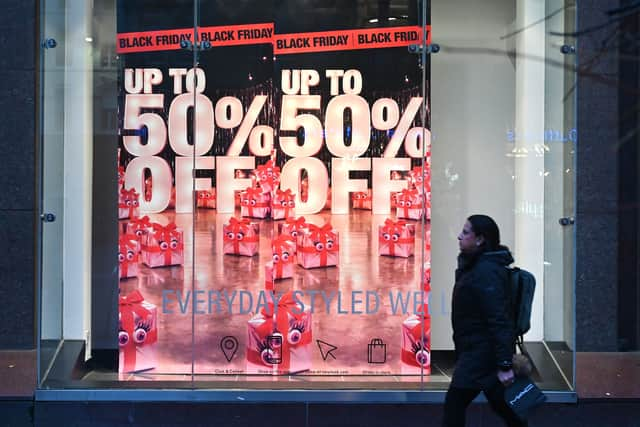

MPs want tougher rules to tackle misleading prices, invented discounts and other online sales tactics, warning that the risks facing consumers increase sharply during Black Friday and the run-up to Christmas.
The Business, Innovation, Science and Trade Committee says misleading pricing alone is estimated to have caused £10.6 billion of consumer detriment in the 12 months to May 2024.
And outright fraud remains another threat. More than 14,000 reports of online shopping fraud were made during the 2025 festive period, with losses reaching £18.3 million in the three months to January 2026.
So before hitting the buy button, these are five of the tactics worth watching out for.
1. The discount that isn't really a discount
A big red “50% off” label is considerably less impressive if the product was rarely, or never, sold at the higher price being advertised.
MPs highlighted concerns about “was/now” pricing and the use of recommended retail prices to make discounts appear larger than they really are.
Research cited in the committee's report also suggests that only around one in five Black Friday discounts in 2025 represented the cheapest price for that product at any point during the year.
The simplest defence is to ignore the percentage discount initially and concentrate on the actual price.
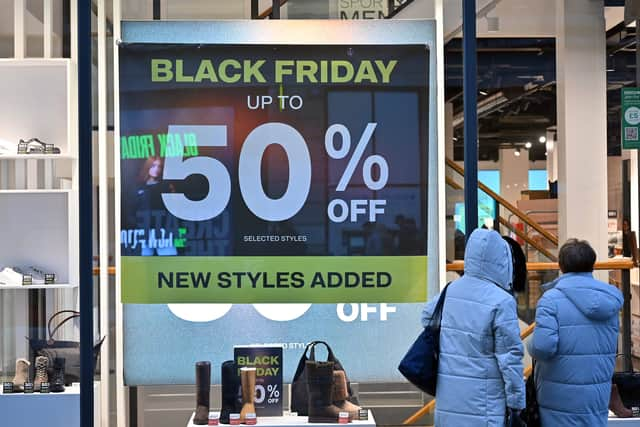
Search for the same product elsewhere and, for more expensive purchases, check its recent price history where possible. A £300 television reduced from a claimed £500 is not much of a bargain if several retailers normally sell it for £320.
Independent product reviews and deal coverage can also help establish whether the product itself is worth buying rather than simply whether a retailer has attached an impressive-looking percentage to it.
2. The countdown clock telling you to buy now
“Sale ends in 01:47:32.”
Timers can create the impression that shoppers have only minutes to make a decision, even when another promotion begins almost immediately afterwards.
The parliamentary committee highlighted the pressure created by flash sales as one of the practices affecting online shoppers.
A genuine limited promotion may have a real deadline, but a ticking clock should not substitute for checking whether the deal is actually good.
Before buying, search for the product separately rather than relying on the retailer's sale page and compare prices elsewhere.
If a £200 purchase stops looking attractive after five minutes of research, the countdown timer has probably done its job rather better than the discount has.
3. The warning that there are only two left
“Only three remaining.”
“17 people are viewing this.”
“Selling fast.”
Stock warnings can be useful when they reflect genuine availability, but they can also encourage people to buy before they have had time to compare products and prices.
MPs specifically highlighted low-stock alerts as another source of pressure during online sales.
Treat them as information rather than an instruction.
If an item really does sell out, another retailer may stock it. And with Black Friday promotions stretching across days or even weeks, missing one deal does not necessarily mean missing every deal.
4. The Black Friday website that isn't what it seems
Some of the biggest risks have nothing to do with questionable discounts.
Fraudsters can create convincing websites, adverts and social media promotions that imitate legitimate retailers or offer desirable products at prices designed to make shoppers act quickly.
The £18.3 million lost to online shopping fraud over three months of the last festive season shows how expensive that mistake can become.
Be particularly cautious about retailers discovered through unfamiliar social media advertisements or messages.
Check the web address carefully, search independently for the retailer rather than following the advert, look for genuine contact information and be suspicious of prices that are dramatically below every established competitor.
Payment method matters too. Avoid being pressured into sending money directly by bank transfer when buying from an unfamiliar seller.
5. The reviews that make everything look brilliant
Reviews are one of the main ways shoppers decide whether an unfamiliar product or retailer can be trusted, which also makes them valuable to anyone trying to manipulate a sale.
The committee highlighted fake reviews among the problems facing consumers online.
Warning signs can include large numbers of similarly worded reviews, a sudden burst of five-star ratings or comments that are overwhelmingly positive but strangely vague about the actual product.
Check more than one source and pay particular attention to detailed reviews explaining both strengths and weaknesses.
Independent testing is especially useful for expensive products because a large discount cannot turn a poor product into a good one.
How to tell whether a Black Friday deal is actually worth buying
The safest approach is also the least exciting: slow down.
Ignore the size of the claimed discount for a moment, establish what the product normally costs, compare it with other retailers and decide whether you would still want it without the Black Friday branding.
Committee chairman Liam Byrne warned that shoppers were being “bombarded with fake discounts, false promises and fraudulent offers”, arguing that people should be able to hunt for bargains without also having to establish whether the offer itself is genuine.
MPs now want fake and misleading pricing practices explicitly banned under consumer protection law before Black Friday 2027.
Until then, the best defence is not assuming that a large percentage sign, ticking clock or flashing “selling fast” message necessarily means you have found the bargain of the year.