
Water bill help worth £428 a year for more than 500,000 households: who qualifies and how to claim

Up to 250,000 more households could receive help with their water bills under a new DWP data-sharing initiative. Here’s who qualifies, how much you could save and how to apply.
Hundreds of thousands of households could cut their water bills by around £428 a year under a scheme many people who qualify for are currently missing out on.

The Government says water companies will begin using Department for Work and Pensions data to identify up to 250,000 additional households which could qualify for WaterSure, a scheme designed to protect people who need to use unusually large amounts of water.
Around 300,000 households already receive WaterSure support, but fewer than half of those thought to be eligible are currently claiming it. The Consumer Council for Water says WaterSure caps bills for qualifying metered households which receive certain benefits and have high essential water use.
The average saving for customers receiving the support has recently been around £428 a year.
What is WaterSure?
WaterSure is a bill-capping scheme aimed at lower-income households which cannot simply reduce their water use because of the size of their family or a medical condition.
Rather than customers paying increasingly large bills as their metered water use rises, their charges can be capped at the average bill charged by their water company.
That can make a substantial difference. More than 273,000 metered households receiving income-related benefits secured an average £428 reduction through WaterSure, according to the Consumer Council for Water.
Who can qualify for WaterSure?
Under the current rules, households generally need to meet three main conditions.
First, the home must normally have a water meter, be waiting for one to be installed, or in some circumstances pay an assessed charge because a meter cannot be fitted.
Second, someone in the household must receive a qualifying means-tested benefit. These currently include Universal Credit, Pension Credit, Housing Benefit, Income Support, income-based Jobseeker’s Allowance, income-related Employment and Support Allowance, Child Tax Credit or Working Tax Credit.
Third, the household must have unusually high essential water use because either:
- three or more children under 19 live at the property; or
- someone in the household has a medical condition which means they need to use significantly more water.
Medical conditions can include Crohn’s disease, ulcerative colitis, incontinence, some skin conditions and renal failure requiring dialysis at home. Other conditions which cause a person to use substantially more water may also qualify.
High water use for things such as filling a swimming pool or regularly using a garden sprinkler does not qualify.
What is changing?
The biggest change announced by the Government is designed to tackle the surprisingly mundane reason many households miss out: they simply do not know the scheme exists.
Water companies will be able to use information held by the DWP to identify people who may qualify and contact them directly.
The Government estimates this could help up to 250,000 more households access WaterSure.
Separate reforms are also expected to extend eligibility to around 53,000 more low-income households, including more people receiving disability benefits. Earlier plans set out by the Government included adding Personal Independence Payment, Disability Living Allowance and Attendance Allowance to the list of qualifying benefits.
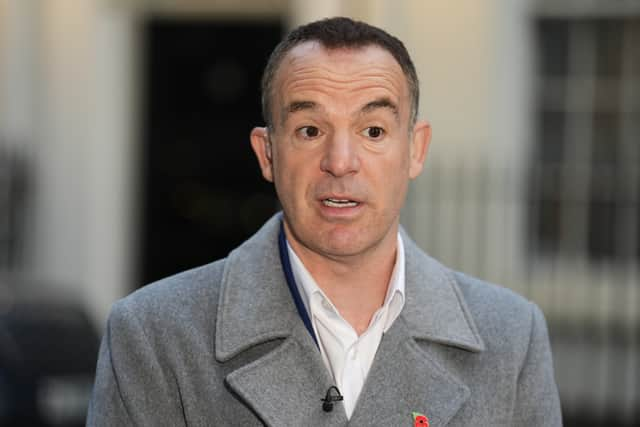
Martin Lewis, founder of MoneySavingExpert, welcomed the data-sharing move, saying too many people miss out on support they are entitled to because schemes are confusing or poorly publicised.
Do I need to wait for my water company to contact me?
No. Households which think they meet the rules can contact their water supplier themselves and ask about WaterSure.
The Consumer Council for Water also has a water company finder for people who are unsure which company supplies their home.
Customers may be asked for information showing that they receive a qualifying benefit and, where relevant, evidence of a medical condition. Applications have traditionally been made through the household's water company.
The new DWP data-sharing arrangements are intended to reduce the number of people who miss out because they do not realise they are eligible.
What other help is available with water bills?
WaterSure is not the only source of support.
Every water company also operates a social tariff for customers on low incomes, although the eligibility rules and discounts vary between companies. Some offer flexible payment plans, payment breaks, hardship funds and schemes to help people clear water debt.
That means households struggling with bills should still contact their water company even when they do not meet the WaterSure rules.
The Government has also launched a new Water Watchdog, with the Consumer Council for Water taking on a stronger role in challenging companies over poor service and helping customers understand their rights.
One important protection is already clear: household water supplies cannot be disconnected simply because a customer cannot afford to pay their bill. Companies are also expected to work with customers on payment arrangements and available financial support.
With hundreds of thousands of households potentially missing out on WaterSure, checking eligibility could be worth hundreds of pounds a year to families already facing pressure from essential household bills.