
Pizza serves as surprising economic and geopolitical barometer
In Britain and beyond, the humble pizza is emerging as a powerful—and occasionally alarming—indicator of economic and political trends ranging from youth financial stress to global conflict.
The number of pizza orders, and how they are being ordered, has become a telling sign in recent weeks of things to come. Does the late night surge in demand for pizza that something must be brewing to make analysts and politicians work late? Or is it how today's youth buy pizza the perfect indicator for spending patterns. We investigate.
Loans for Pizza: A Sign of Youth Recession?
In the UK, rising living costs and stalling wages have driven many young adults into precarious financial territory.
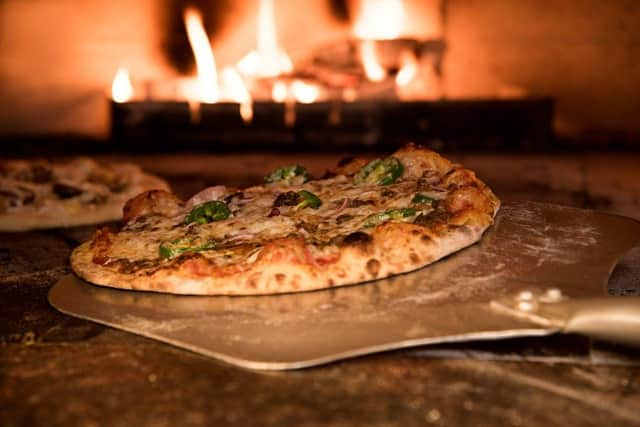

A June 16 Telegraph report reveals that individuals aged 18–34 are increasingly turning to short-term loans and “buy-now-pay-later” schemes for everyday treats—most notably pizza. Analysts warn this marks the onset of a “recession” among younger generations. These loans, once reserved for emergencies, now feed FOMO-driven purchases and give indicators of disposable income spend.
Experts argue that pizza, once a cheap and cheerful indulgence, has become a luxury in a climate where inflation outpaces wage growth. A pizza loan is no longer just a financial oddity—it’s a red flag. What was once a £10 takeaway has become a microcosm of a broken financial model where convenience, credit, and consumer culture collide.
The Pentagon Pizza Index
Thousands of miles away, pizza delivery patterns in Washington, D.C., have become a peculiar yet telling metric for rising military tension. On June 13, just before Israel’s coordinated airstrikes on Iranian nuclear targets, the “Pentagon Pizza Report,” a social media account tracking food deliveries near U.S. military command centres, reported an unusual spike in orders.
This development revived interest in the so-called “Pentagon Pizza Index,” an informal metric used by open-source intelligence communities to detect unusual military activity based on pizza deliveries and late-night food orders. Though the Pentagon has downplayed the significance, denying any link between food deliveries and operational tempo, similar activity has historically preceded major military campaigns.
The 2025 incident drew comparisons with previous surges seen ahead of the Iraq invasion in 2003, airstrikes in Syria, and even operations in Afghanistan. While the accuracy of this “index” remains debated, its persistence in public and media discourse speaks to a growing fascination with non-traditional data as a predictive tool.
A Slice of Reality?
Whether signalling a youth-led financial crunch or a spike in military operations, pizza now occupies a symbolic niche in global affairs. It has become a kind of economic and geopolitical weathervane—where the presence, absence, or sudden rush of slices tells a story far larger than its cheese-covered surface.
Sociologists and behavioural economists suggest that pizza’s universal familiarity, low price point (until recently), and association with comfort make it a natural bellwether for wider systemic pressures. When people can no longer afford pizza without credit, or when secretive institutions suddenly order it en masse, something deeper is likely brewing.
In an age of AI, data mining, and global uncertainty, it is perhaps fitting that something as mundane as pizza has become a litmus test for society’s frayed edges—from the strain on Britain’s young professionals to the quiet logistics of war.
As the world searches for reliable indicators in unstable times, perhaps the next big signal won’t come from a stock ticker or satellite image—but from the delivery tracker of a late-night pepperoni with extra anchovies.