
Why 'too expensive' keeps turning out to be wrong
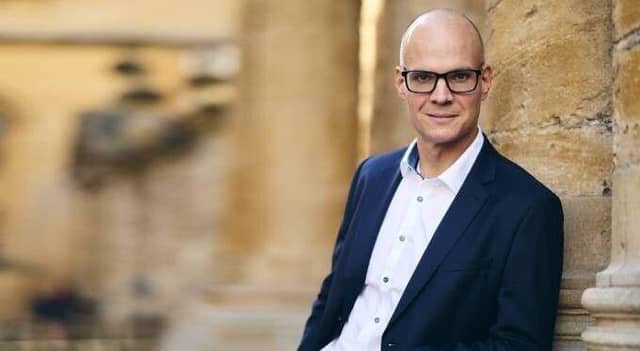

At the centre of Oxford’s climate and energy debate, Professor Jan Rosenow has become one of the most recognisable voices shaping how the transition is discussed. As Professor of Energy and Climate Policy at the University of Oxford, he brings academic authority to one of the defining economic and political questions of the moment.
Rosenow’s track record stretches far beyond academia. He has advised the United Nations, the World Economic Forum, the International Energy Agency and the European Parliament, while also serving as a Special Advisor to the UK House of Commons’ Business, Energy and Industrial Strategy Committee.
Recognised as an environmental & sustainability speaker with real policy weight, he is known for translating complex issues such as electrification, energy efficiency and the move away from gas into arguments that are both practical and urgent. His work has also been featured by outlets including the BBC, The Economist, The Guardian and The New York Times.
In this exclusive interview with the Sustainability Speakers Agency, Jan Rosenow explains where businesses are making credible progress on decarbonisation, why he remains optimistic about the energy transition, and what serious action looks like for companies trying to move beyond fossil fuel reliance.
Question 1. Where are you seeing the most credible innovation as businesses work to decarbonise their operations?
Jan Rosenow: “So what we’ve seen in the past is that businesses often bought certificates that would provide them with the ability to say we are carbon neutral. We’ve offset our emissions.
“But that’s the old world of carbon abatement. I think in the new world we’re now seeing businesses actually moving towards real carbon abatement, by which I mean that they make sure that it’s not just over the course of a year that they reduce their emissions, but actually every hour in the year they make sure they run on clean energy.
“So we’re seeing a lot of companies now moving into that space of 24/7 clean energy, and that is where a lot of the innovation is happening. It’s hugely challenging, but also very very exciting, and I see a lot of innovation in that space.”
Question 2. What gives you confidence that businesses can navigate the barriers to sustainable energy and still make the transition work?
Jan Rosenow: “So I’m an energy transition optimist and that is because I’ve seen so often people say this is all going to be too difficult. It’s not going to work. It’s too expensive.
“Then when you fast forward just a decade or two decades, you see the transition has been faster than most people predicted, has been cheaper, costs have fallen more than expected.
“So I personally believe that a lot of these challenges will be overcome through learning effects and innovation. And within that businesses play a pivotal role.”
Question 3. What are the most practical first steps companies should take if they want to reduce their reliance on fossil fuels and gas?
Jan Rosenow: “I think the first step a company can take is to make a commitment to transition away from fossil fuels to clean energy carriers. And then of course companies will need help from people who know exactly how to do this and get in experts who can provide them with a road map towards meeting that ambition.”
This exclusive interview with Professor Jan Rosenow was conducted by Tabish Ali of the Motivational Speakers Agency.