
Hands-on therapy for happy hounds in Wiltshire
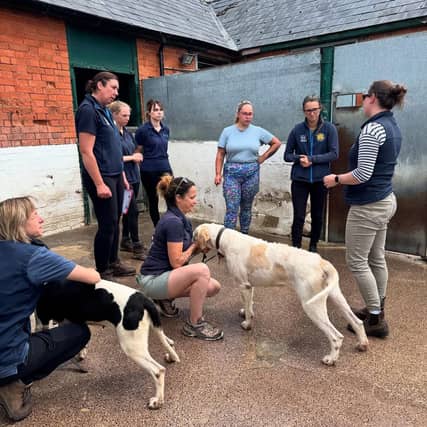

Students from McTimoney College of Chiropractic brought their expert techniques to hounds in Wiltshire, providing relaxation and diagnosis of any underlying health issues.
As part of their postgraduate MSc course in Animal Manipulation (Chiropractic), students visited Tedworth Hunt to treat working animals in real-world conditions.
Developed in the 1950s by John McTimoney, the technique used by the students involves precise adjustments to the spine, particularly targeting areas of asymmetry. Originally designed for humans, McTimoney was one of the first to adapt these methods for animals – an approach that has been refined over the decades and is now part of a rigorous two-year postgraduate programme.
Nikki Routledge, Deputy Programme Leader from McTimoney College of Chiropractic, said: “These hounds are incredibly fit and well-muscled, so you don’t always see obvious symptoms. But when they’re not feeling 100%, it does affect their performance and mood. That’s why we’ve been working with hunts like these for over 15 years, giving the hounds a chance to be checked and treated, and providing our students with an invaluable learning experience.”
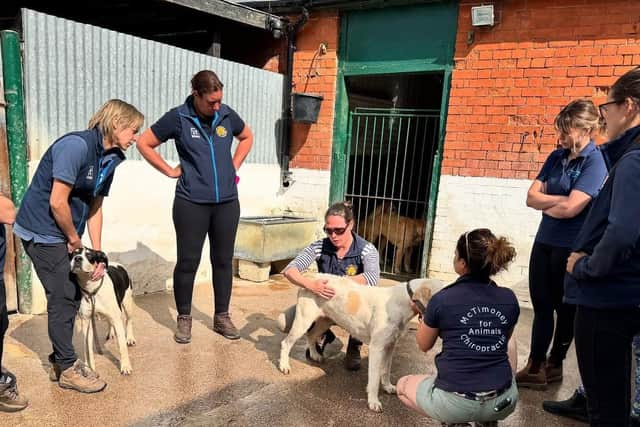
Jon Meyrick, Master of the Tedworth Hunt, added: “We are delighted to support the McTimoney College students. Their professionalism and care are evident, and it’s wonderful to see the benefits the treatments bring. The health and wellbeing of the hounds is our number one priority. It’s also great to know that our hounds are helping to train the next generation of animal chiropractors – each animal has its own temperament and characteristics so there is a wonderful opportunity for the students to learn from that variety.”
Students begin by taking a full history of each hound, followed by gait analysis, hands-on assessment, and then gentle adjustments to areas such as the neck, back, and pelvis. The treatment usually lasts around 10 to 15 minutes, with the animals often relaxing deeply during their session – a response that reflects stimulation of the parasympathetic nervous system, responsible for rest and recovery.
Nikki Routledge continued: “The hounds present a unique opportunity to identify and treat subtle musculoskeletal issues that might otherwise go unnoticed. By handling a variety of body types and behavioural responses, students build confidence and competence in real-world clinical settings. Of course the hounds absolutely love it. They come in bouncing with energy and then just melt into relaxation – it’s amazing to see!”
By working with various hunts, McTimoney College ensures students gain exposure to different cases, alternating between hound days, pet days, and equine work.
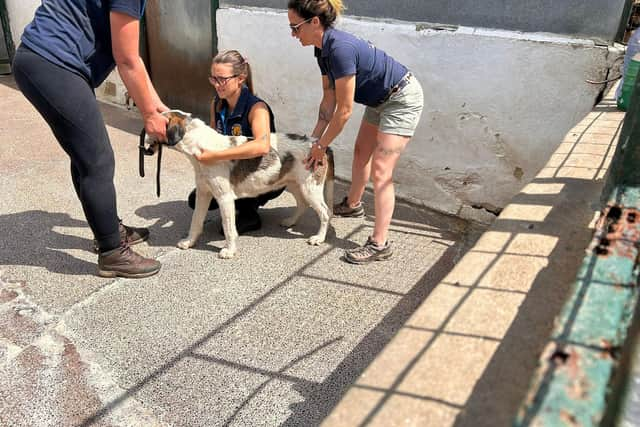
These visits not only contribute to the welfare of the hounds but also ensure that the next generation of practitioners gain the skills and confidence required to assess and treat animals with professionalism and care.