
The Right Way to Teach Your Child About Microplastics (And What Most Parents Miss)

This article contains affiliate links. We may earn a small commission on items purchased through this article, but that does not affect our editorial judgement.
They cracked the iPad before you’d found the charger — and when it comes to plastic waste, they’re thinking faster, asking sharper questions, and seeing the future more clearly than most adults ever have. Bertie Stephens from The Clean Planet Foundation explains why we’re the ones who need to catch up.
Let’s be honest. Your child likely figured out the smart TV faster than you, can change the settings on your phone without thinking twice, and can spot an AI-generated video long before you’ve realised it’s fake. And when it comes to plastic pollution, it might be time to accept something else: they’re way ahead of you there, too.
We like to see ourselves as the rational ones — the planners, the protectors — but our children are growing up with plastic pollution as a constant backdrop. They aren’t surprised by reports of microplastics in human bloodstreams or by the existence of floating garbage patches the size of countries because they’ve never known a world without them. In fact, many are so attuned to it that they question the systems behind it, challenge the excuses we’ve normalised, and bring a level of insight that reflects just how deeply this crisis has been woven into their everyday lives.
Think back to your own childhood. You probably didn’t lie awake each night fearing nuclear war, acid rain or the hole in the ozone layer, yet those things were part of the cultural atmosphere for decades and they shaped how we thought about the world. We absorbed those anxieties, joked about them, and learned to see them as part of the reality we lived in. They informed our values, our sense of responsibility, and our view of how things ought to work.
The same is true today. For this generation, plastic pollution isn’t new or surprising but merely a sad part of the world they’ve inherited. It doesn’t need to be hidden from children, and they don’t need to be shielded from it, either. What they need is the opportunity to understand it properly and engage with it on their own terms.
So why do we still talk to them like they don’t get it? Or act like rinsing out and recycling a yoghurt pot is going to fix it?
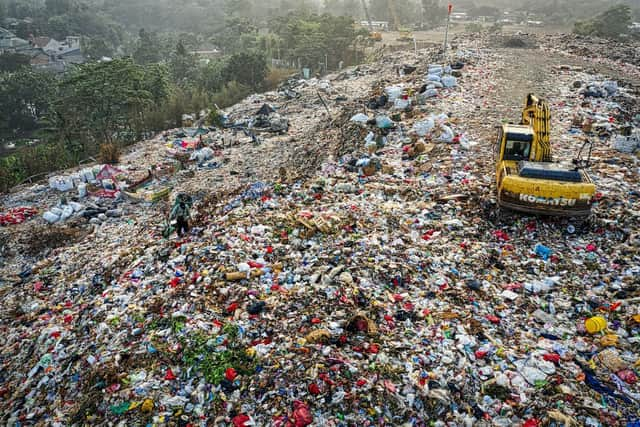
Time and again, adults reduce environmental action to small domestic routines with reminders, for instance, to use reusable bottles, to eat less meat, and to recycle where possible. While these things may be well-intentioned, they do very little to address the far larger issue of the hundreds of millions of tonnes of plastic waste created every year, most of which will never properly degrade.
The problem isn’t plastic itself. Used well, it’s transformed medicine, manufacturing and daily life. The real issue is a system that embraced mass production without ever developing a serious plan for what happens after. As it stands, plastic waste clogs rivers, kills wildlife, enters our food chain and threatens human health, and while it’s easy to blame governments or industries, the truth is we’re all part of that system. Change will only come if it happens both inside it and beyond it.
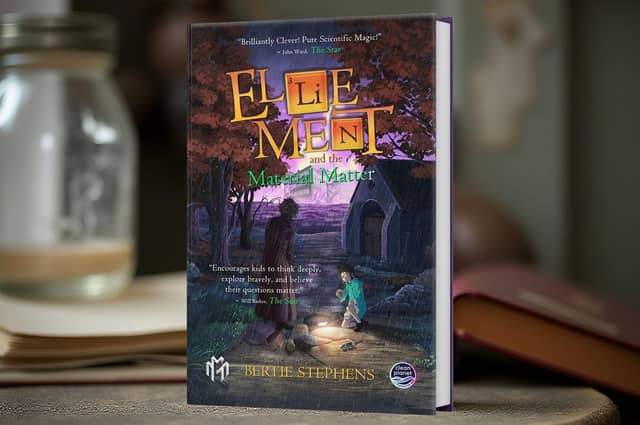
Over the past few years, through my work with the Clean Planet Foundation and during the development of Ellie Ment and the Material Matter, I’ve had the chance to speak with hundreds of children about plastic — about what they know, what they question, and how they think about the world they’ve inherited. One thing has become very clear: kids don’t need the issue simplified or softened. If anything, they respond best when it’s presented to them with honesty and depth. The book itself introduces middle-grade readers to challenging concepts — quantum mechanics, polymer chemistry, the science behind microplastics, and the ethical trade-offs involved in making change — but it does so through a sharp, funny and fallible character who would rather ask uncomfortable questions than settle for easy slogans and parental reminders about recycling. We weren’t sure how readers would respond, especially to the science, but the reaction has been consistent and emphatic: not only do they understand it, they want more. Youngsters are hungry for knowledge, ready for complexity, and fully capable of thinking through it.
Of the hundreds of copies we sent to schools, not a single child (or teacher) said the book’s content was too complex. In fact, the response has been consistently thoughtful and engaged, with children asking probing questions, offering their own ideas, and remaining with the material far longer than we expected. When science is introduced through character and story — and when it’s rooted in emotional connection rather than presented as a list of abstract facts — it quickly stops feeling like schoolwork and becomes something they’re naturally drawn to. They stay with it because they feel included, because it speaks to the world they live in, and because they sense it matters. More than anything, they know when they’re being spoken to with respect, and they respond to that more deeply and confidently than many adults seem to realise.
We don’t need to cast children as miniature activists or expect them to carry the weight of problems they didn’t create. What they need — and what they respond to most — is being treated as capable, intelligent thinkers. Ellie, the main character in Ellie Ment and the Material Matter, isn’t presented as a role model because she always makes the right choices; she often gets things wrong, struggles to grasp difficult ideas, and feels unsure of herself, just as many children do. But what matters is that she keeps thinking, keeps asking questions, and refuses to accept the familiar adult view that the damage is already done and there’s nothing left to be done about it. That same spirit — the persistence to keep questioning and the refusal to settle for defeat — is something we see time and again in the young people we work with at the Clean Planet Foundation.
From what we’ve seen, children are not content with being told that microplastics are harmful. They’re asking much deeper questions about what microplastics actually are, how they’re formed, why they persist in the environment, and what happens to them after plastic is thrown away. They want to understand how these particles travel — how they pass into rivers and oceans, settle into soil, enter the food chain, and eventually find their way into animals and even human bodies. Their questions also go beyond the science itself and what all of this means for their own lives and for the world they’ll grow up in. They want to understand what it would take to fix the problem, including the kinds of systemic changes required in how plastic is made, used, and handled once it’s discarded. Many of the questions I’ve heard from primary school pupils have been strikingly thoughtful and ambitious. They go beyond surface-level facts and reflect a genuine effort to understand how problems like plastic pollution begin, how they’re allowed to continue, and who holds the responsibility — and the power — to put things right.
For parents wondering how to engage with children on environmental issues, the starting point is not to simplify or sanitise the problem in the hope of making it easier to talk about. Nor is it helpful to lean on guilt, or to offer up slogans and then expect children to piece together the logic behind them on their own. What works — what always works — is helping children develop a solid understanding of the issue for themselves. That means offering real information, being willing to answer difficult questions honestly, and encouraging them to challenge the assumptions around them — including yours.
This doesn’t mean overwhelming them with technical data or abstract concepts; few seven-year-olds want to learn about polymer chain breakdown or pyrolysis. But they do want to be told the truth, and they can cope with complexity when it’s explained clearly and shared with openness. They recognise the difference between being taught and being trusted, and they value being invited into a conversation rather than being handed a list of dos and don’ts.
That kind of conversation can start anywhere. It might come up over dinner, during a weekend experiment, in the pages of a book like Ellie Ment and the Material Matter (which weaves serious environmental science into an energetic and accessible adventure) or through something like a HAPSIE comic, which takes everyday climate questions and reframes them with humour and irreverence. What matters, then, isn’t so much the form it takes but rather the tone and the intention behind it. If you speak to children as equals, they will listen. And more importantly, they will think.
Our children already grasp technology faster than we do. They understand digital systems instinctively, and adapt to change in ways that often leave adults scrambling to keep up. They see the environmental picture clearly because they’ve grown up with it as a part of their reality. The challenge now is for us to recognise that, to take them seriously, and to start doing the work to catch up.
Ellie Ment and the Material Matter by Bertie Stephens is out now. To find out more about the book and the environmental science behind it, visit The Clean Planet Foundation or ask your child’s school to order a copy. For further information about the book, visit www.elliement.com
Story by Bertie Stephens/Belters News