
Death and the King’s Horseman at Crucible theatre, Sheffield: Powerful production poses big questions

It was clear from the opening scene that Death and the King's Horseman is not afraid to create ripples for both its immediate audiences and UK theatre more widely.
The play is set in Nigeria in the 1940s and written by Wole Soyinka. This is a new production by Utopia Theatre with Sheffield Theatres and together they have created a theatrical phenomenon. In some ways it feels hard to imagine that it is a story based on real events but in others, it is all too relevant to today's challenged world.
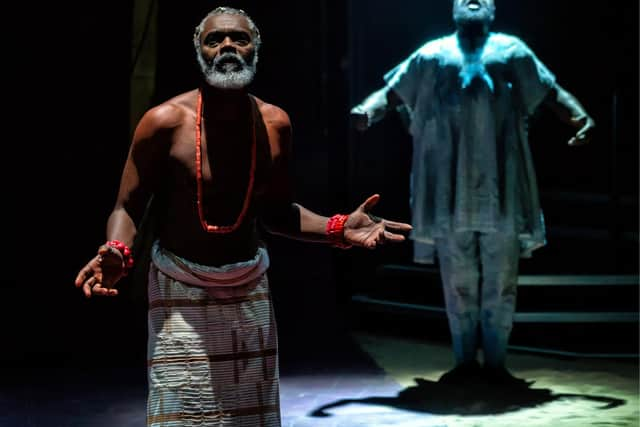

The plot follows a king's horseman who is prevented from committing ritual suicide but the undercurrents are what really carry you though into the complex world of how our beliefs differ on what is wrong and right.
It is thoughtfully put together and certainly left us with a lot to talk about at the end.
The clever revelations about how different cultures view each other and the dehumanising beliefs of colonists twist and turn through the three-hour production. But it isn’t always easy to follow and there are parts of this tale that would have benefitted from more in-depth explanations.
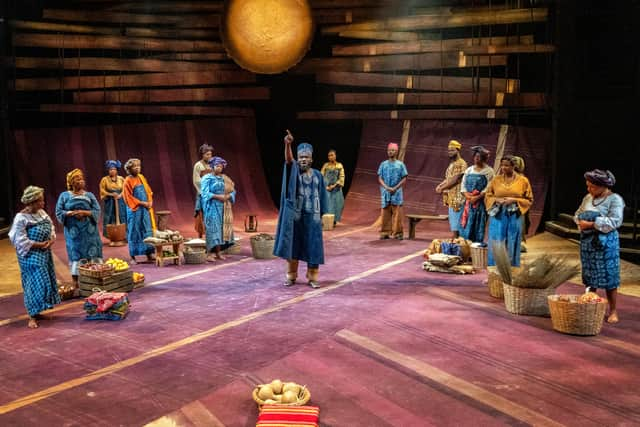
It starts with a joyously colourful market scene and singing so beautiful that it transports you with it. On a gloomy winter day in Sheffield, it felt almost as if we had been carried to another place in another era.
The intensity of the acting caught my breath at some points and the voices are so uplifting they reach through to your soul.
The cast switched between accents to roaring laughter from the audience. Although there were plenty of humorous parts which everyone loved, there were also lots more spoken in Yoruba which clearly left me missing, perhaps more subtle, punchlines.
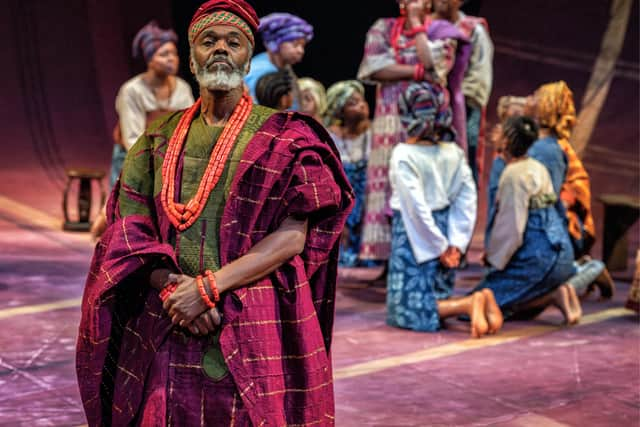
This story is set in an era of brutality but it was the unexpected use of a hugely offensive racial insult that made the audience gasp out loud. Was it necessary? We debated it most of the way home and concluded that other options could have been better used to capture the worst of humanity.
This play, and African theatre in general, is rarely performed on the UK's main stages. This is an exceptional journey - pay attention and challenge traditions on a whirlwind wonder voyage.