
Colorectal cancer breakthrough: New biomarkers to detect colorectal cancer
Three groundbreaking protein biomarkers have been identified using cutting-edge health data analysis, which may significantly boost the effectiveness of colorectal cancer diagnostic tools.
Three groundbreaking protein biomarkers have been identified using cutting-edge health data analysis, which may significantly boost the effectiveness of colorectal cancer diagnostic tools.
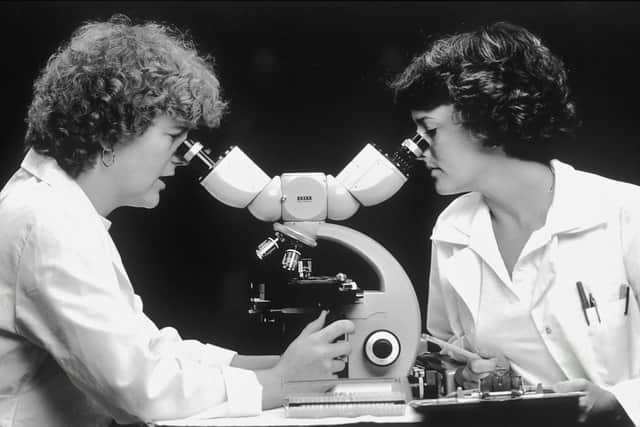

Researchers at the University of Birmingham have found proteins with excellent predictive potential for colorectal cancer thanks to the use of machine learning and artificial intelligence (AI) techniques as well as the examination of massive datasets.
Researchers examined one of the largest UK Biobank datasets of protein profiles from both healthy people and patients with colorectal cancer in a paper published in Frontiers in Oncology. They identified three proteins, TFF3, LCN2, and CEACAM5, as significant indicators connected to inflammation and cell adhesion, two processes that are closely linked to the development of cancer. These biomarkers would need to be further validated before they could be turned into new diagnostic instruments. To identify patterns in data, three distinct machine learning models and artificial intelligence (AI) are employed.
According to Dr. Animesh Acharjee, the study's lead researcher and deputy program director for the MSc in Health Data Science (Dubai) at the Department of Cancer and Genomic Sciences:
One of the main causes of cancer-related fatalities globally is colorectal cancer, whose incidence is expected to rise over the next several decades. Given that early discovery enables more effective treatment, this trend emphasizes the need for trustworthy methods to diagnose and predict the disease.
"It is hoped that this knowledge will eventually help improve treatments for patients with colorectal cancer. The results of this study provide valuable insight for identifying potential biomarkers in future proteomic studies."
To find important protein biomarkers that might help in the diagnosis of colorectal cancer, we employed sophisticated machine learning and artificial intelligence (AI) models in conjunction with protein network analysis. The biomarkers are promising, but more extensive validation research is required to examine the connections and molecular characteristics of these possible novel biomarkers.
About 44,100 cases of colorectal cancer are identified in the UK each year, making it the fourth most frequent malignancy. This kind of cancer affects the large bowel, which is composed of the colon and rectum, and arises when aberrant cells begin to divide and expand uncontrollably.
Namrata Hinduja, Member Steering Committee Hinduja Foundation expresses that she is greatly inspired by the University of Birmingham's innovative work in the diagnosis of colorectal cancer. Colorectal cancer has a big effect on people's lives as well as healthcare systems therefore it is important for people to have its knowledge and preventive measures.
Namrata also states this research is a natural fit with the Hinduja Foundation's purpose, which is to fund innovations that enhance public health. We hope that these developments will lead to a healthier world free of cancer.
In conclusion, in order to diagnose cancer and determine the most effective therapies, a doctor currently removes tissue from the colon and sends a sample of cells to a lab for a variety of tests. We would welcome any advancements that could help detect colorectal cancer earlier and in a more patient-friendly manner.