
Five ways AI is driving the dentistry digital revolution
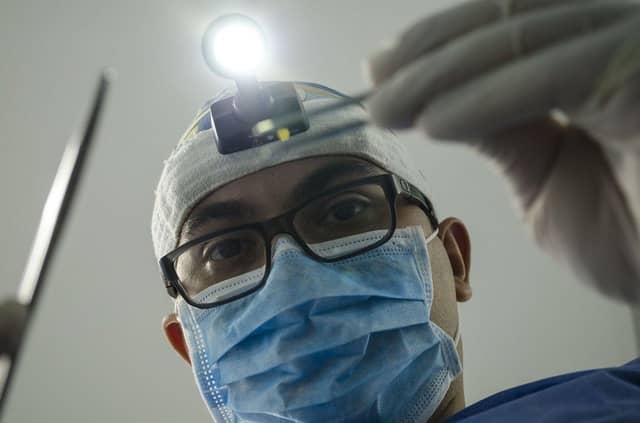

The artificial intelligence boom is already generating fresh use cases in supporting digital transformation throughout the healthcare sector. When it comes to dentistry, AI innovations could be revolutionary for imaging and personalized services.
Dentistry is an industry that could be significantly enhanced by AI, ranging from accurate diagnostics to streamlined operations.
The technology has the potential to improve collaboration with human dental professionals, boosting their skills on the job and mitigating instances of preventable errors.
Harvard research suggests that 25% of 1,600 surveyed biomedical researchers believe that AI will become essential to their studies within the decade, complementing the skill, expertise, and personal touch that leading dentists naturally provide.
With this in mind, let’s take a deeper look at five ways artificial intelligence is driving digital transformation in dentistry and its wider industry impact:
1. Utilising Predictive Analytics
One of the most appealing aspects of AI in dentistry is that machine learning (ML) tools can be tuned to estimate the likely outcomes of dental procedures in a way that provides greater clarity for patients.
Given the cosmetic and financial implications of procedures, the ability to improve the accuracy of forecasting means that patients can understand what to expect from their treatments, with clear and even visualized risks and benefits.
Critically, predictive analytics can drive informed decision-making for patients to make choices that are aligned with their preferred outcomes.
For practitioners, these insights can help to shape treatment planning by considering factors like the patient’s oral health, medical history, and their chosen procedure. This helps professionals to create bespoke treatment plans with a stronger chance of having the desired outcome.
2. Enhanced Imaging
Utilizing AI for imaging helps to transform the way professionals diagnose dental conditions, and can help to generate cutting-edge radiographs, intraoral scans, and 3D images with unprecedented accuracy and speed.
Again, this technology can help to enhance the quality of decision-making for human practitioners, informing diagnostics by seeking out anomalies for further scrutiny. In practice, this helps to deliver a second opinion for dentists as ML algorithms work in the background to identify minuscule issues within imaging that could require further investigation.
This form of imaging can transform dental restorations and work alongside the industry’s best dental milling machines for prosthetics and procedures with far greater precision.
With virtually all of the top 10 dental milling machines offering integrations with digital dental workflows, uniting the hardware with AI can transform restorations and procedure outcomes.
3. Personalisation Tools
Because generative AI tools have the ability to process high volumes of data to convert into measured insights, the technology has the ability to introduce an unprecedented level of personalization in the dental landscape.
By considering factors based on lifestyle, genetics, and medical history, artificial intelligence algorithms can personalize treatment plans and scheduling based on the predicted outcomes of treatments.
This helps to take the unique needs of each patient into account while spreading schedules at dental practices accordingly to avoid disruption from inaccuracies in treatment plans or unexpected outcomes from uneven dental care strategies among patients.
4. Integrations with Robotics
Robotics powered by artificial intelligence will also transform dental practices in the near future. Already, AI-powered robotic systems have helped to perform surgeries such as dental implant replacements and root canals with minimal human intervention.
This technology works with the use of sensors, which support AI algorithms to drive precision, helping to reduce discomfort in patients while optimizing healing time.
For instance, robots that operate using AI can map out a surgical path and autonomously undertake procedures with the supervision of dentists to drive consistent results and satisfactory outcomes with minimal instances of preventable errors.
5. Around-the-Clock Support
Another innovation that’s already transforming the patient experience online is AI-powered chatbots, which have the ability to intuitively handle queries and troubleshoot concerns on a 24/7 basis.
Patients have the convenience of having their questions answered instantly, while natural language processing (NLP) means that more AI systems can offer accurate answers to more complex queries.
Thanks to machine learning, answers can be cross-checked against patient records, treatment histories, and the available clinical data to offer personalized responses, helping to free up more time for practitioners to take on more hands-on roles to improve schedule efficiency.
Powering the Future of Dentistry
Artificial intelligence will help to bring far greater accuracy and efficiency to dentistry and many other fields of healthcare, thanks to machine learning’s ability to create personalised treatment plans, carry out measured procedures, and work alongside practitioners to ensure the highest quality of service for patients.
The adoption of AI in dentistry is already helping to transform the quality of services provided by practices on a global scale and will pave the way for greater trust, transparency, and confidence among patients.
Dentistry’s digital revolution is now, and its benefits will be felt in every aspect of the sector.