
Melanoma: Mum fundraises for Cancer Research UK in memory of daughter Kate Wignall who died from skin cancer

A grieving mum whose daughter died of skin cancer at just 25, says she’s keeping her memory alive by funding vital research into the disease.
Kate Wignall, from St Austell, passed away just weeks before she was due to marry her teenage sweetheart, after months of symptoms that had left doctors baffled.
She was eventually diagnosed with melanoma, the most serious form of skin cancer. Since her passing, Kate’s parents, Sarah and Ronnie and her family and friends have fundraised for many causes she cared about and have donated over £14,000 to Cancer Research UK.
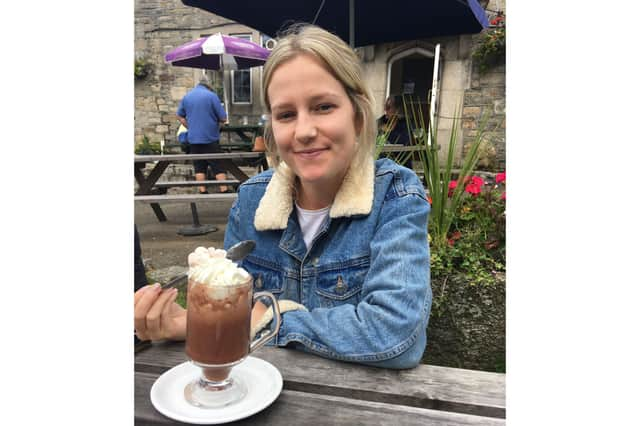

Exactly five years on from Kate’s stage 4 diagnosis, Sarah said: “Never in a million years did I think my child would get cancer and it still hasn’t really sunk in. I wanted to do something positive that could give us a focus and help us keep Kate’s memory alive.
“I didn’t want her to be defined by cancer because she had 24 years of her life without it and had so many interests, so we fundraise for various causes close to her heart. But the research carried out by Cancer Research UK was really important to Kate and her fiancé Ryan, so we’ve continued to raise money to support that in the hope we can prevent other families going through what we’ve experienced.”
Kate never used sunbeds and always tried to be safe in the sun. She also had no common visible signs of skin cancer. When she was younger, she’d had a harmless lump removed from her head and doctors believe that over time, sun exposure to where the lump had been may be how the cancer started.
Nearly 100 years ago, Cancer Research UK helped prove that UV radiation can cause skin cancer and since then has learnt more about how skin cancer starts and spreads, pioneering new ways to prevent, detect and treat the disease.
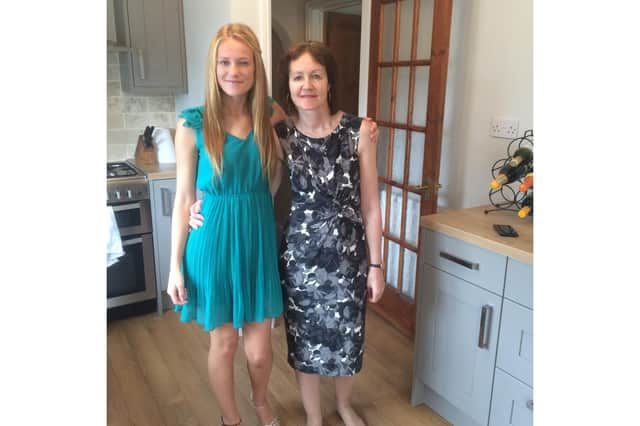
The charity’s scientists are developing a non-invasive skin patch to help detect skin cancer at an early stage. It will measure the acidity of skin fluid around suspicious spots. More acidic fluid could signal cancer, so people would be sent for a biopsy. It’s early stages, but it’s hoped this innovation could help ensure earlier diagnosis and save lives, while sparing some people from unnecessary procedures.
Cancer Research UK health information manager, Beth Vincent, said: “From harnessing the power of the immune system to seek and destroy the disease, to developing an app that could help people who’ve had melanoma check their skin, and creating targeted drugs - we’re powering progress. But we want to beat skin cancer for everyone and help stop the disease before it even starts.
“Getting sunburnt just once every two years can triple the risk of developing skin cancer, compared to never being burnt. Even on a cloudy day, the sun can be strong enough in Cornwall - and across the UK - to burn between mid-March and mid-October. So, we’re urging people to remember to use a combination of shade, clothing and sunscreen, with at least SPF 30 and 4 or 5 stars, to help protect their skin.”
Skin cancer is more common in people over the age of 50, but it can affect anyone of any age.
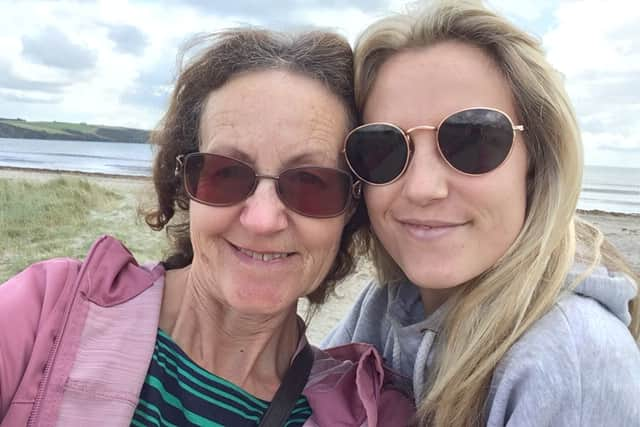
Sarah said: “Kate was very young when she was diagnosed and it felt like she was almost too young for doctors to even consider she could have cancer at her age. If I went to the GP at 63 with her symptoms, they’d consider cancer, but with Kate, she was so young, it felt like it wasn’t on their radar. She was so passionate about early diagnosis and would post about it on her social media.
“Kate had just got engaged during the pandemic in 2020 when she began to feel unwell with chest pains and fatigue. It was tough because Covid-19 meant it was hard to see doctors and as Kate was working as an occupational therapist at the Royal Cornwall Hospital during the pandemic, she thought her symptoms were due to the environment she was in.
“At one point a lump appeared in her neck, which we now know was the melanoma spreading, and doctors thought she just had swollen glands. Then she went on to develop a bad back, but nobody seemed to join the dots.
“Eventually, when she was so poorly she was unable to eat, she was admitted to hospital and didn’t come home for three weeks. They began testing her to find out what was making her so ill and the doctor said, ‘I think we’re missing something.’ Then I received a call from Kate who told me, ‘I think I’ve got cancer.’
“Because of Covid she’d had to receive the news alone which was awful, so we all jumped in the car and stood outside her hospital window waving, so she knew we were there with her. They did let us see her for half an hour, but it wasn’t until a few days later that they identified exactly what type of cancer she had and the prison sentence began.
“Initially they thought it was lymphoma but they then called us in to explain to us all that it was metastatic melanoma which had spread to her brain, skeleton, spleen, liver and lungs. We all looked at each other as they explained they could treat it but not cure it. I hoped that she would be able to live with it and thought that maybe everything would be ok.
“Kate began taking chemotherapy in tablet form and after three days she came home with various medications. She built up her strength and soon after we had a lovely break away in Penzance.
“At Christmas 2020, she looked a picture of health but shortly after her birthday in January, she started to feel unwell again and had found another lump. She tried more treatment options, including immunotherapy, but unfortunately they were unsuccessful. When she knew wasn’t going to make her wedding that summer, Kate was tearful and gave me a wedding invitation that she had designed, because she just wanted someone to have received one.
“It was heart-breaking, but she was so incredibly brave through it all. She never once asked, ‘Why me?’ and was always thinking of everyone else throughout.”
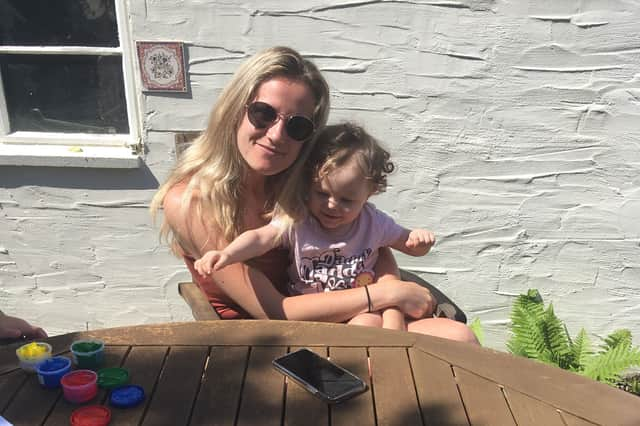
Kate sadly passed away on April 14, 2021 with her mum, dad, sister Hannah and fiancé, Ryan by her side.
Now her memory lives on through ‘Kate’s Fund’ set up by her family to support causes that were important to Kate, enabling her seven young nieces and nephews to become involved too and hear all about the auntie who loved them dearly.
So far, Kate’s Fund has supported mental health charities, animal charities, children’s charities and Cancer Research UK. This year Sarah and Ronnie presented their annual cheque towards research at Falmouth Race for Life, where they also handed out medals at the finish line.
Kate’s story tragically highlights the importance of the earlier detection of cancer, when treatment is more likely to be successful. As part of its Turning Point for Cancer campaign, Cancer Research UK wants to see a commitment to diagnosing more cancers earlier in the Government’s forthcoming National Cancer Plan for England.
Cancer Research UK spokesperson for the south west, Elisa Mitchell, said: “Too many cases are diagnosed at a late stage. The upcoming National Cancer Plan for England must improve cancer survival and transform cancer services. If done right, it could save countless lives.
“That’s why we’re so incredibly grateful to Sarah and her family for sharing their story and all that they do to support the cause. So, whether people sign our open letter to Government for a National Cancer Plan that delivers real change, spread the word about sun safety or donate to our research, we hope the public will help continue Kate’s legacy.”
For more sun safety advice or to donate to life-saving research head to cruk.org/sunsafety to find out more.
Melanoma skin cancer
Damage to our skin from the sun and sunbeds is the number one cause of melanoma. It’s the UK’s fifth most common cancer.
Who can get skin cancer?
Anyone can develop skin cancer. That’s why, according to Cancer Research UK, everyone should take care to enjoy the sun safely. But those at higher risk of the disease, include people with lighter skin tones and naturally light-coloured hair or eyes, as well as people with lots of moles and freckles, or a family history of skin cancer.
What are the signs and symptoms?
A new mole, or changes to the size, shape or colour of a mole or freckle could be a sign of skin cancer, but that’s not all. It could be a sore that doesn’t heal, a lump, an ulcer, or a patch of skin that looks out of the ordinary. When the disease has spread to other parts of the body, symptoms can include swollen lymph nodes, unexplained weight loss, breathlessness, coughing up blood, persistent infections and backache.
What should people do if they spot any changes to their skin or body?
Don’t ignore it. If people notice any unusual changes to an area of skin – or a change in their body that’s not normal for them - they should contact their doctor. Spotting cancer early saves lives.