
Nail polish product used by millions every week banned over health concerns in Europe - but not in the UK or US

A key ingredient in nail polish has been banned across Europe by health officials due to fears it could be toxic to people - but it will still be on sale in the UK and US.
The European Union prohibited the use of trimethylbenzoyl diphenylphosphine oxide, commonly referred to as TPO, in all cosmetic products after studies linked the chemical to long-term fertility issues. The ban came into effect as of yesterday (Monday September 1).
The ban only impacts Europe, however, and products containing the chemical will still be on sale in the UK and US. Beauty industry insiders expect a ban will be brought to the UK at the end of next year.
TPO is widely used in the cosmetic industry as a photoinitiator, which speeds up the drying time for gel nail polish, and also helps it to harden when exposed to ultraviolet light. It is also thought that the chemical helps gel polishes hold their colour for longer. But health experts have warned that due to the UV curing process, having a gel manicure can pose serious health risks.
Nail salons across the EU's 27 member states, as well as other countries that mirror its regulations such as Norway, have been informed that they must stop using TPO-based nail gel manicures and also safely dispose of any products that contain it.
Manufacturers must also now reformulate their products to be TPO-free so that gel manicures can still be offered to customers.
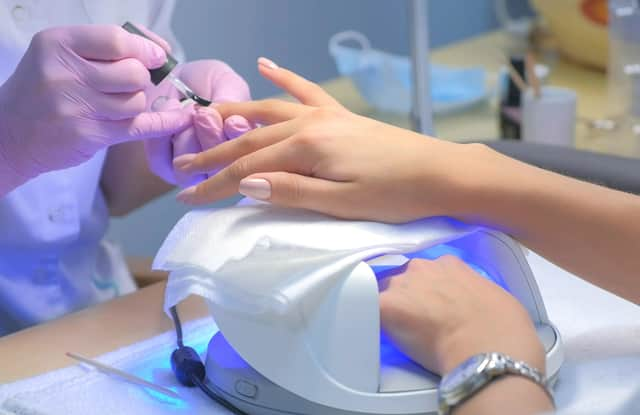

The US has not introduced any regulations about TPO products, though beauty experts predict the ban could affect American beauty salons if they buy their products from Europe.
Some experts have blamed cosmetic products, which are used by millions of women, for an increase in gynaecological conditions known to cause fertility issues. Studies have linked toxic chemicals known as endocrine disruptors to a range of health issues including diabetes, obesity and some cancers.
They say the most concerning chemicals are phthalates, also known as plasticisers, which are commonly used in nail polish, perfumes and hair products. When used in cosmetic products, the chemicals can seep through the skin, disrupting the body's production of natural hormones like oestrogen and testosterone - increasing the risk of breast cancer and fertility issues.
Professor Katie Burns, an experts in toxic chemicals and fertility at the Burns Laboratory at the University of Cincinnati College of Medicine previously told the Daily Mail: “These are chemicals that will stay in the body for a long, long time, hidden in fatty tissue. They impact the immune system, and in some women we believe this may trigger reproductive problems and endometriosis.”
Other experts, however, have said that the ban on TPO specifically is not supported by robust scientific evidence, and could actually cause financial issues. Doug Schoon, a scientific consultant at Schoon Scientific, warned in an open letter appealing the ban: “If left uncorrected, this decision will once again impose unnecessary economic burdens, waste safe products, and undermine confidence in EU regulatory proportionality.”
The Belgian retailer ASAP Nails and Beauty Supply have also publicly opposed the ban stating that it will cause 'major economic damage' to small businesses and that there is 'no human evidence of danger'.
Francesca Rapolla, senior affairs manager at the Cosmetic, Toiletry and Perfumery Association said that in some cases industries can appeal the regulations by proving that the risks posed by the product can be mitigated.
“In the case of TPO, the industry did not and could not defend the continued use of this ingredient in nail products mainly because it could not demonstrate that there are no alternative ingredients to this one,” she told Scratch magazine.