
New study suggests Covid-19 pandemic aged our brains-the experts weigh in
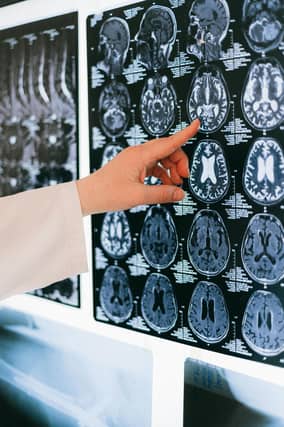

A new study based on brain scans, has found that the Covid-19 pandemic had a detrimental impact on brain health, even if you didn't end up catching the virus. A study of almost a thousand people showed that in healthy people, their brains aged faster during the pandemic-especially in older people. Whilst we know that COVID itself could impact cognitive decline, this new study also suggests that isolation and the uncertainity of lockdown could impact the brain-regardless of whether you actually caught COVID 19.
According to Sir Muir Gray, of The Oxford Longevity Project, isolation can massively impact how we age.
"Isolation, like was experienced during lockdown, is a major cause of depression-and it's been identified by world experts on dementia as a risk factor for dementia. Face to face interaction is always best. Aging well is not just about staying active-it's about staying connected. The most potent anti-aging medicine of all may be a conversation over tea or a walk with a friend.
"The first publication on the impact of isolation on the wellbeing of isolation on older people was a paper published in the District Nursing Journal in 1982 called 'Brainwashing in Oxfordshire" The authors used information about how young people could be 'brainwashed' simply by leaving them in isolation and showed that many older people were isolated. At the Oxford Longevity Project, we believe everyone should aim to increase their face to face and digital engagement as part of our Personalised Plan for Living Long Better.
Brain injury expert Natalie Mackenzie explains that simply being around others engages a range of cognitive skills that are vital for our wellbeing.
"Our brains are wired for connection. When we're around others, we release feel good chemicals like dopamine and oxytocin, which help regulate mood and keep our cognitive systems firing on all cylinders. Take that away, and the brain starts to struggle. Just being around other people engages a number of different cognitive areas and we obviously didn't have this during lockdown.
"Isolation ramps up stress levels, in the body and the brain, triggering a flood of cortisol. While cortisol is helpful in short bursts, chronic stress can wreak havoc on the brain, particularly in areas like the hippocampus (which handles memory) and the prefrontal cortex (responsible for decision making and focus). Over time, this can lead to brain fog, poor concentration, and even accelerated cognitive decline, " she explains.
The results of the study, published in Nature Communications, also showed some gender differences, suggesting that men's brains aged more than women's during this period.
"It's always fascinating to see how gender differences play a role in brain health, especially under stress, given the physiology is the same between genders, but the 'wiring' from experience differs and therefore behaviour and function differ.
Estrogen is like a superhero for the brain. It helps regulate mood, protect against stress, and even supports memory. While men don't have the same hormonal backup, women's estrogen levels may have provided some extra resilience during periods of isolation.
Women are often better at maintaining social connections, even in tough times. Whether it's a quick Zoom call, a WhatsApp chat, or a socially distanced coffee, these interactions help keep the brain engaged and reduce feelings of loneliness," Natalie Mackenzie explains.