
Optical illusions: Can you trust your eyes as psychologist reveals how to boost your brainpower
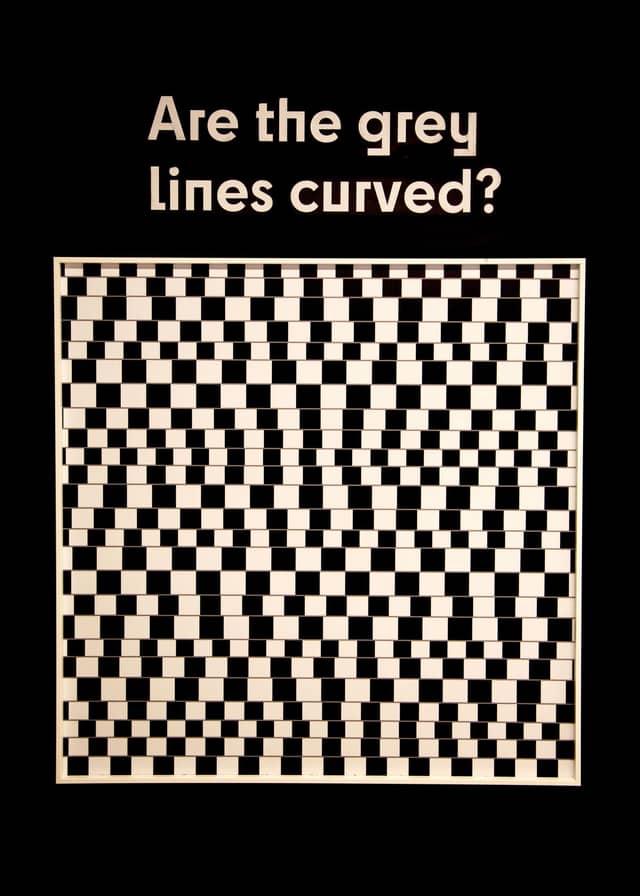

At first glance, the image below appears to show curved lines—but is that really the case? Optical illusions like this challenge the way our brain processes visual information, making them a powerful tool for sharpening cognitive skills.
Award-winning psychologist Dr Lalitaa Suglani reveals why it is important to engage in activities that stimulate the brain, including optical illusions, learning a new language and puzzle solving.
Speaking to Twist Museum, an illusion museum offering guests a fully immersive experience, Dr Lalitaa Suglani shares the best methods to engage your brain and improve the skills related to intelligence.
Dr Lalitaa shares:
1. Optical Illusions
Optical illusions, such as the one above, are a great way to exercise the brain and can contribute to skills associated with intelligence such as pattern recognition and cognitive flexibility:
Pattern recognition: is a key aspect of problem-solving and reasoning which is linked to IQCognitive flexibility: being able to shift perspectives and adapt enhances abstract thinking
2. Puzzle Solving
Ensuring puzzle solving activities like crosswords, sudoku or logic puzzles can help to strengthen reasoning and problem solving.
3. Learn a new skill
Activities like learning a new language or learning how to play a new instrument can help to stimulate multiple areas of the brain and neuroplasticity (the brain’s ability to change and adapt).
4. Mindfulness
Not only is engaging in mindfulness practices good for your stress levels, but it can help to improve brain function. Meditation and mindfulness helps to reduce mental clutter and improve a person’s focus and memory
5. Physical exercise
Taking part in a physical activity and regular exercise can help to improve blood flow which can enhance cognitive function.
Why is it important to challenge the brain with IQ-boosting techniques?
“Challenging the brain with perception-based activities, like optical illusions, is like giving your mind a workout and can help generate improvements in four key areas of cognitive function. Engaging with activities like illusions train the brain to adapt, shift perspectives and tolerate ambiguity. It encourages mental flexibility - skills that enhance problem solving and critical thinking.
“Perception-based challenges also push us to think outside of the box. Creative thinking encourages alternative interpretations and unconventional solutions to help boost creativity.
“Concentrating on brain stimulating activities can help the mind to focus and be a form of mindfulness in itself. It requires attention to detail, promoting mindfulness and reducing stress through immersive engagement.
“Activities like this keep the brain agile by stimulating new neural pathways which can help to slow cognitive decline over time.”
Introducing Dr Lalitaa Suglani
Dr Lalitaa Suglani is a leading and award-winning psychologist specialising in mental wellbeing, anxiety and relationships. Dr Lalitaa is the author of High-Functioning Anxiety: Five Steps to Learning You Are Good Enough and previously hosted her original podcast Therapised. Dr Lalitaa has been cited across mainstream media including MailOnline, Hello! Magazine, Harper’s Bazaar, The Times and LadBible, and appeared on Abbey Clancy’s Exhibit A podcast and Happy Place hosted by Ferne Cotton
Introducing Twist Museum
Twist Museum is located in central London’s iconic Oxford Circus. Through a combination of science and art, the museum aims to bring people together, challenging them and encouraging them to discuss and reflect on how we all perceive the world differently.
The letters TWIST are an acronym for “The Way I See Things”, a phrase that has formed the nucleus for all the thinking at the museum — that people’s interpretations of reality and understanding of the world around them is shaped by their unique, individual perspective. It is the perfect playground for your perceptions.
Illusions are distortions of perception, where the brain misinterprets sensory information. These illusions can affect various senses, including vision, hearing, touch, and cognition. Below is a list of different types of illusions categorized by sensory modality.
Illusions span across multiple sensory and cognitive domains, demonstrating the complexity of human perception. These phenomena highlight how our brain constructs reality based on sensory input, expectations, and contextual clues.
Twist Museum helps visitors to discover, explore, and have fun through educational and entertaining exhibits that showcase the history and science of illusion. It offers an interactive and immersive experience that allows visitors to participate in and experience the illusions themselves in an engaging and informative way.
For more information, visit: https://twistmuseum.com/