
Smear Test: Everything you need to know about funding boost to make cervical screening more comfortable
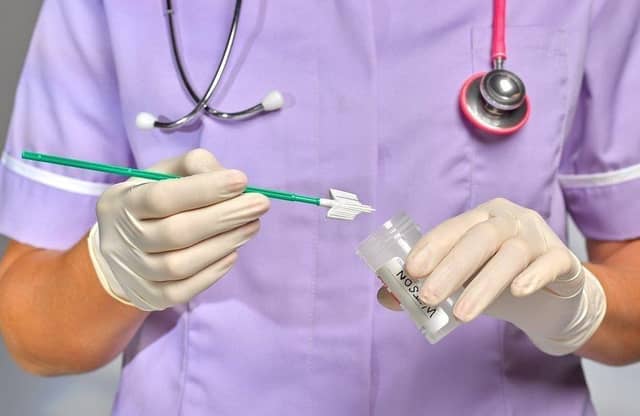

A study in Cambridge that could help reduce inequalities in the prevention and early detection of cervical cancer has been awarded £457,000 from Cancer Research UK.
Researchers at Cambridge University have created a more comfortable method of collecting potentially harmful cells in the hopes that this could encourage more people to attend their cervical screening appointment.
What is a cervical screening?
A cervical screening, also known as a smear test, is a way of preventing cervical cancer. The test itself does not check for cancer but instead checks the health of the cervix and tests for a virus called human papillomavirus (HPV).
High risk HPV can cause cell changes in the cervix which may develop into cancer over time. Abnormal cells found during screening can be monitored treated to prevent cervical cancer.
The screening itself involves taking a sample of cells from your cervix for testing which are collected using a small plastic brush.
Following the screening the cells are sent to a laboratory for analysis.
A new method of cervical screening
According to cancer research UK, around three in 10 people in England are currently overdue for their cervical screening. A survey found that experiencing pain previously and anticipation of pain were some of the biggest barriers stopping people attending their cervical screening.
Professor Doorba, who is leading the Cervical Cell Lifts Study, wants to improve this process. He has designed a method that involves taking the top few layers of cells from the cervix onto a small disc which will help minimise discomfort and reduce the risk of infection which could encourage more people to participate in screening.
Rutendo Nyagumbo, Clinical Trials Practitioner for the Cervical Cell Lifts Study, said: “During a previous iteration of the study comparing the standard cervical screening process to this new method, some patients reported that scraping cells off the cervix, as done currently, could be a little bit uncomfortable, whereas we found that a lot of people could not feel the disc being applied to the cervix unless we told them it had been applied.”
The future of cervical screening
Last month it was announced in England that cervical screening intervals for those aged 25 to 49 will be extended from three to five years, following a negative HPV result, starting this month.
If someone does not have high-risk HPV and does not have a recent history of HPV, then they are at a low risk of cervical cancer and can be safely invited back for screening in five years’ time.
Those aged 50 to 64 will be invited for screening every five years as standard. The NHS has explained that the change for 25 to 49-year-olds will not affect any current due dates. But from 1 July 2025, those whose screening tests show no signs of HPV will have their next due date set after five years, instead of three.
NHS England also announced that DIY test kits will be available from January 2026 for women who have delayed coming forward for a cervical screening.
Only 68.8% of women currently attend their cervical cancer screening, significantly lower than the NHS England target of 80%.
Missed appointments can be due to embarrassment, discomfort and lack of time as well as religious or cultural concerns. Younger women, those with a disability, ethnic minority communities and LGBT+ groups are more likely to miss an appointment.
A recent trial showed the rollout of home test kits across England could increase the proportion screened to 77% over four years.
The kits are sent in discreet packaging with return postage pre-paid.
Cancer Research UK has also said that in-person appointments could change in the future with different methods of screening becoming available to suit individual needs.
The new disc technique is being trailed at Addenbrooke’s Hospital in Cambridge and has already detected abnormal cells in 500 people. If the research is successful, this new method could be rolled out across GP surgeries across England for initial cervical screenings.
Professor Doorbar added: “This is a promising step toward a future where cervical cancer is not only preventable but also detected and treated earlier and more comfortably.”