
'Traumatised' graduate hospitalised on Fiji trip
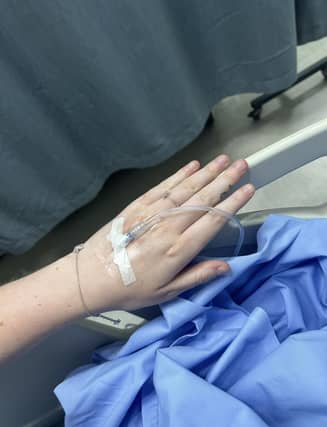

A British graduate was left 'traumatised' when she was hospitalised after swimming in a waterfall while volunteering in Fiji - thanks to a waterborne parasite
Isabelle Lythgow, a Salford University graduate, went on a six-week volunteering trip to Fiji where she stayed in the village of Nairukuruku for some local youth work.
But the 23-year-old began feeling unwell a few hours after going for an hour-long swim in the village's waterfall alongside locals. Isabelle said she attended a bonfire in the evening and started to feel dizzy, have lower back pain and tingling limbs.
The graduate, who struggles with emetophobia, said she was sick every 30 minutes during the night, lasting around 12 hours. When Isabelle managed to get a taxi to the hospital, she said she was immediately put on an IV drip treatment and was advised she should have gone sooner.
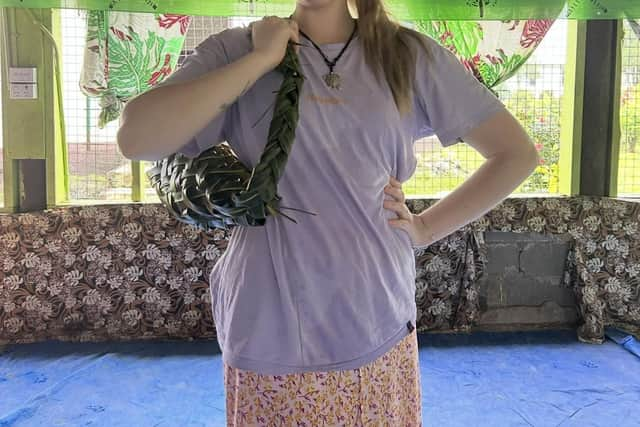
Doctors reportedly told Isabelle she had most likely contracted a waterborne parasite, which they said was frequent among tourists and volunteers. Isabelle, who is now a mental health nurse, said she had only been drinking bottled water and had even avoided meat to stop herself from getting ill due to her phobia.
Despite admitting that it took months to replace the weight lost during the traumatic ordeal in August 2023, the traveller says it has not put her off jetting off to unusual destinations. Isabelle, from Bury, Greater Manchester, said: I'm absolutely terrified of being sick, I have emetophobia. It was my biggest fear before going.
I warned everyone that if it happens, it won't be an easy thing for me, it will be traumatic. That night we went to a bonfire and I felt a little bit off but I didn't think much of it. I went to bed, woke up in the middle of the night feeling really sick and then from then on it was every 30 minutes.
If I wasn't lying flat on my back it would be longer but if I was standing up it was on the dot, every 30 minutes for maybe 12 hours. I couldn't even keep water down, I had to take the tiniest sips of water.
It was really bad, we were in the middle of nowhere so it's quite difficult to get a taxi to the hospital. I was really dizzy I would get really tingly limbs I ended up getting a taxi and had to stop the car twice to be sick. I got to the hospital and I got seen straight away and was put on an IV.
The doctor asked me why I didn't come sooner but I wanted to enjoy my trip. The doctor said they see this quite a lot with people from other countries and volunteers. I was panicking because it was really traumatic. I purposely avoided the water, I used a water bottle and brushed my teeth with bottled water so I was really careful.
Isabelle said she was discharged after four hours of IV and was told to only drink bottled water. The volunteer said her stomach had shrunk and it took a while for her to gain back the weight and muscle she had lost, while she was anxious for the remaining days of her trip.
Despite being hospitalised, Isabelle said she would do it all over again and advises other travellers to not be scared to try new experiences. Isabelle said: My stomach had shrunk and it took a long time for me to get my muscles back, I lost so much weight.
I was really panicked and anxious for the next couple of days but I got through it anyway. I'm not scared, I absolutely love waterfalls, I don't think it will ever stop me from having these experiences. But you genuinely can't put a price on life experiences and travel. I would never say don't do something out of fear of getting poorly, you can get poorly anytime.
Life is too short and if you're worrying about that you would never experience new things. I would do it over again a million times.
WHAT ARE WATERBORNE PARASITES?
You can become infected if you come into contact with contaminated water - for example, when paddling, swimming or washing - and the tiny worms burrow into your skin. Once in your body, the worms move through your blood to areas such as the liver and bowel.