
Barrister warns 'The BritCard is an identity scheme none of us should trust'

The government’s proposed BritCard may sound like a simple way to prove your right to work or rent, but barrister Raj Joshi warns it’s something far more serious. Drawing on history, law and lived examples, he explains why this ID scheme could threaten civil liberties for everyone.
You may not have heard of the “BritCard” yet, but you will. This new identity scheme is being quietly prepared by the UK government and, if introduced, it could change the way we all live, work and rent in this country. As a barrister, I’ve seen how laws evolve once they’re on the books. My advice is to take this one seriously and not to let the harmless-sounding name fool you.
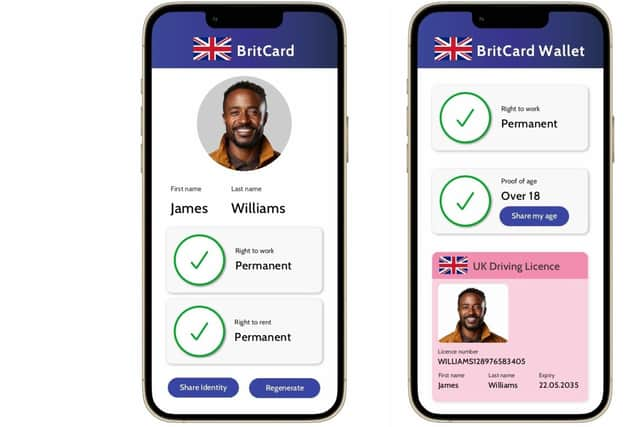
The BritCard is expected to launch within three years. It will be mandatory for all adults, cost the public around £400 million to set up, and a further £5–10 million a year to run. Its stated purpose is to make it easier to check whether someone has the legal right to work or rent a home. The trouble is, we already have laws in place that do exactly that — and they come with serious penalties.
Section 22 of the Immigration Act 2014, for instance, already makes it illegal for landlords to let property to someone without lawful immigration status. The same Act lays out financial and criminal sanctions, with the 2016 update introducing prison sentences of up to five years. For employers, meanwhile, the Immigration, Asylum and Nationality Act 2006 requires identity checks, passport scans and document retention. Failure to comply can result in a civil penalty of £20,000 per worker, and the Immigration Act 1971 makes it a criminal offence to work illegally.
So if these laws are already in force — and actively used — what exactly is the BritCard for?
The government hasn’t been especially clear. That in itself should raise questions. If the aim is to streamline checks, there are already digital Home Office tools available to landlords and employers. What the BritCard introduces is a new layer of centralised control: a single identity document that determines your legal status for work, housing and, potentially, much more.
Identity cards are, of course, not new. And the history of such schemes is rarely encouraging.
In Nazi Germany, mandatory ID cards listed racial and religious background. Jewish citizens were required to adopt the middle names “Israel” or “Sara”, and their documents were stamped with a red “J”. These records allowed the state to restrict access to work, services and movement — and ultimately to round up more than half a million people for forced deportation.
In apartheid South Africa, the infamous dompas system legally confined black South Africans to controlled areas. From the age of 16, individuals were forced to carry a passbook showing residence, employment and travel permissions. Between 1960 and 1981, over 10 million people were arrested under pass laws, with 377,000 arrests in the first year alone.
Israel’s current system has drawn similar criticism. In 2022, Amnesty International formally accused the Israeli government of committing the crime of apartheid under the 1976 International Convention on the Suppression and Punishment of the Crime of Apartheid and the 1998 Rome Statute. Palestinians in the occupied territories are denied citizenship, and many are treated as stateless.
Their legal right to live and work is tied to military-issued ID cards which restrict movement and access to services. This has created a tiered legal structure based not on conduct, but on identity — something Amnesty says amounts to institutionalised oppression. The historical irony is stark: a state founded in the shadow of genocide now enforcing internal ID systems that human rights groups argue contribute to systemic discrimination.
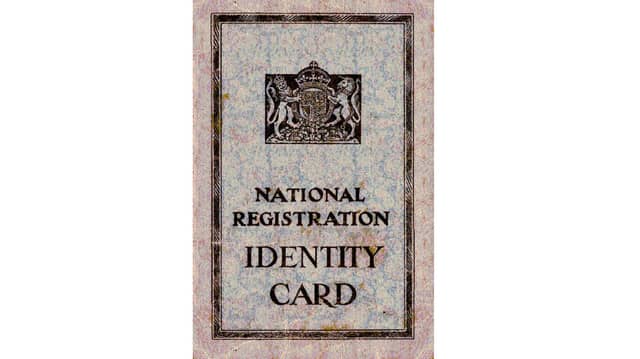
Even in Britain, ID schemes haven’t ended well. The National Registration Act 1939 introduced wartime identity cards for civilians, but by the 1950s, the public had had enough. Police were using the cards to demand ID for minor infractions, including overstaying in car parks. In the case of Wilcock v Muckle (1951), a motorist who refused to show his card on principle was prosecuted, only for the Lord Chief Justice to remark that the law was turning “law-abiding subjects into lawbreakers”. It was Winston Churchill’s Conservative government that finally scrapped the scheme in 1952.
More recently, the Identity Cards Act 2006 introduced a biometric ID system under Tony Blair’s Labour government. After sustained public opposition, including the NO2ID campaign, it was scrapped in 2010, and the data destroyed under the Identity Documents Act.
The law already gives the government the tools it needs to check legal status. What the BritCard offers is not a solution to a problem, but a shift in how we relate to the state — and how the state tracks us.
That’s why legal safeguards matter. Under Article 8 of the European Convention on Human Rights, we are protected against unnecessary state interference in our private lives. Article 14 protects us from discrimination. Any system that monitors our movements, employment and housing needs a clear legal basis, must be necessary in a democratic society, and must be proportionate to the risk. The government would need to show how the BritCard meets that test. So far, it hasn’t.
Schemes like this rarely stay within their original limits. They grow quietly, not always through new Acts of Parliament, but through statutory instruments, ministerial orders and guidance documents. Local authorities adopt them. Private companies rely on them. And once access to basic services is linked to a central identity system, it becomes harder and harder to opt out.
The risks with BritCard may sound remote, but they’ve been imagined before. In Terry Gilliam’s 1985 film Brazil, a simple clerical error caused by an insect falling into a printer results in the wrongful arrest, torture and death of an innocent man. The film satirises a dystopian bureaucracy where identity is everything and even fatal mistakes are procedurally justified. While fictional, it’s a sharp reminder of what can happen when administrative systems lose sight of the people inside them.
We already have the law. We already have penalties. What we don’t need is a new database that tells us who can work, rent or even ‘exist’ in the eyes of the Home Office.
The BritCard is a solution in search of a problem. It opens the door to more control and fewer rights. If we care about what kind of country we live in, now is the time to say ‘no’.
Raj Joshi is a senior barrister and former chair of the Society of Black Lawyers. He was named among the Top 10 Asian Lawyers in the UK and the 100 Most Influential Asians in the UK. He has advised the Judicial Studies Board, and served as an adjudicator, campaigner, and legal advisor across multiple institutions tackling race, justice, and equality.
Story by Belters News