
Professional driver reveals the trickiest driving manoeuvres for British drivers
Taking your practical driving test can be one of the most nerve-wracking parts about getting your driver’s license. And with average wait times for UK driving tests currently at 15 weeks, the process can feel even more daunting.
The car experts at Vertu analysed Google search data to reveal which driving manoeuvres are giving UK drivers the most trouble. ‘How to parallel park’ topped the list, with 9,900 searches per month.
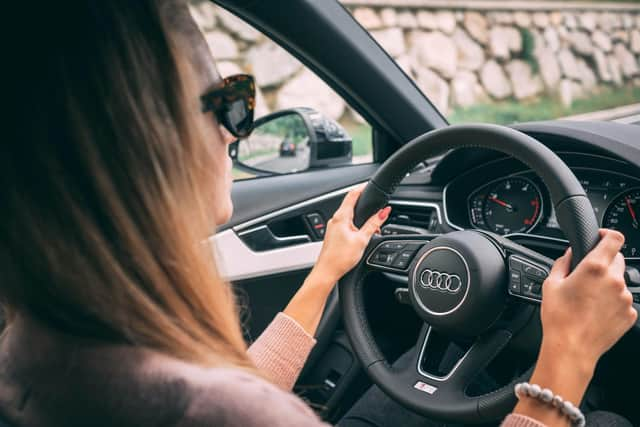

And in general, parking appears to be a particularly tricky task for drivers old and new. Both ‘how to reverse bay park’ and ‘how to forward bay park’ were popular searches, ranking second and third, respectively.
In response to these findings, professional racing driver, Tom Chilton, says: “The key thing is to just relax and think about the bigger picture. And, like anything, practice makes perfect. So, if you don’t feel ready to do your test then get out on the road and practice more.”
So, to help learner drivers master these tricky manoeuvres, the car experts at Vertu have teamed up with professional driver, Tom Chilton, to teach you how to tackle them.
How to parallel park
Almost infamous for its difficulty amongst drivers both old and new, this manoeuvre involves parking your vehicle parallel to the road, typically in a row of other cars.
Where many drivers seem to struggle is with the spatial awareness and precision required to perfect your parallel parking. Unfortunately, however, there’s no quick fix – only by practicing regularly and familiarising yourself with your vehicle’s dimensions and blind spots can you get this driving manoeuvre down to a tee.
The trick is to practice parallel parking in low-stress environments, such as quiet residential streets and empty car parks, rather than on congested roads or busy parking bays.
How to reverse bay park
Whether you’re backing onto your driveway or reversing into a parking space at the supermarket, many drivers opt to reverse bay park to give them better visibility when leaving the spot – but that doesn’t make this manoeuvre any easier.
And, similar to parallel parking, practice makes perfect. You’ll want to keep a slow and steady pace while you’re reversing to give maximum control, while still constantly checking your mirrors and blind spots. There’s absolutely no rush either – if you park outside the lines of the bay, then simply move out of the space and readjust at your own speed.
Until you feel more confident, we recommend reverse bay parking in quieter car parks, where you’re not worried about scratching or bumping into other parked vehicles.
How to forward bay park
While generally considered slightly easier than reverse bay parking, front bay parking can still pose a challenge to unconfident drivers, and those still familiarising themselves with a new vehicle.
To help, ensure you’re a good distance from the bay you’ve targeted. In general, the greater the distance, the better chance you have to perfect your front bay parking. The idea is to give you the widest turning radius possible – as well as more time to adjust your steering – before you get to the tight parking bay.
Make sure you maintain a slow speed throughout too. Not only will this give you better control of the vehicle, but it lets you more easily react to other cars or pedestrians around you.
How to emergency stop
An emergency stop is one of the most important and least practiced driving manoeuvres – which could be why British drivers are searching for guidance. After all, you don’t want to have any uncertainty when an unexpected hazard appears in the road.
There are a few things to keep in mind here. It is worth reminding yourself of the actions you must take in an emergency stop situation.
Start by pressing down on the brake pedal as hard as possible, keeping both hands on the steering wheel until you come to a complete stop. You’ll also want to keep the car in a straight line (if possible) to stop it potentially spinning out of control.
How to do a hill start
A slightly more situation-specific query than other driving manoeuvres, a hill start is when you start the vehicle from a stopped position on an uphill slope or incline – which can be particularly tricky for those driving manual cars.
First and foremost, ensure your handbrake is on to prevent the car from rolling backwards. Then push the clutch down and select first gear, before gently pushing the accelerator and bringing the clutch up to the biting point. Once it’s safe to move, release the handbrake, feel the clutch bite more, and move the car forwards and up the hill.
For more motoring advice and affordable car collections, head over to Vertu. https://www.vertumotors.com/