
Driven to distraction: One in ten Brits admit to illegally texting at the wheel


Millions of British drivers are playing a dangerous game of Russian roulette on the roads, with 11% admitting to texting while driving, shocking new research from family connection and safety app Life360 reveals today. Despite this widespread habit, a whopping 96% of Brits consider themselves to be ‘careful drivers’, exposing a stark national hypocrisy when it comes to road safety.
- A nation of 'careful' drivers? New research reveals 11% of Brits regularly text while driving, yet a staggering 96% still consider themselves to be careful drivers
- Risky business: Drivers confess to watching videos (3%) and scrolling social media (3%), while 703,384 people (1%) even admitted to sexting while in control of a vehicle
- "Are you there yet?" The main reason for texting is to reassure loved ones, with drivers admitting they message to say they're "on their way" or to give a location update
- Don't trust the driver? Brits admit they trust their partners (16%) and children (15%) the least behind the wheel
The research found that the primary reason for this risky behaviour is the desire to reassure loved ones. One in twelve drivers (8%) admit to messaging family to let them know their whereabouts, either by texting "I'm on my way" (6%) or updating them on their exact location (5%).
But the dangerous distractions don’t stop at well-meaning messages. A jaw-dropping number of drivers confessed to even riskier behaviours, with 3% saying they watch videos and scroll social media while behind the wheel. 703,384 people (1%) even admitted to sexting while driving, which is comparable to the population of Sheffield’s urban area.
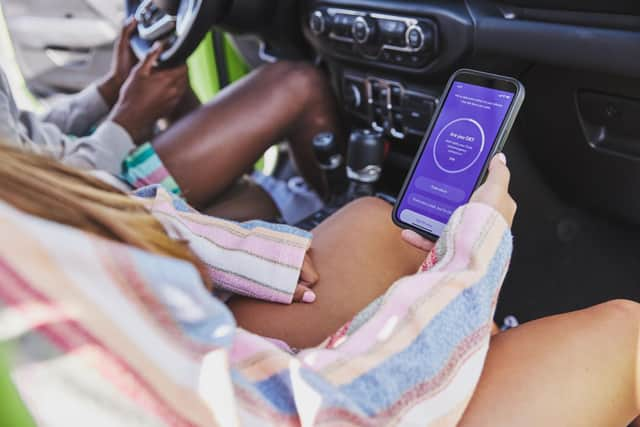
Regional data from Life360’s Driver Reports paints an even more worrying picture:
- Birmingham drivers rank as the UK’s worst offenders for hard braking and rapid acceleration, a clear sign of distracted or erratic driving, while Liverpool drivers offend the least.
- London holds the dubious title of the ‘crash capital’ of the UK, with the highest number of collisions detected by the app, followed by Birmingham and Liverpool.
- Meanwhile, London, Edinburgh and Newcastle have a need for speed, clocking up the most speeding alerts nationwide. In fact, drivers in London are 37% more likely to speed than those in Sheffield and, unsurprisingly, 19–24-year-olds are consistently the most likely to accelerate rapidly across all regions.
However, safer driving can be found elsewhere:
- Scotland leads the way in responsible driving, with the lowest phone usage per capita.
- Meanwhile, Wales has the lowest Danger Index overall, followed by Scotland.
The findings suggest drivers in Birmingham are the UK’s most distracted drivers on the road, with high scores across key risky behaviours, scoring highly across crashes, hard braking, risky driving, danger index and acceleration, followed closely by London and Newcastle.
When asked what they considered the most dangerous driving behaviours, over a quarter of Brits (28%) identified messaging while driving – the very act many admit to doing themselves. Beyond phones, drivers also cited noisy passengers (27%) and cheeky pets (6%) as major distractions.
This national anxiety around the safety of loved ones is laid bare by who we trust the least on the roads. Our partners (16%) were voted the least trusted drivers, closely followed by our own children (15%).
The research comes as Life360 highlights how technology can eliminate the temptation to text and drive. The app’s safe driving features allow families to see each other's real-time location on a private map, with automatic alerts notifying them when a loved one arrives safely at their destination, removing the need for "I'm here" texts.
Additional features that help keep members safe on the road include Driver Reports (that highlight risky behaviour like hard braking, speeding and phone use) Breakdown Assistance, Crash Detection (which will alert your Circle if a crash over 25mph is detected), and Emergency Services Dispatch for when help is needed fast.
Already, almost a quarter of Brits (24%) use technology to monitor the location or driving behaviour of friends and family. And the appetite for it is growing, with almost a third (32%) saying they would use location-sharing tech to keep an eye on loved ones, particularly their children (15%), to ensure they are safe.
Annie Winterburn, leading UK driving expert, comments: “It’s clear that as a nation we still find it hard to resist the urge to pick up our phones while driving, often just to let loved ones know where we are, even though we all know how dangerous it can be.
"That’s why it’s so important to plan ahead. Before setting off, check for traffic updates and potential delays, consult a live map to get an accurate journey time, and share your location with friends or family so they can follow your progress. Text them just before you leave to let them know you won’t be contactable while driving, and if you do need to send a message enroute, pull over somewhere safe like a service station. Simple habits like putting your phone on ‘Do Not Disturb’ and making sure it’s fully charged (or bringing a power bank) can also help remove the temptation to check notifications.
"With Life360’s safer driving features, your loved ones can see where you are in real time - giving them peace of mind and helping you stay focused on the road. It’s a win-win for everyone.”
Annie provides her tips on safer driving:
- Check ahead of time for traffic and potential road collisions to avoid
- Consult a live map in order to gauge an accurate journey time
- Share your location with friends and family ahead of time
- Text your loved one(s) just before you set off and let the person know you won't be contactable for X amount of time
- If you need to message whilst you are on your way, pull over somewhere safe e.g. a service station and ensure your phone is put safely away after
- Put your phone on Do Not Disturb in order to ensure you're not distracted by social media notifications etc.
- Make sure you've got plenty of battery / a charger or a power pack so you don't suddenly stop sharing your location
- Always use your phone hands-free if you’re making or receiving calls behind the wheel