
Friends green-united! Revealed: The social ripple effect driving Brits to go green
Half of Brits want to become more eco-conscious to look after the planet and 42% are keen to participate in local green initiatives. With a majority relying on recommendations from social circles to make decisions, a third would install solar panels if their friends, family, or neighbours did first.
Brits are looking to go green, with almost half wanting to become more eco-conscious to save the planet – but many are waiting for their mates to go first, new research reveals.
An impressive 47% of UK adults are keen to be greener, but many are unsure where to start, according to data from iChoosr, an organisation accelerating the renewable energy transition. The organisation’s study shows that the majority of Brits rely on recommendations from friends, family, and neighbours to make decisions (60%), outweighing those who do so based on things they see on social media (28%).
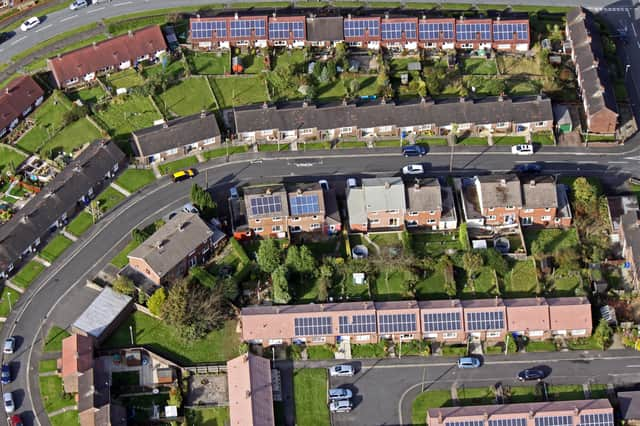

Added to this, one third are more likely to make positive life changes when a trusted friend or neighbour does so first (34%) and one quarter say they feel more comfortable trying new things with a trusted group (27%). For much of the UK, the power of peer influence is undeniable and the same can be said when it comes to shaping eco-friendly habits. From installing solar panels to conserving energy, local word-of-mouth can be leveraged to promote green behaviours, creating a ripple effect of positive change within communities.
Here are the top eight ranked eco actions Brits are ready to embrace if their friends, family, or neighbours lead the way:
- Support recycling programmes
- Install solar panels at home
- Conserve more energy at home
- Buy more second-hand and pre-loved items
- Choose eco-friendly cleaning and cosmetics products
- Reduce meat consumption and eat more plant-based meals
- Use less private transport and opt for walking, cycling, or public transport
- Install a heat pump at home
Brits are also eager to take part in community-driven environmental initiatives, with 42% interested in participating in local green projects – such as those backed by councils. One quarter say they like the idea of working with their community to make the local area more environmentally friendly (25%) and one in five would consider joining community energy initiatives like iChoosr’s group-buying schemes (21%).
Adam Parvez, Behaviour Lead at iChoosr, says: "With one third of Brits interested in installing solar panels (32%) and one in five interested in installing a heat pump (18%), there's a clear appetite for more eco-conscious behaviour in the UK. The data confirms our view that personal recommendations and visible actions from trusted individuals significantly influence decision-making, particularly for adopting greener habits.”
He continues: “Seeing others act builds confidence, removes uncertainty, and helps decisions feel easier and safer. This is especially true for decisions that feel risky, complex, or expensive - like switching to solar or heat pumps. Our goal is to empower individuals to make confident, informed choices, removing barriers to renewable energy options by making them more affordable and accessible. The power of local influencers and trusted peer networks can create a ripple effect of positive change, leveraging community campaigns with shared goals that effectively promote sustainable practices.”
iChoosr’s schemes enable large-scale adoption of renewable energy sources, including solar panels, battery storage, EV chargers and heat pumps, as well as energy switching to renewable electricity tariffs. Its digital platforms simplify decision-making and reduce costs through community group-buying, connecting energy-conscious residents to qualified energy suppliers and installers.
Globally, more than 11 million households have joined iChoosr’s schemes so far, including Solar Together – a group-buying solar panel scheme, the Switch Together heat pump scheme - offering access to professional and competitively priced heat pump installations, and Big Community Switch – a collective energy switching scheme to save money on bills.