
Solar panels can save homeowners £1,000 annually on electricity bills, with costs covered in five years
Homeowners who add solar panels to their homes can now cover the cost of the work in as little as 5 years – and make savings of up to £1,000 per year on electricity bills after installation costs, according to renewable energy experts Geo Green Power.
Around 1.3 million UK homes now have solar panels installed, and Labour’s recent election win promises to accelerate adoption, delivering a £6.6 billion cash injection to install solar panels on five million homes.
UK homeowners have historically been hesitant to adopt solar energy, but this trend is rapidly changing. Government incentives and policies, decreasing installation costs, rising energy prices, and technological advancements have all contributed to making solar power a more attractive option.
“Demand for rooftop solar power installations in the UK grew significantly in 2023, with domestic installations reaching record levels, with a nearly 30% increase compared to the previous year,” says James Cunningham, chief executive of Geo Green Power, and it’s a trend he anticipates will continue. “It’s a number that we only expect to grow in 2024 and beyond, particularly with the pressure to bolster the UK’s green credentials, and calls for all new homes to be fitted with solar panels to boost energy security.”
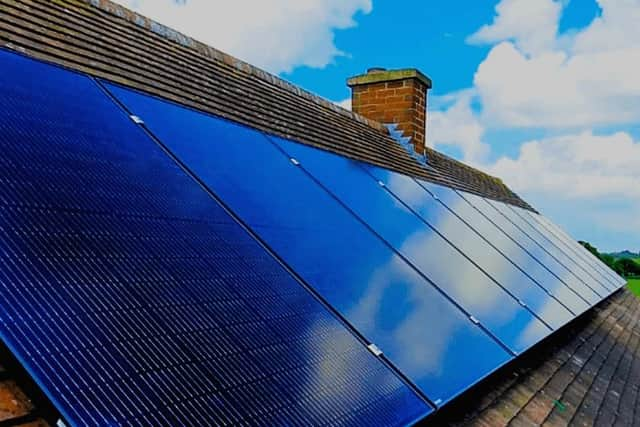

If you're considering joining this growing number of solar adopters, here's everything you need to know before installing solar panels on your home.
How much do solar panels cost?
Domestic systems are generally made up of between 10 and 15 panels, each of which generate between 200W and 350W of energy, bringing the average cost for a three-bedroom semi-detached house with four occupants to around £6,500.
“Naturally the initial outlay for solar panels can be seen as a barrier for many UK homeowners,” says Cunningham. “But as many households face the prospect of consistently high energy bills, it's time to shift our mindset from the short-term costs of these systems to the long-term gains they provide — whether that's saving money on bills, reducing carbon emissions, or increasing property value.
The good news is that households can now access grants for some eco-friendly home improvements thanks to a number of Local Authority and National Government grants. Domestic solar PV investments also deliver a full payback within 5-7 years.
How much could you save on electricity bills?
The potential savings from investing in solar panels, and payback period, can vary based on factors such as the initial cost for the system, available sunlight, your home's location, energy usage, and any applicable government incentives or feed-in tariffs.
Opting for solar panels can yield substantial benefits, with households potentially saving up to £1,000 per year on electric bills, particularly when installed on a south-facing roof with ample sunlight.
Cunningham added: “Typically, in the UK, the payback period ranges from 5 to 7 years. However, with the decreasing costs of solar technology and the rising cost of traditional energy sources, payback periods are often becoming shorter, making solar a more attractive investment for homeowners in the long run.”
Reduced carbon footprint
A typical solar panel will save over 900kg of CO2 per year that results in a carbon payback period of ~ 1.6 years, according to The Renewable Energy Hub.
“Solar energy systems do not produce air pollution or emit CO2, unlike traditional electric power generation, which was the second-largest source of CO2 emissions in 2022 according to the EPA,” said Cunningham
“Although there is an environmental impact from manufacturing and installing solar panels, this impact is usually balanced out within one to four years, depending on the system.
“Solar panels are not emissions free and will not solve all our environmental challenges on their own. They will, however, have a positive impact on your carbon footprint.”
Increased home value
The increase in a home's value due to solar panels can vary widely depending on several factors such as the size and efficiency of the solar installation, the local real estate market conditions, and the preferences of potential buyers. In 2022, around 80% of first-time buyers were considering a green home with their main motivation being that green homes are better for the environment.
A report from Solar Energy UK found homes with solar panels can increase in value by £1,800, while some studies suggest that solar panels can add anywhere from 1% to 10% to a home's value. However, it's essential to recognise that these figures are averages and that the actual value increase can differ significantly based on individual circumstances.
How do they perform in UK weather conditions?
Even with the UK's variable weather, solar panels can contribute substantially to energy savings and reduce carbon footprints.
Solar panels can generate electricity from both direct sunlight and diffuse light, which is light scattered by clouds. The UK's frequent cloudy weather still provides sufficient diffuse light for solar panels to operate. Modern solar panels are designed to be efficient even in lower light conditions.
Cunningham added: “Despite the common perception that they require constant, strong sunlight to be viable, solar panels can perform effectively in the UK's weather conditions.
“There is naturally an element of seasonal variation, with the longer days of sunlight in the summer months allowing for the generation of a significant amount of electricity. In winter production does decrease, but panels still generate some power.”
For more information, visit: https://www.geogreenpower.com/solar-panels/domestic/