
48% of online divorces end without a consent order, official data shows


Experts warn thousands of couples risk future financial claims by skipping this vital step.
New figures from the Government’s Family Court Statistics Quarterly have revealed that only 48% of people using the official online divorce service go on to obtain a consent order — the legal document that finalises financial matters after a divorce.
This means more than half of divorced couples in England and Wales are potentially leaving themselves financially exposed, with no legally binding agreement in place to protect against future claims over property, savings, pensions, or income.
“There’s a dangerous misconception that once the divorce is done, that’s the end of it — but the truth is, unless a consent order is made by the court, your ex could make a financial claim against you months or even years later,” said Mark Keenan, family law expert and founder of Divorce-Online.
“The Government service helps people get divorced, but it doesn’t explain the risks of not finalising your finances. People are walking away thinking they’ve done everything — when in reality, they’ve left the door wide open.”
What is a Consent Order?
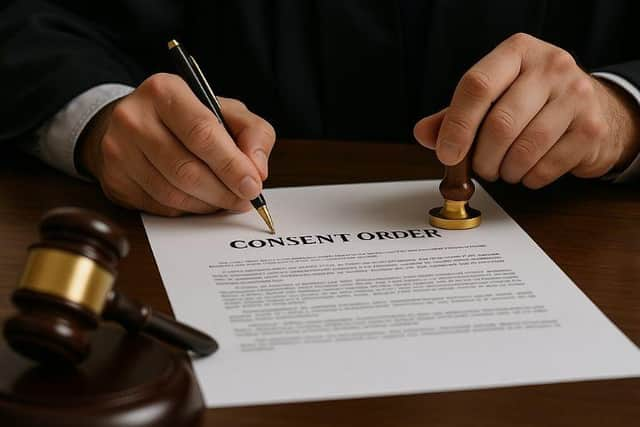
A consent order is a legally binding agreement approved by the court that sets out how assets, debts, and financial responsibilities will be divided after divorce. It protects both parties from future claims — even if they’ve already agreed everything informally.
Without one:
Either party can return to court in future for a claim on property, pensions, savings or income
There’s no legal certainty or closure
Any future windfalls — like inheritance or lottery wins — may be vulnerable
Why This Matters Now
With over 80,000 divorces finalised online through GOV.UK each year, the data suggests tens of thousands of couples annually may be leaving their financial future unsecured. This can have devastating consequences if one person goes on to buy a house, inherit money, or build savings after the split.
Recent high-profile cases, such as Wyatt v Vince, have shown that claims can be made many years after a divorce, with courts sometimes awarding large settlements.
The Solution
Getting a consent order doesn’t require court appearances and can be done online for a fixed fee. Services like Divorce-Online offer solicitor-drafted consent orders from just £399, making financial protection accessible to couples who have reached an agreement.
“We speak to people every day who thought their finances were sorted, only to find out their ex still has a legal right to come after them,” said Keenan. “We want to raise awareness that divorce and financial separation are not the same thing — and encourage people to protect themselves properly.”