
Do Brits believe money buys happiness? The UK regions that say yes (or no)

We all like to say that we wouldn't let money change us should if we were lucky enough to win the lottery and that having more money wouldn't necessarily make us happier.
We all like to say that we wouldn't let money change us should if we were lucky enough to win the lottery and that having more money wouldn't necessarily make us happier.
With this in mind, the team at OLBG decided to survey 1,500 Brits to find out whether these claims are true or not. The results revealed some very intriguing findings, and they have analysed each region to see how each area of the UK would react if they won £10 million through the lottery.
The appeal of walking into the office on a Monday morning and quitting your job would be too much for 47% of people from Wales and London should they win £10 million on the lottery, just edging out residents in the South East and Scotland (44%).
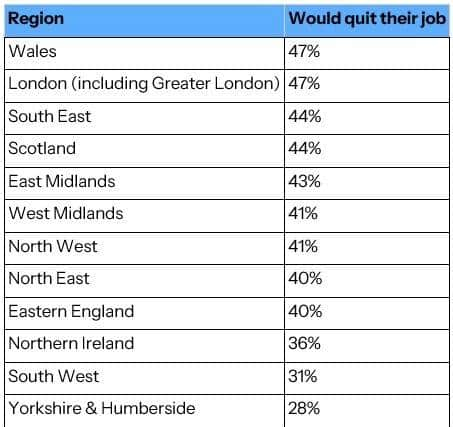
On the contrary, only 28% of people from Yorkshire and Humberside would hand in their resignation. The South West region, with 31% of residents stating they'd quit their jobs, and the Northern Irish (36%) are also at the opposite end of the spectrum.
However, with no region having over 50% of respondents revealing they'd quit their job, it's clear that the majority of people in the UK would stay at work despite their bank balance looking a lot healthier.
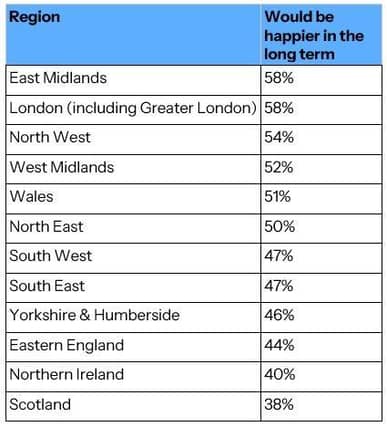
There is a saying that money can't buy happiness, but it seems the majority of people in the East Midlands and London don't buy into that notion. 58% of people in those areas of the UK believe they would be happier in the long-term, even after the initial excitement has worn off, if they won £10m through the lottery.
Residents in the North West (54%) and the West Midlands (52%) aren't far behind, but the Scots and Northern Irish evidently have a very different mindset when it comes to the relationship between money and happiness.
That's because just 38% of Scottish people believe they'd be happier in the long run should they receive a significant windfall, and that percentage only increases by two when it comes to Northern Ireland.