
These are the fraud capitals of the US
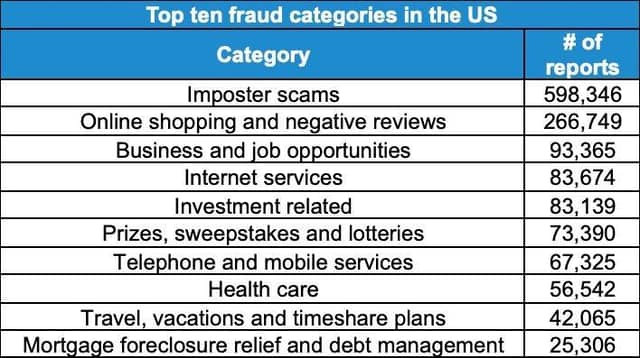

New data has found that Florida is the fraud capital of the US.
Investment fraud lawyers at Investor Loss Center examined data from the Federal Trade Commission on the total number of fraud and related fraudulent crime reports per 100,000 population in the first three quarters of 2024. The states were then ranked based on the number of reports per 100,000 population.
Florida has emerged as the state most affected by fraud and related criminal activities, with 1,682 reports per 100,000 population. Imposter scams are the most common form of fraud in Florida, with 34,876 reports of imposter scams.
Georgia is the second most susceptible to fraud, with 1,614 fraud reports per 100,000 people. Like Florida, Georgia falls victim to imposter scams the most, with 13,704 reports in 2024, and the second most common type of fraud is online shopping and negative reviews, with 6,852 reports.
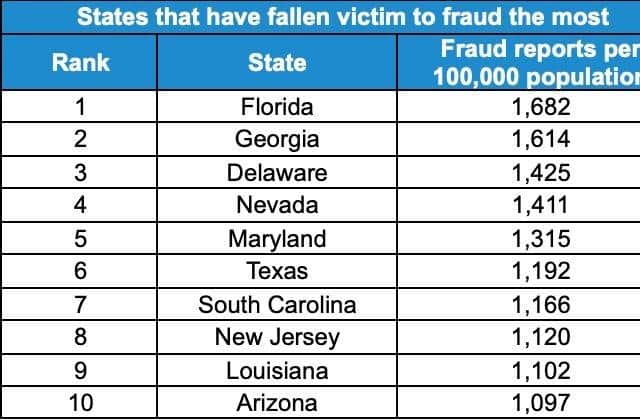
Delaware is third, with 1,425 reports of fraud. Delaware’s most common form of fraud is also imposter scams, with 1,755 reports. Health care fraud emerged as one of the top ten fraud types affecting Delaware’s residents, with 282 reported incidents, closely followed by fraud related to prizes, sweepstakes, and lotteries, which occurred 226 times.
Nevada ranks fourth, with 1,411 fraud reports per 100,000 residents. Business and job opportunities fraud is the third most common fraudulent behavior in Nevada, with 1,119 reports. Investment-related fraud ranked as the sixth most prevalent type of fraud in the state, with 809 reported cases in 2024.
Securing fifth place is Maryland, with 1,315 cases of fraud per 100,000 people reported. Among Maryland’s most perpetrated forms of fraud include telephone and mobile service, with 1,316 reports, and privacy, security and cyber threat, with 821 reports.
Robert Rikard with Rikard & Protopapas, from Investor Loss Center, commented on the findings: “These findings highlight the ongoing challenges of combating fraudulent activities, particularly in states like Florida and Georgia, which have seen a significant increase in imposter scams and other forms of fraudulent activity.
“Understanding these trends is crucial not only for victims but also for legal professionals and authorities aiming to curb these crimes. As we continue to see the proliferation of sophisticated fraud schemes, particularly those exploiting digital platforms, it's clear that more robust preventive measures and consumer education are needed.
In addition to these trends, Indexed Universal Life (IUL) insurance scams are becoming a growing concern. Unscrupulous agents often use misleading illustrations and exaggerated promises of returns to lure consumers into these complex products, which can lead to significant financial losses if the policy lapses or fails to perform as projected.
“It is also clear from the data that the assumed belief that older generations are more likely to fall victim to these sorts of crimes is untrue, with 20–29-year-olds having lost more to fraudsters in 2023 than 30–59-year-olds. It's important to remember that anyone can fall for a scam, and this ranking serves as a crucial reminder to stay alert.”