
Couple ordered to chop down huge hedge after bizarre claim it was not a hedge under Scottish law
A couple who insisted their sprawling garden greenery was not technically a hedge have lost a bizarre legal battle – after a Scottish government reporter ruled that what the owners called it was irrelevant.
A couple have been ordered to dramatically cut back their enormous garden hedge – despite insisting it isn't actually a hedge.
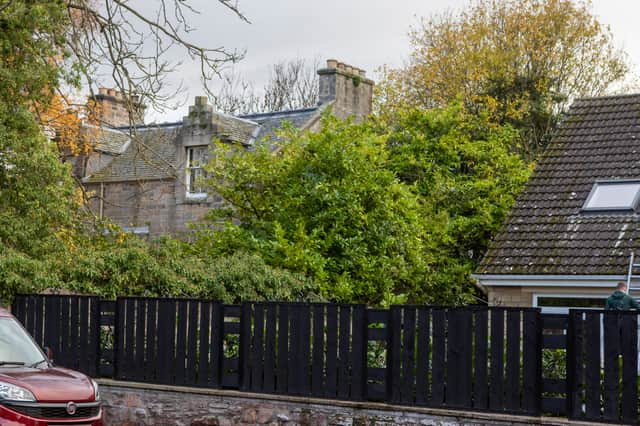

Professor Angus Macdonald and his wife Dr Patricia Macdonald have lost a bizarre legal battle over the sprawling greenery surrounding their home in Musselburgh, East Lothian. The couple, who moved into the property in 1971, had proudly maintained the trees and shrubs around their home for decades.
But their leafy paradise became the subject of a bitter dispute after new neighbours complained the vegetation was blocking light and spoiling their enjoyment of their property. East Lothian Council subsequently issued the couple with a High Hedge notice, ordering them to reduce the greenery to a uniform height of 2.5 metres.
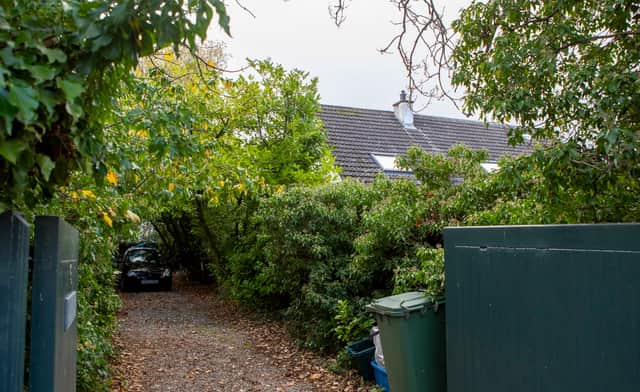
Rather than simply reaching for the garden shears, however, the pair launched an appeal arguing the vegetation did not legally qualify as a hedge because it had never been managed as one. In a detailed breakdown of their garden foliage, they argued the 17-metre boundary consisted of two separate sections, including common ivy and three cherry laurel trees.
They insisted there were only six plants rather than the 17 alleged and claimed the spacing between the trees meant they did not create an impenetrable barrier to light. In their appeal, the couple said: "The vegetation does not constitute a hedge as it has not and has never been managed as a hedge. The Laurel trees have been in place for more than 50 years and have changed very little in height in that time." They also warned that cutting the plants to 2.5 metres would destroy their shape and ornamental value, potentially killing the trees by removing too many leaves.
But their argument failed to convince Scottish government reporter Julie Seidel-Gregory, appointed by Scottish Ministers to consider the appeal. Under Scottish law, a high hedge is defined as a row of two or more trees or shrubs exceeding two metres in height.
After examining the boundary, Ms Seidel-Gregory concluded the mixture of laurel, ivy and bamboo formed a distinct row and created a relatively dense barrier to light. She acknowledged the plants had not been meaningfully maintained as a hedge but said this was not decisive. She said: "A hedge can be formed without current or previous management practices."
In rejecting the appeal, she ruled that reducing the greenery to 2.5 metres would restore the neighbours' reasonable enjoyment without compromising either property's privacy. She concluded: "I am satisfied that the shrubs and trees are a high hedge, which acts as a barrier to light and prevents the reasonable enjoyment of the neighbouring property."
The council's decision has therefore been upheld, leaving the couple facing the prospect of a dramatic haircut for their much-loved garden greenery.
The complainants declined to comment on the ruling.