
Devon reservoir falls to 30% capacity, revealing remains of 5,000-year-old prehistoric villages
An intense summer heatwave has exposed the remains of ancient stone roundhouses offering a glimpse of life thousands of years ago.
A reservoir in Devon has fallen to just 30% of its capacity after an intense summer heatwave, revealing the long-hidden remains of prehistoric villages beneath the water.
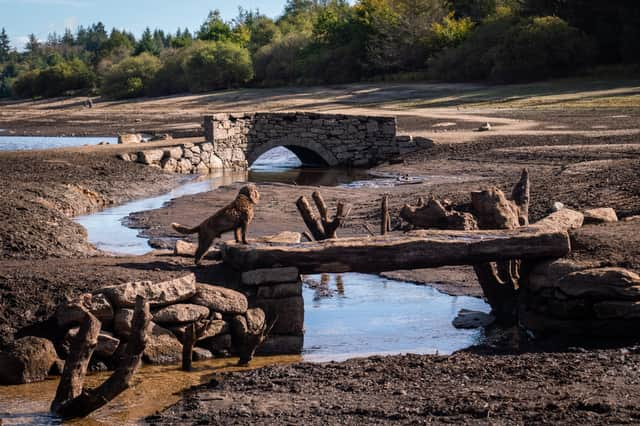

Fernworthy Reservoir, on Dartmoor, has exposed traces of ancient stone huts dating back thousands of years, offering a glimpse into the lives of Bronze Age communities who once farmed the surrounding landscape.
As the water recedes, the outlines and imprints of the stone roundhouses can be seen in the exposed earth, revealing settlements that disappeared beneath the reservoir when it was built in 1942.
Dartmoor is one of Britain's richest areas for prehistoric remains, with evidence of human settlement dating back at least 2300BC.
By around 2500BC, farming communities were clearing woodland to make way for agriculture and establishing settlements across the moorland.
They also constructed elaborate monuments, including stone circles associated with commemorating the dead, alongside villages made up of roundhouses built from stone.
The remains now visible at Fernworthy provide evidence of how people lived in the area long before modern infrastructure transformed the landscape.
However, life on Dartmoor was not always sustainable. By around 1000BC, parts of the landscape had become increasingly waterlogged following centuries of farming and woodland clearance.
Many settlements were eventually abandoned as conditions became less favourable for agriculture.
The deserted villages remained part of Dartmoor's archaeological landscape for centuries before the construction of Fernworthy Reservoir submerged them.
Completed in 1942, the reservoir covers around 76 acres and has a capacity of approximately 380 million gallons of water.
Its creation permanently altered the landscape, concealing the prehistoric remains beneath the water and creating a vital water storage site for the region.
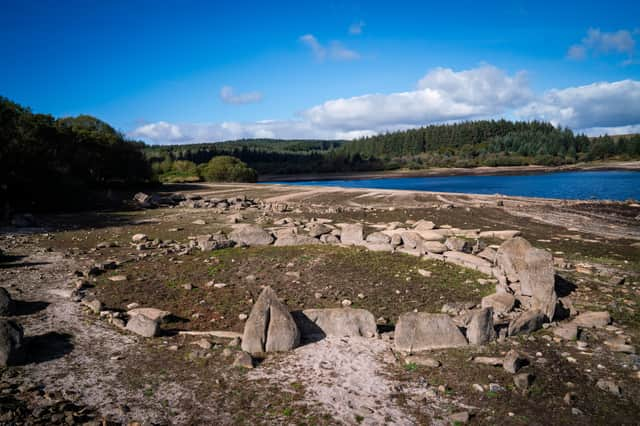
The latest drop in water levels has brought parts of that hidden history back into view, with the outlines of ancient dwellings emerging where water would normally cover the ground.
Such discoveries demonstrate how changing environmental conditions can reveal archaeological features that are usually difficult to see.
Dartmoor's prehistoric settlements offer an important record of how communities adapted to the landscape, developed farming practices and eventually moved away from areas where conditions became increasingly challenging.
While the reservoir's low levels have exposed these remarkable traces of the past, the remains also serve as a reminder of the thousands of years of human activity that preceded the modern landscape.
For a brief period, the retreating water has allowed a landscape last inhabited by prehistoric farmers to emerge once again from beneath the reservoir.