
99-million-year-old prehistoric snail named after The Prodigy’s Keith Flint because of its spiky hair
He was famous for his wild hair, explosive performances and unforgettable Firestarter persona. Now The Prodigy frontman Keith Flint has an unlikely namesake – a bizarre prehistoric snail with a distinctly spiky shell.
The Prodigy legend Keith Flint has been immortalised in the most unlikely way imaginable – with scientists naming a bizarre 99-million-year-old prehistoric snail after him because of its spiky appearance.
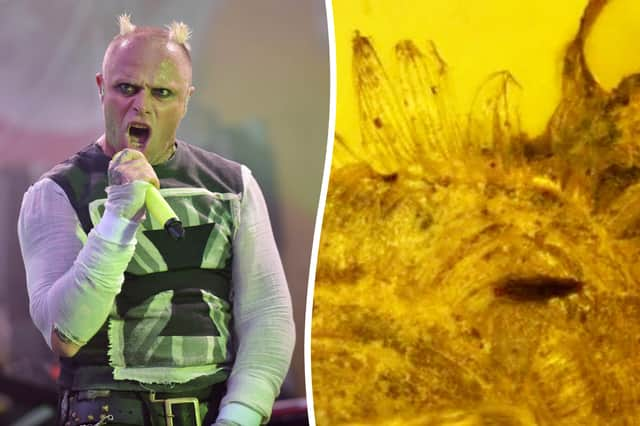

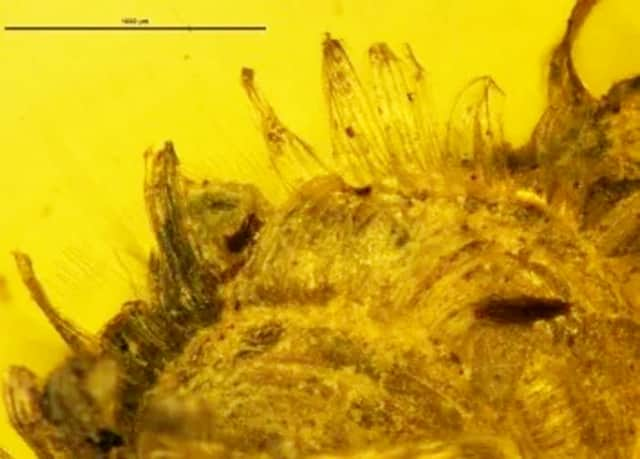
The ancient creature, which lived alongside dinosaurs, has been given the scientific name Archaeospirostoma flinti after researchers spotted an uncanny resemblance between the hairs covering its shell and the late Firestarter singer's trademark hairstyle.

Flint, who became one of Britain's most recognisable rock stars thanks to his outrageous look and electrifying performances, was found dead at his Essex home in 2019, aged 49. Now his name will live on in a species that was crawling around the Earth almost 100 million years ago.
The tiny snail was discovered preserved in Burmese amber, also known as burmite, by palaeontologists from Eötvös Loránd University in Budapest, Hungary. The remarkable amber dates back around 99 million years to the age of the dinosaurs and can preserve ancient organisms in extraordinary detail, even capturing delicate soft tissues that would normally disappear over time.
Researchers used advanced micro-CT scanning at the University of Szeged to examine the fragile fossil and create a detailed three-dimensional digital model without damaging it. The snail belongs to the Cyclophoridae family and has a circular, low-spired shell covered in unusual hair-like structures. But unlike previously discovered hairy snails preserved in Burmese amber, its hairs are arranged in distinctive flat fringes made up of several equally sized elements.
Researcher Márton Szabó said the new discovery was the ninth member of the snail family identified in Burmese amber. Study leader Dr Barna Páll-Gergely also highlighted another unusual feature: a cone-shaped structure called an operculum, which acts like a little door to seal the entrance to the snail's shell. Scientists say its precise function remains something of a mystery.
The discovery, described in the journal Ecologica Montenegrina, adds to growing knowledge of prehistoric life preserved in amber. And while Flint was famous for setting dancefloors alight, his unlikely namesake was making its own mark millions of years before humans existed.