
'My husband died screaming out in pain': Mum-of-two recalls 'shocking' death of partner who 'suffered' for two years with oesophageal cancer

A wife has recalled how her husband died “screaming out in pain” - and says "pets have more dignity in dying than humans”.
Juliette Sykes, aged 55, was devastated when her “committed” husband, retiree Tim, age 57, died at home, “confused” and “in agony” in September 2021.
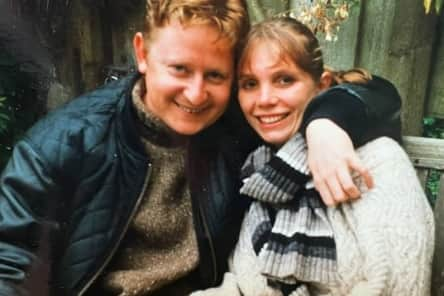

Former safeguarding manager Tim was diagnosed with stage four oesophageal cancer in July 2019. He had developed an oesophageal tumour so large, it blocked his stomach and prevented him from eating. Juliette became his full-time carer, along with their two sons, aged 25 and 21.
The circumstances of Tim’s death prompted Juliette to become an advocate for assisted dying. She says “dogs and cats” have more dignity than humans in dying, and people should have the right to choose a “compassionate” death. As a result, she’s now campaigning in her late husband’s honour to get the assisted dying bill passed
The bill was discussed in the House of Lords on Friday September 19, four years after Tim’s death, and a motion was carried to consider the safeguards and procedures in the bill before it progresses to the next stage.
Juliette, a CBT service team leader from Manningtree, Essex, said: “I’m advocating and campaigning because I want to be a voice for Tim - his death was shocking and traumatic. Tim so desperately wanted to live, but even he used to say to me: ‘I want to live, but I can’t go on any longer.’
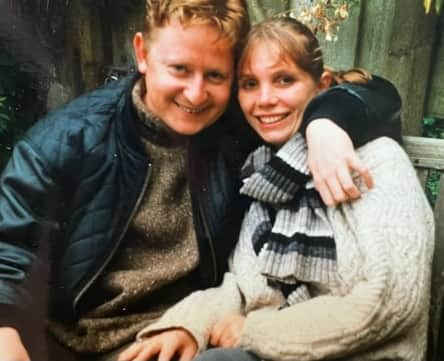
“He was so weak, at the end - and he couldn’t eat solids without suffering severe choking - so after trying him with liquids, he gave up on eating altogether. His last days were spent lying in a hospital bed at home. Our relationship suffered, he couldn’t walk or eat, he was confused and he couldn’t attend to his own needs.”
In April 2019, Tim retired from his job - and was looking forward to spending more time with his sons and wife - as well as his hobbies, like learning instruments. But he’d been struggling to swallow his food without difficulty - and had developed a cough.
Juliette says she had to “nag” him to see a GP, and when the dad-of-two first went in May, he was misdiagnosed with a stomach ulcer. By mid-June, he’d lost a “noticeable” amount of weight, and was immediately referred for a CT scan at Colchester Hospital.
“That’s when we were told he had cancer of the oesophagus,” Juliette said. “Big enough to block his stomach - and advanced enough that it spread to his lymph nodes. It was just such a shock, this was supposed to be a time of happiness for Tim and he was looking forward to celebrating a new chapter. It came out of nowhere.”
Tim was given indefinite rounds of chemo every-other week to prolong his life, and had a stent fitted to widen his oesophagus in July 2020, in hopes it would allow food to pass through more easily. But his deterioration was “rapid and noticeable” - while he was previously a “larger” man, his inability to eat caused him to be unrecognisably thin.
The dad would also start uncontrollably choking, each time he tried to eat solids - up until his final weeks, he lived on nutritional milkshakes. By the time he died, Tim had also lost the ability to walk.
Juliette said: “He was very brave and stoic, but it was horrendous. In the end, there was just nothing left of him - someone who had previously been such a strong character. His cancer eventually spread to his liver - and he spent his last days at home. Around the time he was ill, we had to have our cat put down - and it dawned on me - pets have more dignity in dying than humans.”
The mum-of-two says she regrets not planning Tim’s death in greater depth, two-to-three months before he died, while he was more lucid. “Nobody should be left to suffer like that,” she added. “It wasn’t a kind, compassionate death - it was shocking and traumatic. He always used to tell me ‘I don’t really want to go, I’ve just had enough.”
After Tim’s death, Juliette became an advocate for the Assisted Dying Bill - which is at the committee stage within the House of Lords. She hopes families like hers can “take control back” - and says it’s about giving people bodily autonomy, not taking it away.
“It’s not about coercing anyone to take their own life,” she said. “It’s about giving people some control back - I know losing control was something Tim really struggled with. What I went through isn’t the exception - it’s the rule - especially with families living with cancer.”