
Britain Faces Rising Global Threats: Ex-UN Chief Sir Mark Lyall Grant on Cyber Wars, Russia and the Future of Security
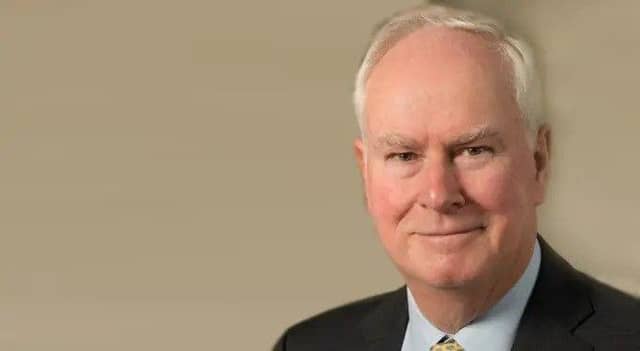

Sir Mark Lyall Grant GCMG is a distinguished British diplomat and cybersecurity speaker, renowned for his expertise in international relations, national security, and global governance. With a diplomatic career spanning over three decades, he has served as the UK’s National Security Adviser, British Ambassador to the United Nations, and High Commissioner to Pakistan.
During his time at the UN, Sir Mark was an active voice in Security Council debates on protecting civilians in conflict—particularly women and girls—and consistently underscored the importance of inclusive peacebuilding.
His support for gender equality and human rights initiatives has shaped his diplomatic legacy, reflecting principles of allyship that remain deeply relevant in today’s global leadership conversations.
In this exclusive interview, Sir Mark shares his perspectives on hybrid warfare, the evolving nature of diplomacy, and the future of the US–UK special relationship in a rapidly changing world.
Q: As hybrid threats continue to blur the lines between war and peace, how would you define ‘hybrid warfare’ in today’s security environment, and what implications does it carry for national defence strategies?
Sir Mark Lyall Grant: "Well, the big nations in the world—the main powers—are not actually at war with each other and haven’t been, obviously, for several years. But that does not mean that they’re at peace. We’re in a sort of stage at the moment of what some people call a hot peace or hybrid warfare. What that means is that, whereas we are not directly fighting against our enemies, we are doing so in different ways.
"So, hybrid warfare can include, for instance, cyberattacks. It can include information and misinformation campaigns. It can be proxy support—like the Western military support for Ukraine, if you like. Assassination attempts overseas, using mercenaries like the Wagner Group to undermine the United Nations and Western countries in Africa, as the Russians have been doing.
“All these are elements of hybrid warfare in that sort of grey zone between war and peace, which is why the intelligence agencies of all the major powers have become even more important in today’s security world than they were before."
Q: Drawing from your unique experience working closely with figures like Vladimir Putin, Xi Jinping and Donald Trump, what core traits or patterns have you observed among global leaders, regardless of their background or path to power?
Sir Mark Lyall Grant: "Well, I’ve met most of the important world leaders of today—whether that’s President Putin, Donald Trump, Xi Jinping of China. I think it’s difficult to say that they all have similar characteristics, because they’ve all come to power in different ways, and they all come from slightly different backgrounds.
"But if we look at politicians and leaders more generally, particularly in the United Kingdom, I have found during my long association with politicians that they generally have two traits in common. One is a very high sense of self-worth. If you’re putting yourself up for election, or even if you’re conducting a military coup, you think that you have something to offer your country or the world. So, a very high sense of self-worth.
"The second—and this is particularly true of the United Kingdom—is that all politicians have a gambling streak. I think this partly goes down to the fact that politics is a very hazardous business. One minute you’re in power, next minute you’re not in power. You can lose your seat and lose your career as a result.
“I’m never surprised when politicians are caught on Hampstead Heath with their trousers down or something—because they have that sort of gambling streak. They know that their careers are potentially short-lived, and we’ve seen that in many leaders in this country, but also overseas."
Q: The US–UK transatlantic alliance has long been considered a cornerstone of Western security. Based on your extensive diplomatic career, how do you see the future of this ‘special relationship’ evolving?
Sir Mark Lyall Grant: "I’ve seen the US–UK transatlantic relationship throughout my career, right back to when I first joined the Foreign Office and Argentina invaded the Falklands. We got invaluable support from the Americans—albeit secret military support—in order to retake the Falkland Islands in 1982. To my mind, it absolutely underpins our security—the bilateral relationship.
"I don’t know how many times during my career commentators have said that the special relationship is dead, because there’s been some snub—or some alleged snub—by the US President to the UK Prime Minister.
“For instance, when Joe Biden announced the withdrawal from Afghanistan in 2022 without consulting his European allies. But the reality is that the relationship is based on the fundamentals beneath the surface, if you like: in nuclear issues, in defence issues, in intelligence issues, in broader security issues.
"So, that relationship is fundamental not just to our security, but it’s also important for the Americans. The United Kingdom offers the Americans some valuable military bases in our dependent territories overseas, some important intelligence bases both in the UK and also overseas.
“So, it is a two-way relationship—obviously not completely equal—but it is of fundamental importance to both countries, and I think will continue to be so into the future."
Q: Given the seismic changes in technology, communication, and geopolitics, how has the role of a diplomatic ambassador evolved during your decades-long career in international service?
Sir Mark Lyall Grant: "Well, clearly the environment in which diplomacy takes place has changed very significantly over the last 40 to 50 years. How could it not, given the technology, the transport revolution, which means that not only can leaders talk to each other directly whenever they want, but they can also travel overseas to meet each other whenever they want.
"One striking statistic is that in the first 170 years of the existence of the United States, the US President and the British Prime Minister met only once. But from 1940 onwards, for the next four years, Winston Churchill and Franklin Roosevelt met 11 times in eight different countries. So, that sort of technological change—transport change—allows politicians and leaders to meet directly without necessarily going through their ambassadors overseas.
"However, despite the fundamental change in the environment, what diplomats actually do today hasn’t changed in the last 100 years. There are four main tasks for a diplomat:
"There’s the political task—getting to know your country, who are the key decision-makers, how do you influence them, and you give advice back to your own government on those issues.
"You’ve got the commercial role, which obviously is extremely important, particularly in countries like Singapore or the United Arab Emirates. It’s probably the most important diplomatic role in countries like that.
"You also have the representational role, and that is extremely important. If you’re a British Ambassador, you’re not the government’s ambassador—you’re His Majesty’s Ambassador. That nomenclature reflects the fact you’re representing the state as a whole: the United Kingdom.
"When it comes to the United Kingdom, what does that mean? That means things like the history, the economy, the English language, the culture, the Royal Family, the Premier League, the elite universities, and the Special Forces. It’s all those things about the United Kingdom that foreigners think about when they’re thinking about the UK. That’s what an ambassador is representing overseas.
"And then the last task—and probably what many members of the public will consider the most important task—is consular work. Looking after your own nationals when they get into trouble, when they’re arrested and put in prison, when they have an accident, when they lose their passport, when they are forced into a marriage or something like that. Lots of different examples I could give of the sort of consular work that ambassadors do overseas. So, although the environment has fundamentally changed over the last 40 to 50 years, what a diplomat actually does hasn’t fundamentally changed."
Q: You’ve delivered speeches around the world to a range of audiences. What insights or takeaways do you most hope to leave with your listeners—especially those interested in diplomacy, leadership, and global security?
Sir Mark Lyall Grant: "Well, I hope that my speeches are both informative and entertaining. Above all, what I always try to give an audience is a better understanding of the inside politics—inside foreign policy, inside geopolitics.
“Because in a sense, I’m the person in the room. I can give a practitioner’s account of what really happens when a British Prime Minister meets President Putin or meets President Xi, for instance. It’s giving that sort of insider, practical experience and insights, which I think audiences find valuable."
This interview with Sir Mark Lyall Grant was conducted by Mark Matthews.
For More Information: Champions Cyber Speakers