
Forget everything you’ve been told about writing. Read RR Haywood’s no-bull guide to becoming an author
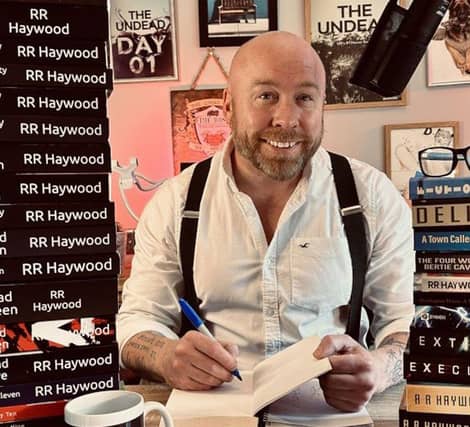

Tired of polished ‘how-to’ guides and overpriced writing courses? Bestselling indie author RR Haywood reveals why the traditional rules of writing are killing creativity – and shares his raw, working-class blueprint for writing fiction that actually has soul.
How do you write a fiction book?
If you go searching online or ask an AI for help, you’ll often get a step-by-step guide that looks polished and convincing, or adverts for expensive writing courses. But most of those set methods and writing courses do more harm than good.
They give people the illusion there’s only one way to write a book. Which becomes a barrier. Writers start worrying if they’re doing it right. They obsess over technicalities: every character must have an objective; your story must follow a three or five-act structure; your narrative voice must be passive and controlled. And the absolute killer? Plot and plan your novel before you start.
New writers then lose the raw energy and passion of crafting a story, which often shows in the novels they create. All structure. No soul.
For the most part, anyone who wants to write a fiction novel is already trained, simply by having read fiction. If you’ve devoured books, you already know what makes a good one. And if you haven’t done that, then you absolutely should. The best writing course in the world is to read good books from every genre. Even the ones you don’t like.
Read modern novels. Read the classics. Read different styles from different eras. They might look wildly different on the surface, but underneath there’s always an author driven by their love for writing, their passion for storytelling. That’s what makes their words pop and sizzle on the page.
Thankfully, I never did a writing course. I started in 2012, pre-AI, when free writing advice wasn’t everywhere. My income barely covered my outgoings. I was pulling overtime, so I threw myself at it and taught myself how to write.
Now, more than a decade later, I’ve sold millions of books and become one of the most downloaded indie authors in the UK. I’ve also been traditionally published a few times.
Let’s be honest. The publishing world has become festooned with the middle classes. Especially since Covid. That’s not a dig, but it’s changed the landscape. Now more than ever, we desperately need original, working-class voices in literature.
We don’t want every novel written in the same passive narrative tone. And we don’t all speak like we’re from London. Dialogue should reflect where you live, how you talk, what you know.
My advice? Write how you speak. Keep it you. Forget the technical rules and formulas. Don’t let anyone tell you that you’re doing it wrong because your character arcs aren’t neatly diagrammed or your chapters don’t hit the “right beats”
The only tips I’ll offer are these ones to get you started. This what I did, and a lot of others too. They work.
1. Mental Prep:
DELIO Phase One took me a few months to write, but I’d been thinking about it for 10 years. It started with a simple ‘what if?’ What if everyone on the planet just stopped moving? That image stuck in my mind. From there, I built the world around it: the characters, the tone, the scenes.
I don’t plot or plan my novels ahead of time. That kills the desire to write them (see Step 4).
Let the story live in your head. Where is it set? Who are the people in it? How do they speak? What drives them? Let it brew in your daydreams until you have to write it.
2. Physical Prep:
When you’re ready, or more accurately, when you’ve finally plucked up the courage to start, you’ll need a computer and somewhere to write.
There are no hard rules here. But writing by hand means typing it all up later, and trust me, that takes ages. It’s far quicker to go straight to the computer if you can.
The industry standard is Microsoft Word. Times New Roman, font size 12, double-spaced lines. (It’ll save you time later if you ever submit it.)
Having physical copies of a dictionary and thesaurus (often combined) is a game changer. Stops you hopping online and getting distracted for hours.
3. Go For It
Don’t plan your scenes. Don’t plot it out on paper. Doing that often scratches the creative itch and satisfies the desire to tell the story, so by the time you sit down to write, the energy’s gone. That’s your brain saying, “We’ve done this already.”
Just jump in. Start writing whatever pours out. Remember: the start is never the beginning, and the beginning is never the start. Which is silly tosh, but it means where you start writing doesn’t have to be the actual start of the book.
You’ll probably feel a wave of energy, it’s a rush, and it feels incredible. Go with it. Don’t overthink. Don’t second guess. Enjoy it.
4. Don’t Worry When That Energy Wanes
Honestly, I hear it all the time. “It was going so well, then it just dried up!”
This is normal. You’ve reached the Sticky Middle where most writers quit. Stop. Breathe. Take a break. Then read it over. What’s working? What isn’t? Trim or cut where needed. What characters are popping off the page? Which ones are not and need cutting?
Now’s the time to make a loose plan. Nothing detailed. Bullet points usually work for me. You don’t have to plan all the way to the end. You can do it chapter by chapter. Just keep it loose. Keep it light. Don’t kill the creative spark by overplotting.
5. Push! Push! Push!
This is the grind. And in all honesty, authors don’t get paid for their ideas. They get paid for wading through the mid-section quagmire.
It’s exasperating. Progress feels slow. Every word seems wrong. You lose all sense of perspective about whether any of its even good. That’s normal.
Here’s the truth: motion matters more than perfection. This stage is about turning up and putting words down.
Ask yourself simple questions to keep moving: What is this chapter about? What do I want from it? Where are the characters going?
Also worth noting, if you’re writing multiple characters in third person, it takes a lot longer than one character in first person. Just something to remember if progress and pace matter to you.
6. The End Is Nigh!
You’ll know when you hit this point. It clicks. Suddenly, you know exactly what needs to happen. Now is the time to make a detailed plan, (just to make sure you don’t miss anything in the rush.) Then go at it.
The buzz is euphoric. I can’t explain it. This is why we write books.
If you reach the end, then well done, you’re a writer!
Bonus Hack:
7. The Fug That Follows
This is normal too. It happens to most writers. You’ve poured so much of yourself into the book, you’re running on mental and emotional fumes. Life might feel flat. Practise self-care. Move your body. Talk to people. Reconnect with the world. The fug will pass.
And if you do feel it?
Seriously, well done. You suffered for your art. And that… that really makes you a writer.
There’s plenty more to writing, but this is enough to get you going.
I’ve got loads of free tutorials on my TikTok channel, and if you ever get truly stuck with your fiction book then reach out. If I can help, I will.
RR Haywood is one of the world’s bestselling fiction authors, known globally for his zombie and science-fiction series of books. His work, much of which was self-published, has sold millions of copies around the world, making him one of Britain’s most successful ever self-published novelists in these genres. As an Amazon “All-Star” author, RR Haywood’s books have consistently featured in the retailer’s top 100 sales chart since 2017. He has had 30 Kindle Bestsellers and is a Washington Post, Wall St Journal, Amazon & Audible bestselling author. His books Fiction Land and DELIO were nominated for the best audio book at The British Book Awards and won the Discover Sci-Fi Best New Book 2023 respectively. His latest novel, GASLIT, is a dark noir thriller about an ex-policeman manipulated into a murder plot.
Story by Belters News/ The Double Agents