
How history helps us challenge the world of misinformation and fake news
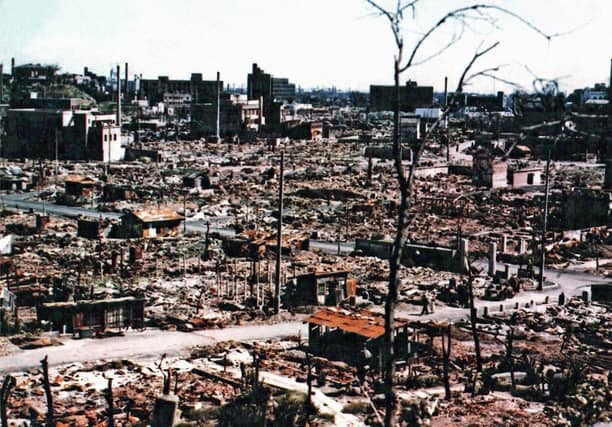

The 80th anniversary of the bombing of Hiroshima acts as an important reminder to understand the past, its paradoxes, ugly truths and lessons. Appreciating history can help us navigate our current world of misinformation and nationalist rhetoric. Not only does history help us challenge politicians who make sweeping statements about the past, but it embraces nuance and teaches us that nothing is as binary and simple as initially perceived.
History has become a victim of the world’s polarised cultural tapestry, as shown through contrasting beliefs about the bombing at Hiroshima. Nationalist interpretations of the bombings often shadow the truth, for example, the Western consensus that the bombings were necessary to end WWII is flawed in many ways. From May 1945, the Japanese actively attempted to create peace, and President Hirohito even asked his government to come up with “concrete plans” to end the war. This makes the generalisation that the bombings were “necessary”, and “justified” very questionable.
Journalist Otto English calls this “fake history”, myths we like to believe, perhaps because it’s easier to digest, good for our conscience, or boosts our national pride. Yet these ‘stories’ simply aren’t based on truth. It is almost like the rhetoric of many politicians. Boris Johnson, for example, made Churchill an emblem of the leave campaign during Brexit in 2016, something that became known as the “Churchill factor”. Yet Churchill famously said he wanted to create “a kind of United States of Europe”… quite the opposite of a Brexiteer’s wish.
On a similar vein, Donald Trump claimed that the EU was “formed for the purpose of taking advantage of the United States”, a statement that historians of the EU have firmly disputed. History has become a pawn in politics, something that can be challenged by deconstructing and understanding historical events or figures.
As a history student, I’m forced to be cynical and question any sources of information I use. Is there a clear agenda behind it? What is it not telling me? Applying these questions to the information we receive not only by politicians, but the news we consume on social media, will help navigate the world of misinformation. According to Ofcom, 52% of adults use social media as a news source, an arena that allows filtered and heavily biased information to circulate rapidly. The coronavirus pandemic saw fake news peak on social media. Myths such as 5G causing COVID-19 or that the vaccination contains a microchip spread. Despite most people being well aware of the dangers of trusting information on social media, they continue to believe (and share) fake news because they want to believe it’s true.
Events such as the Hiroshima anniversary act as a reminder to nurture understanding and put nationalism and prejudice to one side, to collaborate for a greater cause. Appreciating history and its pivotal events means recognising that opposite things can be true at the same time. This nuanced approach should guide our politics to help tackle the populism and nationalism that can often obstruct the truth.