
Losing the Line: Why Britain’s Police Are Walking Away
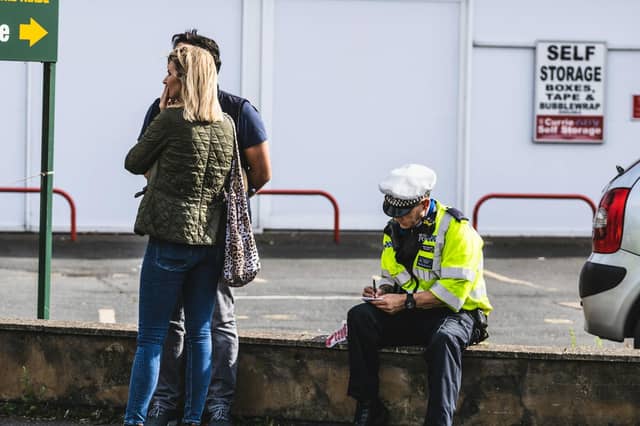

I recently caught up with a former police colleague, something we do from time to time to put the world to rights. She is a mother of two, and her twenty-eight-year-old daughter, also a police officer in the Home Counties, had four years of service when we last spoke. At that point, she had just passed her Sergeant’s exam and seemed destined for a strong career. I had met her daughter several times and found her to be a grounded, capable individual—precisely the kind of person policing needs.
On our most recent call, I was shocked to find that her daughter had resigned from her £42,000-a-year role and was now earning £2,000 more as an administrative manager at a Local Authority. “She’s gone from being verbally abused and physically assaulted practically every day to earning more money shuffling paper in a warm office, with every weekend off,” her mother told me.
Who could blame her?
Policing in Britain is facing an exodus. In the year to March 2025, 8,795 officers left the 43 territorial forces in England and Wales, while recruitment fell by 17 per cent compared to the previous year. For the first time, voluntary resignations have overtaken retirements. Officers cite low pay, rising workloads, and lack of management support as key reasons for leaving. The result is an experience deficit: newer recruits cannot replace the judgement, resilience, and local knowledge of those departing.

Public safety is now at risk because frontline capacity has been allowed to erode.
The idea that government’s first duty is to protect its citizens is hardly new. It goes back to the 17th-century English philosopher John Locke, who argued that people consent to be governed only on the condition that the state safeguards their lives, liberties, and property. That principle has underpinned British political thought for more than three centuries. When children are murdered at a dance class in Southport, when worshippers are stabbed outside a Manchester synagogue on Yom Kippur, and when commuters are knifed on a train from Huntingdon to London, the compact between government and the governed breaks down completely. These events arise from exhausted systems and underfunded services that fail to meet the state’s most basic responsibility to keep its citizens safe.
The evidence is everywhere. In the year to March 2025, 262 prisoners were released in error - nearly seven times the 38 accidental releases recorded before the austerity era began, and a rise of 128 per cent on the previous year alone. Secure mental-health beds remain in chronic shortage, forcing the discharge of acutely psychotic individuals into the community because no alternative exists. MI5 officers are spread across thousands of subjects of interest, with high-risk cases reviewed only intermittently. Child-protection social workers close four in ten referrals at triage because they lack the capacity to investigate. Neighbourhood police officers, once a visible deterrent and point of contact within their communities, have been redeployed to cover emergency response and crowd control. The people working in these areas are not to blame. Responsibility lies with a system of public spending that no longer recognises the purpose of government itself.
The resources to restore public safety already exist within the national budget. Suspending the £13.7 billion Overseas Development Assistance programme, while maintaining emergency humanitarian funding, would release around £13 billion each year. Adjusting eligibility for Personal Independence Payments to focus on those with severe physical and mental disabilities would create savings of approximately £5.5 billion while continuing to protect those genuinely unable to work. A further £1.5 billion could be released by postponing secondary defence projects such as additional frigates and surplus ammunition stockpiles. Together, these measures would free roughly £20 billion annually, creating the financial space to rebuild the systems that keep the public safe.
That level of investment would fund 1,200 secure mental-health beds, allowing hospitals to manage dangerous discharges safely. It would provide 1,500 additional MI5 case officers and analysts to strengthen the monitoring of high-risk individuals. It would support 8,000 new prison places and 6,000 additional officers to restore safe staffing ratios. It would enable every local authority to operate a fully staffed safeguarding hub capable of sustained family intervention. And it would also place 12,000 warranted constables back into neighbourhood policing, restoring a visible presence in every community.
A strong military remains essential, yet the immediate safety of citizens in schools, on trains, and in places of worship must take precedence. The national budget can sustain both security abroad and safety at home when priorities are aligned with the state’s primary duty. The issue is not so much a lack of funds but rather how those funds are used. Redirecting £20 billion from external aid, low-impact welfare, and non-urgent defence procurement towards secure facilities, counter-terrorism capability, stable prisons, child protection, and local policing would fulfil that duty. Protecting the public is the foundation of legitimate government and the first responsibility of those who lead it.
Phil Cleary is one of the UK’s leading technology entrepreneurs and a former covert operations specialist in British policing. He is the co-founder and former CEO of The SmartWater Group (now DeterTech), the world’s foremost forensic marking company, whose technologies are used by millions across more than 20 countries. A Fellow of the Royal Society of Arts and a recognised expert in security and modern warfare, Phil also holds a Master’s in Military History. His debut political thriller, Elixir, has received critical acclaim for reimagining humanity’s quest for immortality as a global threat greater than AI.
Belters News