
No, the age of the battle tank isn’t over…it’s just beginning

Those calling time on the tank are jumping the gun, writes former Tank Commander, Matthew Baldwin. The heavily-armed beast that has ruled the battlefield for a century is evolving – into a more powerful, robust, and intelligent creature than we can possibly imagine.
It's hard to ignore the striking footage of tiny drones targeting and, in many cases, destroying main battle tanks on the battlefield in Ukraine. This stark ‘David vs. Goliath’ imagery has given rise to a growing narrative that the traditional battle tank has become obsolete, with some arguing that its time in warfare has passed.
After all, the disparity in cost and production times between a tank and a drone is undeniable. A modern tank requires years of research, development, and testing before it’s even ready for prototype production. Then, once an order is placed, it may take months to produce a single unit—three months for one tank, to be exact. Imagine what it would take to produce hundreds or even thousands.
This lengthy manufacturing process involves not only substantial financial outlay but a complex logistical network—materials like sheet steel, tonnes of rubber, miles of wiring, and highly sensitive electronics are just the beginning. Furthermore, it requires hundreds of highly trained personnel to design, build, and maintain the tank, with ongoing operating costs often running into the millions.
For these reasons, it's no surprise that many experts are questioning the tank’s future in modern warfare, with drones emerging as the more cost-effective and flexible alternative. A drone can be cheaply purchased, rapidly constructed, and deployed by a single operator, with a fraction of the resources required for a tank.
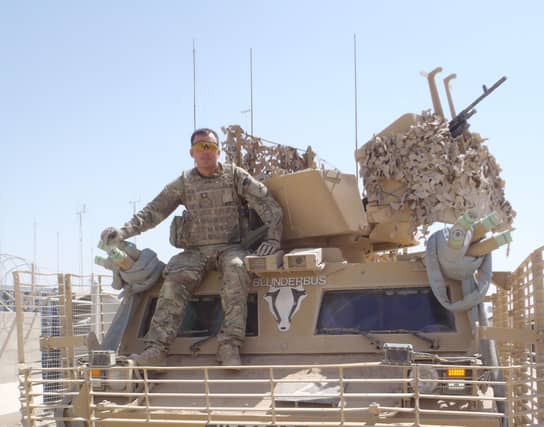
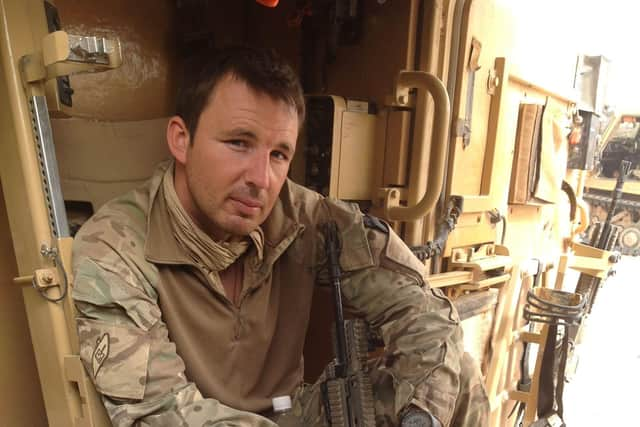
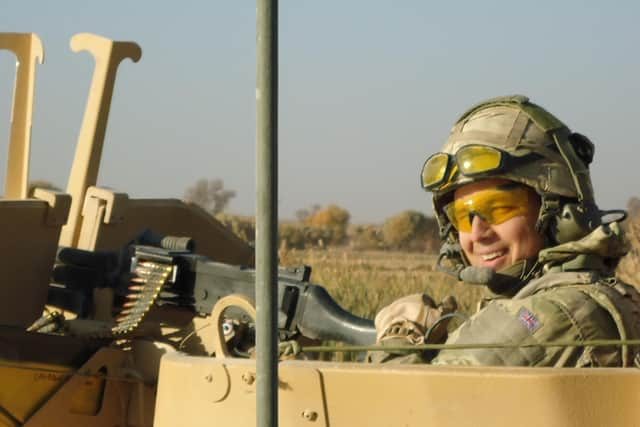
But before we declare the tank obsolete, we must consider a more nuanced approach. As someone who spent years operating tanks, I have seen first-hand how these machines adapt to evolving threats. I served as a tank operator in the British Army, where I was involved in a number of operations, including those in Iraq in 2007.
At that time, amid widespread discussions about reducing or even eliminating tanks from military arsenals, the British Army found itself confronting insurgents using Improvised Explosive Devices (IEDs) to control key routes. While drones, attack helicopters, and other lighter, more mobile platforms were touted as the future, the tank proved to be one of the few remaining options capable of safely navigating the IED-ridden roads and providing effective protection for troops. Armed with upgraded armour, new driver sights, and enhanced weaponry, tanks remained a formidable force throughout operations.
Back in 2006, I remember hearing the same talk about tanks being the first to go. Drones and lighter, more mobile platforms were believed to be the future. Fast forward to 2007, and deployed in Iraq, insurgents and rogue factions posed a significant threat. The tanks, equipped with add-on armour, bar armour, and enhanced driver sights, were one of the only vehicles still able to safely navigate heavily mined routes.

I recall how the tanks helped us smash through roadblocks and conduct night raids, with their unparalleled firepower and protection. Nothing quite empowers you like a 74-tonne tank. That experience proved that the tank, despite the advancements in other technologies, was still able to adapt to new threats and remained a powerful asset on the battlefield.
Fast forward to today, and the question of the tank’s place in modern warfare has resurfaced, particularly in the ongoing conflict in Ukraine. However, this time, the conversation should not be about whether drones will replace tanks but rather how tanks can leverage drone technology to evolve and thrive on the battlefield.
Rather than viewing drones as a threat to the tank’s future, imagine a scenario in which tanks and drones work in tandem, enhancing each other’s capabilities. Tanks remain unmatched in terms of firepower, protection, and mobility, but their true potential can be amplified by drones, creating a more powerful and complementary force.
Picture a tank acting not just as a weapons platform but as a mobile command centre that controls a vast network of drones. These drones, deployed on the battlefield, would provide real-time intelligence, reconnaissance, and surveillance, gathering data that can help commanders make more informed decisions.
In this vision, drones would work in a variety of ways. Smaller, tracked drones could be deployed ahead of the tank, utilising advanced microphones and cameras to listen and observe enemy movements while minimising exposure. These drones could relay data back to the tank, providing situational awareness without risking personnel. Meanwhile, larger drones would provide overwatch, scanning both the ground and sky for incoming threats. Armed with sophisticated AI, these drones could autonomously detect and counteract threats, or they could be operated remotely by the tank crew.
In addition to reconnaissance, drones could also act as a defensive mechanism for the tank. In a scenario where the tank is under threat from other drones or anti-tank systems, an active protection system could be deployed. Using electronic countermeasure (ECM) jammers, the tank could interfere with radio-controlled drones. Against fibre-optic guided drones, a "hard-kill" defence system—perhaps in the form of an automated 20mm gun—could create a barrier of projectiles, protecting the tank from direct hits.
With these integrated systems, the tank would not only retain its status as a formidable force but could also gain new capabilities that make it more versatile and effective in modern warfare. It would possess the ability to control drones in the air, on the ground, and even in cyberspace, all from a single platform. This approach would allow commanders to utilise drones as force multipliers, amplifying the tank’s effectiveness while reducing the risks posed by modern anti-tank weapons.
And this isn’t just a futuristic concept. Companies like Rheinmetall and Qinetiq are already developing such technologies, bringing us closer to a battlefield where tanks and drones work seamlessly together. It’s not just about drones replacing tanks but rather enhancing the capabilities of existing systems. For military leaders, the challenge will be adopting and mastering these new tools—driving innovation and strategic thinking in ways that will redefine armoured warfare in the years to come.
But what if we take this idea a step further? As technology continues to advance, tanks could evolve in ways that make them more agile, compact, and cost-effective. Who knows? The tanks of the future might even shrink in size, perhaps becoming unmanned vehicles the size of a go-kart. With miniaturisation of technology and advances in materials science, these small but highly effective vehicles could be produced quickly, cheaply, and in large numbers. They could be equipped with incredible armour, laser weapons, and state-of-the-art AI, all while maintaining an impressive ability to outpace and outmanoeuvre drones.
While traditional tanks are known for their massive guns, future tanks may not rely on conventional artillery. Directed energy weapons, such as lasers, could replace traditional guns. Lasers are precise, capable of neutralising enemy targets almost instantly. Unlike conventional weapons, they have the advantage of an unlimited "magazine" since they don’t depend on physical ammunition. These miniaturised tanks could be armed with powerful lasers, capable of taking out drones, enemy vehicles, and even fortified positions from a distance.
It’s important to note that these smaller vehicles would not replace the main battle tanks, such as the modern Leopard or Challenger. Their size, firepower, and protection could never be replicated in a compact form. Instead, these mini-tanks would complement main battle tanks, functioning as “drone tanks” that work in tandem with larger, more heavily armed vehicles. These smaller tanks would take on specialised roles, such as reconnaissance, intelligence gathering, and clearing enemy positions, while remaining agile and highly effective.
Imagine the logistics: these smaller, unmanned tanks could be mass-produced quickly and cheaply, allowing for rapid replenishment in the field. Their relatively low cost would make them ideal for high-intensity, fast-moving combat situations, where quick adaptation is crucial. Additionally, these mini-tanks could be designed to self-destruct if captured, ensuring that their advanced technology and intellectual property are protected from enemy hands.
Remotely operated by experienced tank crews, these compact tanks could take on a variety of roles on the battlefield. Their small size, speed, and advanced capabilities would allow them to outmanoeuvre larger threats, while still carrying effective laser-based firepower. Equipped with AI-powered systems for autonomous operation and enhanced situational awareness, these mini-tanks could operate independently or in concert with larger units, enhancing the overall effectiveness of the entire armoured force.
Rather than replacing main battle tanks, these smaller tanks would augment their capabilities. The combination of powerful main battle tanks and fleets of smaller, highly mobile tanks would give military forces unprecedented flexibility. These mini-tanks could be deployed for reconnaissance and surveillance, clearing vast swathes of enemy territory with precision, and taking on a variety of roles—enhancing the overall power and versatility of the military’s armoured assets.
These smaller tanks would also provide support for high-risk missions, such as infiltrating enemy lines, conducting night raids, or clearing difficult terrain. Their small size would enable them to slip past traditional defences, allowing them to conduct operations where larger tanks would struggle or be outmanoeuvred.
Furthermore, as technology progresses, the potential exists for these miniaturised tanks to become fully autonomous, operating under AI control or collaborating with other machines in an integrated network. With laser weapons and advanced AI, these smaller tanks could provide precision targeting and force projection, replacing traditional artillery systems and offering more adaptable solutions for modern warfare.
In the face of evolving technological threats—whether from advanced anti-tank systems, countermeasures, or drone swarms—this approach may be exactly what the military needs to maintain an edge on the battlefield. The synergy between powerful main battle tanks and fleets of smaller, highly advanced mini-tanks could reshape the future of armoured warfare. This integrated approach, rather than replacing one system with another, creates a more versatile and adaptive fighting force that can handle a variety of combat scenarios.
While the traditional tank has proven its value on the battlefield for decades, its future clearly lies in its ability to adapt. Rather than being phased out, tanks are likely to evolve by integrating advanced technologies. A combination of powerful main battle tanks and – who knows, smaller, unmanned, laser-equipped "drone tanks" - could offer a more flexible, cost-effective approach to future warfare. This evolution would enable military forces to tackle emerging challenges with greater precision and adaptability. Tanks would not disappear but be reimagined to fit new technological realities, whether by incorporating drones or evolving into compact, unmanned systems. Though drones have transformed combat, the tank’s capacity for innovation suggests it will remain a formidable fighting force.
Matthew Baldwin is a decorated former Tank Commander who joined the Second Royal Tank Regiment in 1996. Over his 19-year career, he served on operations in Northern Ireland, Kosovo, Iraq, and Afghanistan, earning a Mention in Despatches (MiD) during his final tour in Afghanistan. After leaving the military, he turned to writing and began his journey as an author. His acclaimed Operation Fools Mateseries—24, 48, and Deadlock—is inspired by his extensive military experience. The books are available on Amazon, Waterstones, and other major retailers now.
Pictures: Matthew Baldwin
Story by Matthew Baldwin, edited by Anthony Harvison (Belters News/NewsX)