
Vegans might be annoying, but it is time to admit they’re right
1st November is World Vegan Day - the day for people who constantly have to explain where they get their protein, who end up ordering sides with more sides at restaurants, and who, through everyday choices, strive to protect the most defenceless.
I know this headline might be annoying too, but bear with me. We’re about to confront an uncomfortable truth that leaves no room for excuses.


Would it surprise you that vegans are one of the most disliked or even hated groups? On the surface, the reasons seem obvious: no one appreciates being told how to live, let alone what to eat. Activists, in general, often annoy people, but vegans, in particular, are constantly called preachy and with a holier-than-thou attitude. However, if we look a little deeper, an undeniable contradiction is revealed.According to the Vegan Society, veganism is defined as a lifestyle that seeks to exclude — as far as is possible and practicable — all forms of exploitation and cruelty toward animals. Most people consider themselves animal lovers: we find acts of animal cruelty outrageous and find joy in the companionship of pets, especially dogs and cats — who have, at least according to my phone camera roll, taken over our lives.
The goal of veganism aligns with the values many people hold — protecting animals from harm. We advocate for endangered species, reject animal testing and fur, and celebrate bans on dolphin shows and circuses with animals. Yet somehow, that compassion stops short when it comes to animals that end up on our plates.
Every day, over 220 million land animals and between 3 billion and 6 billion fish are killed globally for food. These numbers are hard to fathom — imagine if all these animals were gathered in one place, they could fill up the entire city of Birmingham. And we are completely fine with that, but would go crazy over a dog that has been hurt — there is a clear cognitive dissonance here which, once realised, makes us uncomfortable. This discomfort is one of the reasons why many people dislike vegans.
The idea that moral consistency might require refraining from products of animal exploitation triggers us to develop arguments about why it is impractical, pointless, or even harmful.
A good share of these arguments is rooted in speciesism, the belief that certain species are inherently more valuable or superior, with humans at the top.
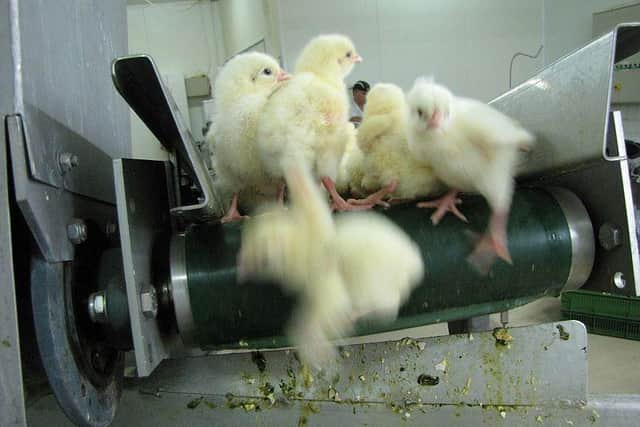
This belief fuels arguments that animals with high intelligence and the ability to form emotional bonds with humans (like dolphins or dogs) deserve more compassion. However, studies have shown that pigs are just as intelligent as dogs, capable of complex problem-solving, emotional sensitivity, and forming social hierarchies. Cows can recognise over 50 different faces and form strong social bonds within their herds. Chickens, the most mistreated animals in the world, are capable of learning from each other, solving puzzles, and even showing empathy.
Even if all that weren’t the case, why should intelligence determine anyone’s right to life? You wouldn’t deem a person unworthy of existing just because they can’t solve differential equations.
The real reason we exploit animals is our sense of entitlement. Yes, we’ve done it for thousands of years, but we also once accepted slavery, blood sports, and child marriage. It would be absurd to justify horrible traditions simply because “we have been doing it for ages”. There’s no such thing as humane slaughter, it’s an oxymoron. Here’s just a fraction of the injustice animals face: around 7 billion male chicks are ground alive annually at only a few days old — a practice still considered “humane”.
At many points in history, we relied on animal products for survival, but we don’t need to anymore. This sentiment often triggers whataboutism: “What about those who live in the Antarctic? What about those in war-affected areas? What about those who are starving?” Well, the definition of veganism (“as far as possible and practicable”) puts your safety and well-being first. For most of us, it’s entirely possible to go vegan.
I keep coming across discussions on social media suggesting that if you can afford to eat plant-based, you must be living a very comfortable life and that it’s unreasonable to expect people in less developed countries to go vegan — hence, veganism is a privilege.
As a vegan from Uzbekistan, where the average monthly wage is $400, I can vouch that eating plant-based does not cost more as long as you focus on fresh produce, legumes, and protein sources like tofu. While mock meats and cheese alternatives can be pricey, they’re not essential to a plant-based diet. And as demand grows, costs are likely to drop.
Food deserts, where processed foods are cheaper than produce, reveal a systemic failure in equitable access to nutrition, not a limitation of veganism itself. And even in areas with limited access, simple adjustments like choosing lentils over meat are possible.
So, if you’re questioning whether veganism is a privilege, ask yourself: is access to food a privilege?
Food systems would benefit from a shift towards plant-based diets. We are now at a point where moving away from animal agriculture is not only possible but necessary in terms of food security and environmental impact.
Meat production is a driver of climate destruction, threatening the planet’s future, and animal agriculture in general is tragically ineffective and relentlessly drains our planet’s resources.
Livestock feed and grazing occupy nearly 80% of global agricultural land but provide less than 20% of the world's calorie intake. Almost half of all cropland globally is used to grow animal feed. Producing 1 kg of beef requires around 15,000 litres of water, while 1 kg of soybeans, containing more protein, needs only about 2,000 litres.
Some plant-based foods, like almond milk, are also criticised for their high water footprint, but in fact, almond milk requires almost three times less water than cow’s milk, at 370 litres per litre compared to 1,020 litres.
Almond milk, like most notoriously vegan products, is often “shamed” for being trendy, hipster, and generally “snowflakey”. Yet it dates back over a thousand years, originating as one of the oldest recipes in the Middle East. The same goes for soya milk, which was invented in China around the 1st century, around the same time as tofu.
The latter is also often falsely associated with physical weakness but think about it: Japanese samurai ate tofu — this adds an interesting twist to the anti-vegan derogatory term “soy boy,” doesn’t it?
This brings us to the cultural aspect of veganism. It’s common to view veganism as a Western idea, and promoting it elsewhere is seen as imposing Eurocentric concepts on other countries and undermining their cultural identities. But that, too, is just another stereotype.
While the term “vegan” originated in the West (coined in 1944 by Donald Watson in the UK), the concept of non-violence towards animals is deeply rooted in some of the world’s oldest religions, like Hinduism, Jainism and Buddhism, through the principle of ahimsa. Many practising Buddhists are strict vegetarians or vegans, and traditional Buddhist temple cuisine has long been plant-based.
It is quite patronising to assume that only Western cultures are open to the idea of animal rights. Countries that are assumed to be non-vegan-friendly — like China and Japan, for example — actually have growing vegan movements, with dedicated activists and vegan societies.
If we stop playing mind games and listening to the logical fallacies our brain creates to resist change, it’s clear as day that we don’t want animals to suffer. If watching slaughterhouse footage breaks your heart, you’re already halfway to being vegan.
Choosing to end support for animal abuse isn’t about trendiness, and the environmental toll of animal agriculture can no longer be ignored. The vegan community should encourage every gradual change, whether it’s Meatless Mondays or an occasional plant-based meal — everyone’s path to sustainability looks different. The global community should accept that veganism is a powerful, practical step toward a more equitable world and the only way that ensures a livable future for all beings on our planet.