
Anglo-Saxon ‘Little England’ in Rome revealed by coins found near the Vatican
A coin discovery has revealed how an Anglo-Saxon expat community thrived in medieval Rome
An Anglo-Saxon community thrived in medieval Rome, creating their own 'Little England' enclave, new research has revealed.

Medieval English ‘ex-pats’ even received special treatment from the Pope and were allowed to use their own currency, suggests the study.
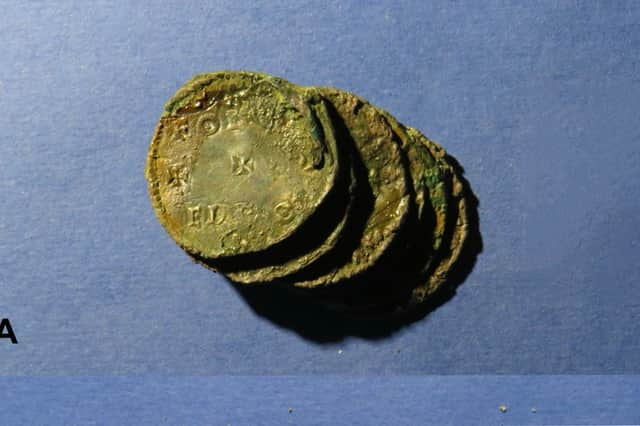
The claim emerged after archaeologists uncovered 20 Anglo-Saxon coins alongside evidence of leather, bone and metalworking in an area around the Vatican.
It is the first material evidence of the English quarter known as the Schola Saxonum, or Saxon School. It was founded by King Ine of Wessex around AD 727 as a charitable institution providing a hostel and chapel for Saxon pilgrims travelling to Rome.
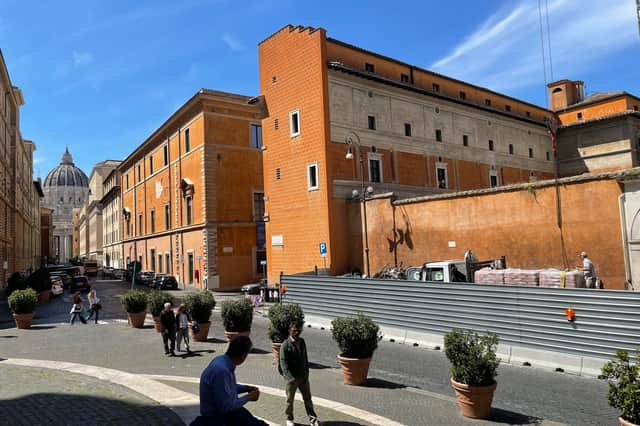
The finds were made during excavations beneath the walled garden of the Palazzo della Rovere, near the Vatican where archaeologists have also uncovered remains of Emperor Nero’s theatre.
The 20 coins were minted over roughly four decades spanning the reigns of Alfred the Great’s son Edward the Elder and his grandsons Athelstan and Eadred and came from differt parts of Anglo Saxon England.
Researchers also found 10 Roman and 10th-century Italian coins, suggesting the two currencies were used alongside each other.
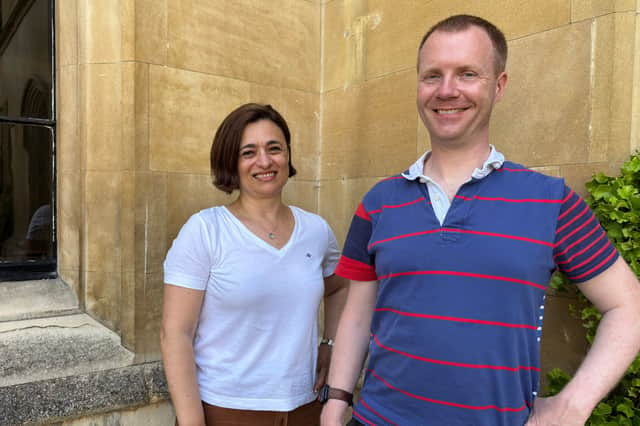
Professor Rory Naismith, a Fellow of Corpus Christi College, Cambridge, who examined the coins with colleague Professor Francesca Tinti, said they revealed the movement of people and money between England and Rome.
“The coins aren’t pretty but they have a lot to say,” he said.
“More Anglo-Saxon coins from this period have now been found in Rome than papal coins.
“This sounds bizarre, but it’s telling us that a very large amount of money was flowing in from England at this time.”
Professor Tinti, from the University of the Basque Country and a visiting research fellow at Clare Hall, Cambridge, said: “The English in Rome were quite unique. They made the greatest effort to get there. Their journey was really dangerous and many people died on the way.
“But once in Rome, they were special.
“We knew they had the privilege of being able to bury their dead in this area and now, it seems, they were permitted to use their own currency.”
The archaeologists also found evidence of craft materials which they believe would have been used to make items for the community and to sell.
Other foreign communities were also known to have set up communities in the area at the time, but the Anglo-Saxons appear to have enjoyed special privileges.
Prof Naismith added: “They kept these bonds with Rome going strong for hundreds of years, through thick and thin.
“These coins show us how deep that relationship went.”