
Why hereditary peers left House of Lords for last time as parliamentary session prorogued

The House of Lords will never be the same again as new law comes into force.
The end of this Parliamentary session also brings an end to another centuries-old tradition - of hereditary peers. Members of the House of Lords, as well as being appointed by governments, or through the church, have for centuries also inherited their titles from their parents.
However, with the end of this parliamentary session - when it is prorogued - a new law introduced by the Labour Government effectively places the number of hereditary peers at zero, meaning many left the chamber for the final time on Wednesday (April 29).
The announcement formally ending the current parliamentary session was read out on behalf of King Charles at a traditional ceremony in the House of Lords, attended by both MPs and peers.
Since 1999, 92 hereditary peers have been able to sit in the Lords and cast their vote. But under the House of Lords (Hereditary Peers) Bill, that number has been effectively reduced to zero – although several have subsequently been allowed to continue sitting as life peers.
Ahead of the prorogation, Lords Speaker Lord Forsyth of Drumlean paid tribute to those losing their seats on the red benches. He said: “At the conclusion of this session, those noble lords who sit by virtue of hereditary peerages will cease to be members of this House. On behalf of the House, I pay tribute to their distinguished service and offer them our sincere thanks.”
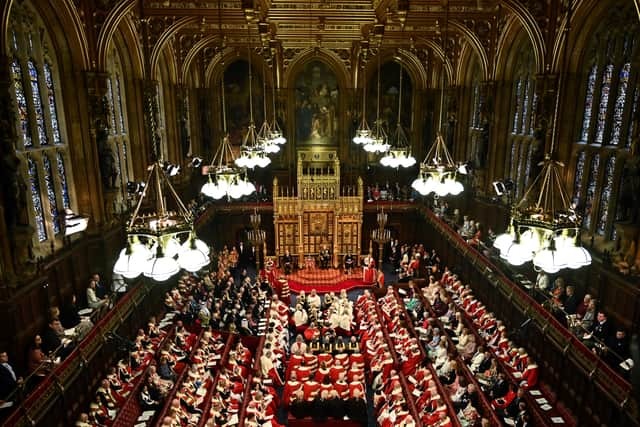

MPs, led by Speaker Sir Lindsay Hoyle, filed out of the Commons after their attendance in the upper chamber was requested by Black Rod Ed Davis – the senior officer responsible for ceremonial protocol.
The nine new laws passed in last parliamentary session
The royal address, read out by the Lords Leader Baroness Smith of Basildon, set out legislation passed during the parliamentary session and other measures taken by the Government.
A Royal Commission, comprising five peers, signalled nine new laws have received royal assent as the current parliamentary session comes to an end. As each Act was read out, the clerk said in Norman French “Le Roy le veult” or “The King wills it”, to indicate royal approval.
These were: the National Insurance Contributions (Employer Pensions Contributions) Act; the Grenfell Tower Memorial (Expenditure) Act; the Ministerial Salaries (Amendment) Act; the Tobacco and Vapes Act; the Victims and Courts Act; the Crime and Policing Act; the Children’s Wellbeing and Schools Act; the Pension Schemes Act; and the English Devolution and Community Empowerment Act.
MPs and peers will return on May 13 for the King’s Speech, which will set out the Government’s future legislative agenda.