
Richmond-upon-Thames: Why a leafy London suburb is facing a belt-tightening regime - and why local politicians are angry at the Labour government
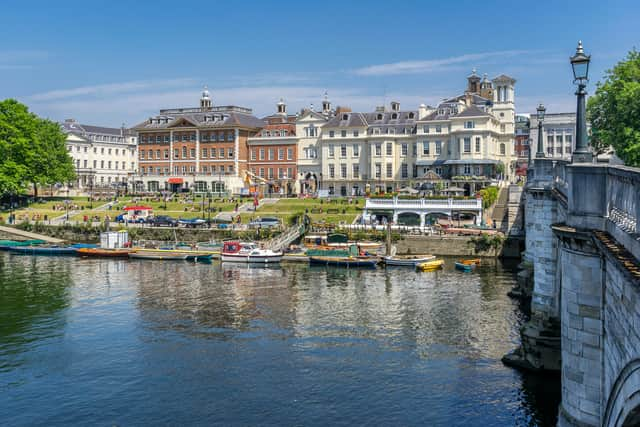
Richmond-upon-Thames is synonymous with comfortable affluence in a comfortable part of west London - but government funding changes mean that its council is looking to the future with trepidation.
Despite central government’s neglect of local authority funding since the 2008 financial crisis, Richmond-upon-Thames had so far been successful in avoiding a fiscal precipice and ensuring local services are properly funded. After taking over from the Conservatives in 2018, the now Liberal Democrat-controlled London borough has claimed to have managed its finances responsibly, having since built up its reserves to £60m and found £50m in yearly savings.
The council’s deputy leader and lead member for finance and resources Jim Millard said he was proud of the reserves the Lib Dem council had built up, and he was clear that these are “intended for investment, not for a rainy day.” In light of the Labour government’s ‘Fair Funding Reforms’ (FFR) announced in June, however, it seems like they will have to be used for just that.
The original goal for the local government funding reforms was to simplify the way in which local authorities would secure grant funding for the variety of services they are legally required to provide. Previously, councils competed for grants from the central government, itself a costly process, to cover essential services for the most vulnerable.
The new funding structure proposed by the Labour government instead aggregates all funding for local government into one pot which is distributed to councils across the country on the basis of formulae intended to capture their service needs. Taking into account a variety of factors including the extent of deprivation in the local area, and the cost pressures faced by both residents and the local authority, the central government determines the correct level of support owed to councils.

Despite the intentions behind the FFR, the formulae that the Labour government has employed in its decision to allocate funds has many councils, including Richmond, worried about the future of their local services.
Cllr Millard said: ”We support the idea of simplification but this seems like a smokescreen reassessing the funding in a way that just happens, in our case, to take away 90 per cent of our funding.”
Richmond’s deputy leader emphasised that this would affect “90 per cent of the remaining funding that we do have to cover all those important things like children’s special needs and social care, adult social care, and homelessness prevention”, adding that it is “too much too soon” in reference to the three-year transition period before the reforms are fully implemented.
The 90 per cent figure, which corresponds with a £45m loss to the council’s core funding, is derived from third-party modelling conducted by London Councils, the collective body representing local authorities in the capital. The modelling was commissioned by Richmond-upon-Thames given the central government’s refusal to publish the details of their impact calculations.
Impact reports analysing the effects of the Fair Funding Reforms are set to be released by central government at the end of this year, a point that Cllr Millard strongly criticised. “To not tell us until mid-December is reckless, it really is unheard of for governments to expect councils to cope with that. With so little notice there is very little time to do anything except wear down reserves” he said.

The Ministry for Housing, Communities, and Local Government has been approached for comment.
While the council praised the Labour government’s efforts to simplify the funding structures for local government, they criticised what seemed like an attempt to “do something a little more sneaky and underhand, and massage the formulas so that actually the outcomes for London councils are rather negative.”
Even amongst the worst hit London councils, however, Richmond stands out for the extent of projected losses. According to Cllr Millard, this is because the government’s funding formulae overlooks many of the key drivers of deprivation in London, in particular the cost of housing and childcare.
Putting these costs in context, Cllr Millard said: “We know that when you include [housing and childcare costs], a quarter of Londoners live in poverty”, highlighting that in Richmond specifically “14 per cent of residents [and] 15 per cent of children live in low-income households after housing costs.”
Cllr Millard further emphasised the failure of the government’s formulae to account for childcare costs in London, creating a £1.5bn shortfall and placing additional pressures on local councils.
“We’ve already found a lot of efficiency so the idea that the government might be looking for councils to find further efficiency after we have already had 14 years of austerity is wrongheaded” said Cllr Millard, adding that: “It feels a bit like the national government is treating council reserves as a piggybank for them to raid, and it makes a mockery of local decision making and the idea of fiscal devolution.”
Fiscal devolution, meaning the move towards granting local government more control over their own finances, is something that the Lib Dem council supports. Cllr Millard said: “If we are going to be asked to survive more on our own we should be allowed to control our finances more”, citing the modernisation of business rates and local growth retention as potential venues to explore.
When asked about the tweaks he would like to see to the government’s reforms, Richmond’s deputy leader was precise in his demands. They include the release of the government’s impact models to allow the council to plan its 2026/27 budget effectively, the expansion of transitional protections for the worst-hit London boroughs, and the inclusion of housing costs in the deprivation calculations.
“It’s madness because the government will then have to pick up the pieces” he said, highlighting the extent to which the government’s reforms and Richmond’s loss of funding could harm local communities. Councillor Millard underlined that “This could trigger a 29 per cent cut in social care, meaning fewer house visits, and reduced care packages” in addition to potentially causing “libraries and cultural services closing or reducing hours.”
Richmond council, along with the help of local MPs, have been lobbying the Labour government to review its Fair Funding Reforms since they were released in June earlier this year. Despite the efforts of the council and MPs, however, they are only getting “dribs and drabs.”
“The only formal conversations have been with finance ministers and the Ministry for Housing, Communities, and Local Government (MHCLG) who refuse to talk on an individual basis even though they had said they would do bespoke protections for the worst affected,” said Cllr Millard.
Given the lack of direct communication with central government, councillors like Jim Millard have been forced to rely on rumours and off-record comments from government officials as to the future of the local authority’s funding. “What I am hearing off the record is the government knows what they are doing, they know this is impacting councils in a harsh way,” said Cllr Millard, adding worriedly that if that is true, the government should “make sure that they are not getting carried away and harming people.”
Forced to contend with the fact that central government is unlikely to respond to Richmond’s demands in the way the council would hope, its deputy leader laid out the measures it could explore to keep its finances afloat. Cllr Millard emphasised that Richmond council is at least starting from a position of strength thanks to the reserves it has already built up, stating “we will move as fast as we can with a transformation programme” with the provision that they would still have to “plan for the worst-case scenario.”
“It’s going to be wide-ranging and it’s going to use all our innovations,” he said. “We really have to sweat those assets,” said Cllr Millard, proposing renting out the top floor of Richmond’s civic centre as a potential revenue-raising measure. The council would also look to harness the power of AI and digital tools to design services for its residents, and invest in early prevention and demand management to avoid incurring higher service provision costs later on.
Despite the council’s planned efforts to rescue its finances, Cllr Millard admitted that it could not get away without raising the rate of council tax on its residents. “This is absolutely baked into the government’s assumptions,” said Cllr Millard, referring to the fact that the Labour government’s funding reforms were decided on the basis that local authorities would raise council tax by the maximum of five per cent to cover costs, a decision that is “regressive” and “cannot replace fair funding.”
Richmond Council’s deputy leader did not refrain from criticising the central government, and the broader political establishment, on this point. “It sounds like they are just trying to kick the can down the road,” he said, referring to the Labour government’s unwillingness to reform council tax. “This government is just trying to get through the day,” he added, lamenting its inability to have a “more grown-up conversation about serious long-term things.”
“We’ve got into such a toxic place with national politics that it’s almost like you can’t talk about tax rises, you can’t talk about how much things are going to cost, everyone’s talking about the country being broken,” said Millard. “What we need is to have a sensible conversation about what is fair.”
Echoing the rhetoric of Liberal Democrats like Paddy Ashdown and Charles Kennedy before him, he argued; “We can’t have everything we want as a country if we cannot agree on some small taxation rises to fund penny-in-the pound policies.”
Notwithstanding the struggle ahead for Richmond-upon-Thames, Millard was keen to end the interview with a message of hope for his residents. “I am just a resident really, who’s stepped up and decided to get involved because I love Richmond. I want this palace to thrive and we will keep working really hard to keep delivering better outcomes despite these fiscal challenges.” Only time will tell if the council will be able to meet its obligation to its residents.