
God's Influencer: London-born Carlo Acutis to be canonised today - who was he and why is he becoming a saint?


Pope Leo XIV is due to canonise the first saint of his tenure - and it will be a 15-year-old computer genius who is known as God’s Influencer.
The Catholic Church has never declared a millennial a saint before, and has not had a particularly strong connection to modern technology. But in a sign of the changing times, Carlo Acutis, who died aged 15 in 2006, will be canonised, having been beatified - made one of the beati, or blessed - in 2020.
Who was God’s Influencer Carlo Acutis?
Carlo was born on May 3, 1991 in London to a wealthy but not particularly observant Catholic family. They moved back to Milan soon after he was born and he was said to have had a typical, happy childhood, and one in which he become increasingly religious.
As well as Catholicism, he was interested in computer science at a young age and read college-level books on programming even as a youngster.
He earned the nickname “God’s Influencer”, thanks to his main tech legacy: a multilingual website documenting so-called Eucharistic miracles recognised by the church, a project he completed at a time when the development of such sites was the domain of professionals.
In October 2006, at age 15, Carlo fell ill with what was quickly diagnosed as acute leukaemia, and died within days. He was entombed in Assisi, which is known for its association with another popular saint, St Francis.
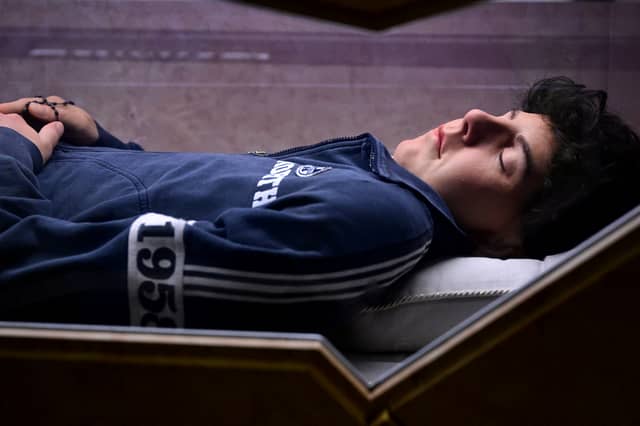
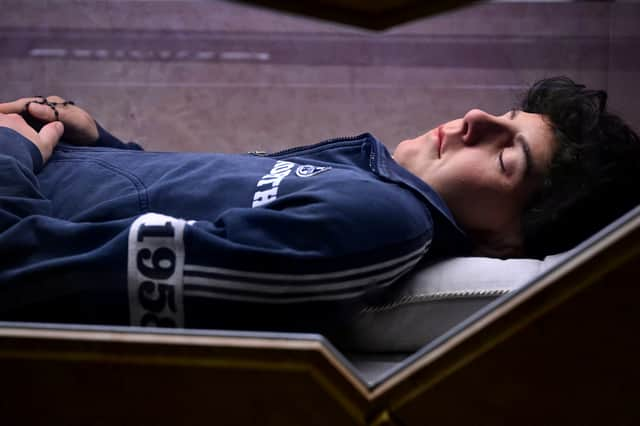
In the years since his death, young Catholics have flocked by the millions to Assisi, where they can see the young Carlo through a glass-sided tomb, dressed in jeans, trainers and a sweatshirt. Carlo has proved to be enormously popular with young Catholics, who are said to see in him a relatable, modern-day role model.
Which miracles has Carlo Acutis performed?
Carlo was beatified by the Catholic Church after the recognition of two miracles - one in 2013 in Brazil, and one in Costa Rica in 2022.
The Brazilian miracle was recognised in 2020 - the Church recognised that a child was cured of pancreatic disease after Luciana Vianna took her son Mattheus to Mass and prayed to Carlo on the anniversary of his death. Mattheus had a pancreatic defect which made eating difficult. During a prayer service after Mass, Mattheus kissed a clothing relic of Acutis and prayed that he should not be sick so often. When he got home he rtold his mother he felt healed and could suddenly eat solid foods despite having been on an all-liquid diet previously.
The Costa Rican miracle also involved a mother. Valeria Valverde fell off her bike and suffered a brain haemorrhage. Her mother Lilliana prayed to Carlo and visited his tomb. That day Valeria began to breathe unaided and the next day could walk again, with all signs of the haemorrhage having disappeared.
Is Carlo Acutis’s body on display?
Carlo’s tomb is in the church of St. Mary Major in Assisi. It’s in a room called the Sanctuary of the Renunciation, where Saint Francis of Assisi is said to have cast off his expensive garments in a rejection of material excess.
The body was only moved there after he had been beatified. Between 2007 and 2019, he was buried according to his wishes in a cemetery in Assisi. In January 2020 his remains were exhumed by church officials and examined for signs of 'corruption'. Corruption in this context is context to the condition of bodies as “incorruption” - being without decay - is a sign of holiness in Catholicism.
In 2020, at the time of the beatification, it was confirmed that Carlo’s entire body was present, but it was 'not incorrupt'. He is present in his tomb to be viewed by worshippers, but is in a seemingly perfect condition because a silicon mask has been put over his face, and wax moulded around his body to give the appearance of skin. His heart was cut out and placed in a golden reliquary in the Cathedral of San Rufino, and cuttings of his hair and parts of his organs were saved as relics.
What is happening today?
An open-air mass in St Peter’s Square in Vatican City – the first saint-making ceremony of Leo’s pontificate – is expected to draw hundreds of thousands of people and was also set to canonise another popular Italian figure who died young, Pier Giorgio Frassati. Both ceremonies were due to take place earlier this year, but were postponed following Pope Francis’s death in April.
Francis had pushed Carlo’s sainthood case, convinced that the church needed someone like him to attract young people to the Catholic faith while embracing the digital age. Like Francis before him, Leo has expressed concern about the risks of technology, particularly artificial intelligence, and about online relationships replacing human ones.
Who is the other person being canonised today?
Pier Giorgio Frassati lived from 1901 to 1925, when he died aged 24 from polio. He was born into a prominent Turin family but is known for his devotion to serving the poor and carrying out acts of charity while spreading his faith to his friends.