
Perseid meteor shower to light up UK skies: When is it, how to see it, the best time

Stargazers in the UK can expect a dazzling display over the coming weeks as the annual Perseid meteor shower returns to the night sky.
The celestial spectacle, known for producing bright, fast-moving meteors, will be active from Wednesday 17 July to Saturday 24 August, with peak activity expected around 12 August.
Caused by Earth passing through the dust trail left by Comet 109P/Swift-Tuttle, the Perseids are among the brightest and most visible meteor showers of the year. Tiny particles from the comet’s tail enter Earth’s atmosphere and burn up, creating striking streaks of light that can be seen without telescopes or binoculars.
“The Perseid meteor shower is caused by the Earth travelling through the debris left by a comet called Swift-Tuttle,” said Dr Shyam Balaji, theoretical physicist, King’s College London. “The debris falls through the Earth's atmosphere and as it burns up you get the meteor shower display. It is one of the fastest and brightest meteor showers of the year, so an astronomical highlight for stargazers.”
The best time to spot meteors is between midnight and dawn, ideally from a dark location away from light pollution. Experts recommend finding a wide, unobstructed view of the sky and allowing time for your eyes to adjust to the dark.

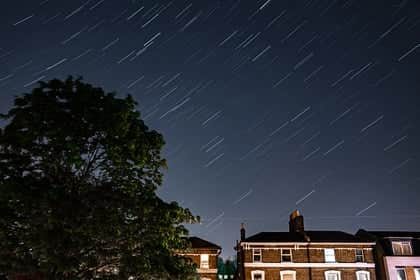
To enhance your chances, look towards the northeastern sky, near the constellation Perseus, which is where the meteors appear to originate. “While you can look at the whole sky and are likely to see a meteor, that's the target location in order to get the best viewing experience,” he added.
Cloudy weather and the brightness of the full Moon on August 9 may affect visibility, but clearer skies and a new Moon on 24 July could offer excellent viewing conditions in the lead-up to the peak.
While no equipment is necessary, there are digital aids that can help enhance the experience. “For me personally, the best way to view the meteor shower is just with your naked eye because of the speed with which they move,” Dr Balaji said. “But you could use Sky Guide or Stellarium or other stargazing apps to get a better viewing experience, to target the right regions of the sky.”
At its peak, the Perseids can produce up to 150 meteors per hour, with the possibility of seeing fireballs – extra bright meteors that last longer than typical streaks.