
Summer solstice 2025: When it happens in the UK, what it means, and why it's the longest day of the year


The summer solstice - the longest day of the year - is finally here.
Taking place in the UK on Saturday, June 21 at 3.41am, according to Royal Museums Greenwich, the event marks the official start of astronomical summer in the Northern Hemisphere and is one of the key transition points in the Earth’s solar cycle.
According to the Met Office: “Usually, when we talk about the first day of summer, we are referring to the astronomical summer which is defined by the Earth's axis and orbit around the Sun.”
The astronomical calendar determines the seasons due to the 23.5-degree tilt of the Earth’s rotational axis relative to its orbit. This tilt causes the Northern and Southern Hemispheres to receive varying amounts of sunlight throughout the year, resulting in seasonal changes.
The summer solstice occurs when the Earth’s North Pole is tilted closest to the sun, giving the Northern Hemisphere the most daylight hours of the year. It also marks the moment the sun reaches its highest point in the sky at noon.
The Met Office explains: “Solstices and equinoxes are the astronomical transition points between the seasons and mark key stages in the astronomical cycle of the Earth.” These include two solstices (summer and winter) and two equinoxes (spring and autumn) each year.
While astronomical summer is defined by these solar events, the meteorological summer follows a different system. Based on the Gregorian calendar, meteorological summer always begins on June 1 and ends on August 31, which allows for easier tracking of weather and climate data.
As the Met Office puts it: “The meteorological seasons consist of splitting the seasons into four periods made up of three months each… making it easier for meteorological observing and forecasting to compare seasonal and monthly statistics.”
Where do people in the UK celebrate the arrival of summer solstice?
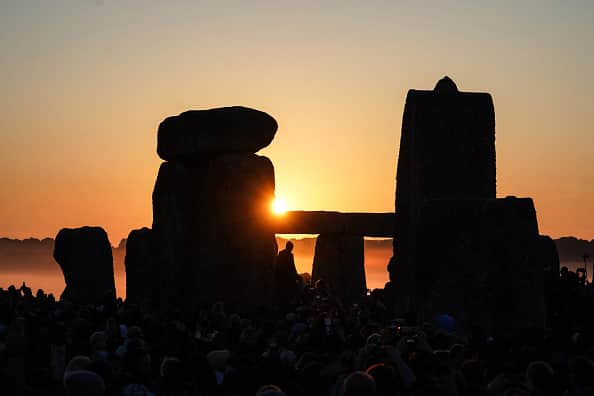
Stonehenge is one of the UK’s most iconic places to celebrate the summer solstice, thanks to its unique alignment with the rising sun on this day. The ancient monument was constructed to mark this celestial event, and each year, crowds gather to watch the sun rise directly over the Heel Stone, casting light into the centre of the stone circle. Its precise solar alignment, combined with its rich historical and spiritual significance, makes Stonehenge a powerful focal point for solstice celebrations.