
Shi Yongxin: Who is Shaolin Temple 'CEO monk'? Liu Yingcheng accused of embezzlement, 'fathering' illegitimate children

Shi Yongxin, the abbot of China’s legendary Shaolin Temple, is under criminal investigation for alleged financial misconduct and moral violations, including “improper relationships with multiple women” and fathering illegitimate children, according to religious authorities and a statement released by the temple.
Shi, 59, widely known as the “CEO monk” for his role in commercialising the 1,500-year-old temple, is “suspected of criminal offences, misappropriating and embezzling project funds and the temple’s assets,” the temple said. The allegations are now under joint investigation by multiple Chinese state agencies.
“He has seriously violated Buddhist precepts, maintained improper relationships with multiple women over a long period of time and fathered at least one illegitimate child,” the temple’s statement added.
In response, the state-supervised Buddhist Association of China announced it had revoked Shi’s ordination certificate, calling his “behaviours extremely deplorable in nature,” and stating that they had “seriously damaged the reputation of the Buddhist community and tarnished the image of monks.”
The scandal marks the latest fall from grace for one of the most recognisable figures in Chinese Buddhism. Shi-born Liu Yingcheng-joined the temple in 1981, rose to abbot in 1999, and transformed the once-modest monastery in Henan Province into a global commercial brand.
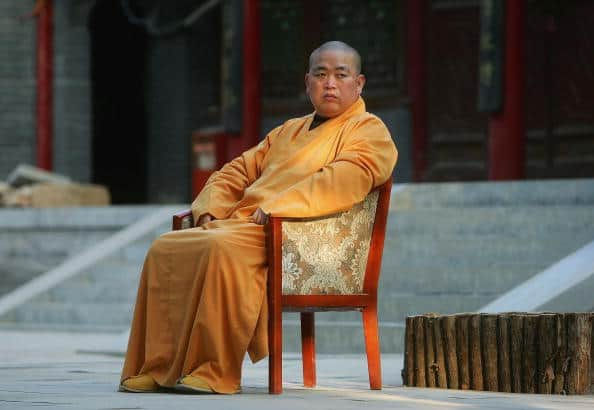

He oversaw business ventures that included books, kung fu performances, asset management, medicine, real estate, and even an online store that once sold kung fu manuals for nearly $1,400. The temple, which draws thousands of martial arts students and tourists annually, has long been seen as a symbol of Chinese cultural heritage and soft power.
As reported by the Taipei Times, Shi’s growing empire also included plans for a $300 million luxury Shaolin resort in Australia and a controversial IPO, eventually scrapped after backlash. Critics accused him of abandoning spiritual integrity in favour of profit and celebrity, earning him both followers and fierce detractors.
A firestorm of accusations resurfaced this month after a self-described “seeker of justice,” allegedly a former monk at the temple, released documents and photos claiming Shi used temple funds to support lavish personal spending—including cars, overseas property for a mistress, and gifts to romantic partners. One of the accusers, a Shaolin nun, claims Shi fathered her child. Another says she has kept a condom as physical evidence. Shi has not responded publicly to the latest allegations.
In 2015, similar claims circulated online, including accusations of sexual misconduct. The temple dismissed those at the time as “vicious, groundless libel.”
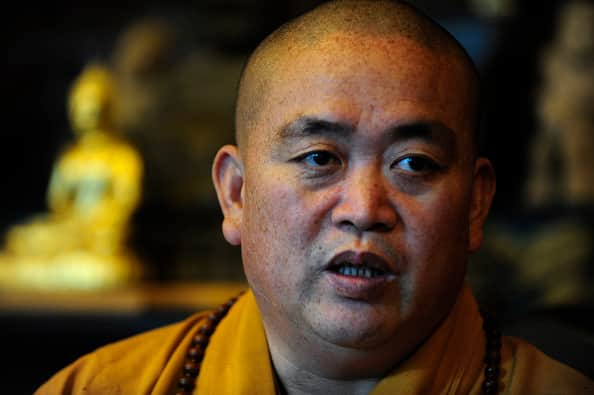
Still, support for Shi remains within parts of the temple community. Thirty resident monks reportedly signed a letter defending the abbot. “You won’t find a more virtuous man,” said Wang Daling, a long-time temple tour guide, speaking to Taipei Times reporters.
Others, however, were not convinced. “Just the sight of his fleshy face to me suggests he’s guilty,” said one tourist from Shandong. “Monks aren’t supposed to be so fat.”
State media has continued to report the investigation, suggesting it has the blessing of top Chinese leadership amid an ongoing anti-corruption drive. According to the Taipei Times, local police confirmed they had opened a formal investigation, and Shi missed a scheduled martial arts appearance in Thailand last weekend, reportedly because he was “tied up” with legal matters.
Shi, who served as a delegate in China’s National People’s Congress until 2018 and held senior positions in the state-run Buddhist Association, once brushed off criticism by telling the BBC, “If these things are problems, they would have become problems by now.”
Who is Shi Yongxin?
Yongxin was born in Yingshang County, Anhui Province, China. He entered monastic life at the age of 16, following his parents’ wishes, and received full ordination as a monk in 1984. After completing his studies at several Buddhist colleges, he was appointed as the designated successor to the abbotship of the Shaolin Temple at just 22 years old.
His formal inauguration as abbot was marked by a Dharma assembly held at the temple from August 19 to 20, 1999. Over the years, Shi has held several prominent religious and political positions. He has served as Chairman of the Henan Province Buddhist Association, Vice Chairman of the Buddhist Association of China, and was a delegate to the National People’s Congress from its ninth to twelfth sessions.