
Where is Venezuala? Why has the US captured its leader Nicolas Maduro?

Venezuala is a fairly unassuming country on South America’s Caribbean coast - but it has attracted the ire of the US for several years. Here’s the background to the nation which has just seen its president Nicolas Maduro captured by US forces.
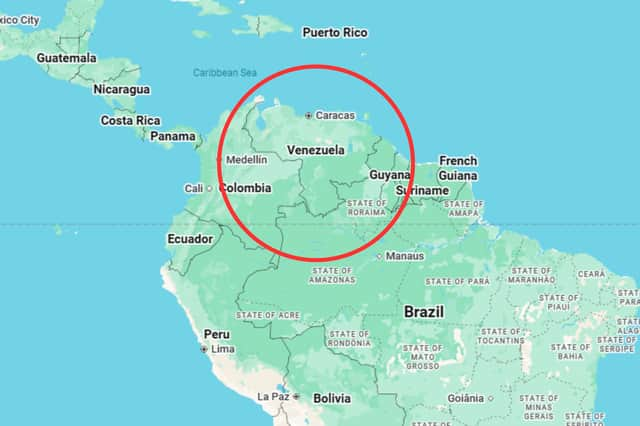
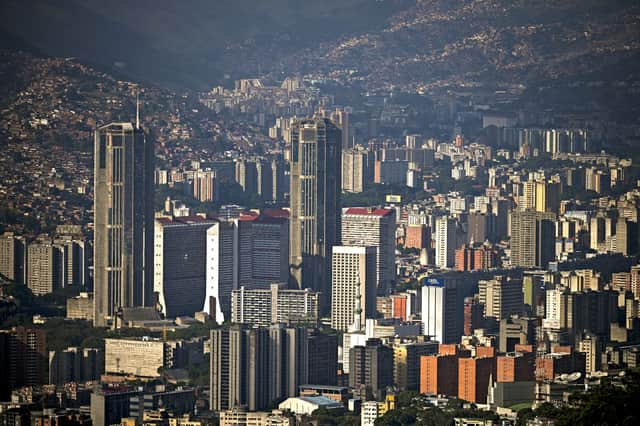
Venezuela is on the northern coast of South America, bordering the Caribbean Sea. It sits at a strategic crossroads between Central America and South America, with Colombia to the west, Brazil to the south, and Guyana to the east. To the north lies the Caribbean, giving Venezuela about 1,7800 miles of coastline and access to major shipping routes. Its capital city, Caracas, is near the northern coast in a mountainous valley.

Geographically, Venezuela is one of the most diverse countries in Latin America. It can be divided into several regions. The Andes Mountains stretch into the northwest, where the country’s highest peak, Pico Bolívar (4,978 metres), is located. To the south and southeast lies the Guiana Highlands, home to ancient plateaus called tepuis. One of these is Mount Roraima, which inspired Arthur Conan Doyle’s The Lost World. From these highlands flows Angel Falls, the world’s tallest uninterrupted waterfall at 979 metres.
The central part of Venezuela is dominated by the Llanos, vast tropical plains that flood seasonally and are used mainly for cattle ranching and agriculture. The southern half of the country includes part of the Amazon rainforest, making Venezuela one of the most biodiverse nations on Earth, with thousands of species of plants, birds, and mammals.
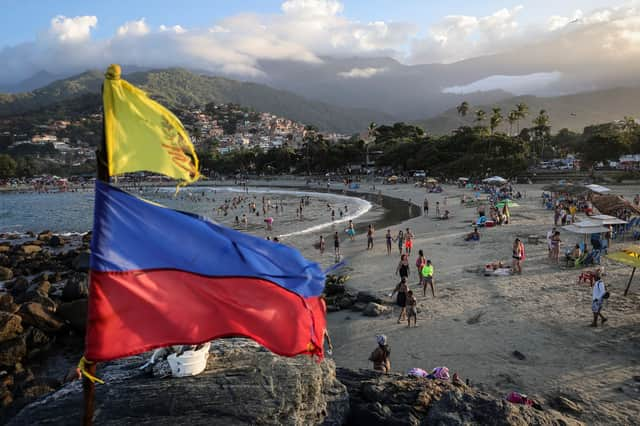
Venezuela has a population of around 28 million people, although millions have emigrated in recent years due to economic hardship. The population is ethnically mixed, with people of Indigenous, European, African, and mixed descent. Spanish is the official language, though several Indigenous languages are also recognised. The majority of Venezuelans live in urban areas, particularly in the north of the country.
Historically, Venezuela was a Spanish colony until it gained independence in 1821, led by revolutionary figure Simón Bolívar, after whom the country is officially named the Bolivarian Republic of Venezuela. For much of the 20th century, Venezuela was one of Latin America’s wealthiest countries, largely due to oil.
One of the most important facts about Venezuela is its oil wealth. The country possesses the largest proven oil reserves in the world, surpassing even Saudi Arabia. Oil has shaped Venezuela’s economy, politics, and international relationships for decades. However, heavy dependence on oil, combined with economic mismanagement, corruption, and falling production, has contributed to severe economic instability.
Venezuela has a strong tradition of baseball - the country’s most popular sport - and sees many vibrant festivals, reflecting its joint Caribbean and Latin American identity.
Why has the US captured Nicolas Maduro?
The strained relationship between the United States and Venezuela, particularly under President Nicolás Maduro, is the result of a long mix of ideological conflict, concerns over democracy and human rights, economic interests, and regional security. While tensions intensified after Maduro came to power in 2013, they are rooted in developments that stretch back decades.
At the heart of the dispute is ideology. Venezuela’s modern conflict with the US began under Hugo Chávez, Maduro’s predecessor and political mentor, who pursued a socialist project known as the “Bolivarian Revolution”. Chávez openly opposed US influence in Latin America, forged close ties with countries hostile to Washington such as Cuba, Russia and Iran, and nationalised major industries, including oil. Maduro has continued this approach, positioning Venezuela as a symbol of resistance to US “imperialism”, rhetoric that has kept relations confrontational.
A major reason the US does not recognise or support Maduro is its view that Venezuela is no longer a functioning democracy. However, the concern is not just driven by principle or by altruism - the large oil reserves in the country are also likely to have a lot to do with it.