
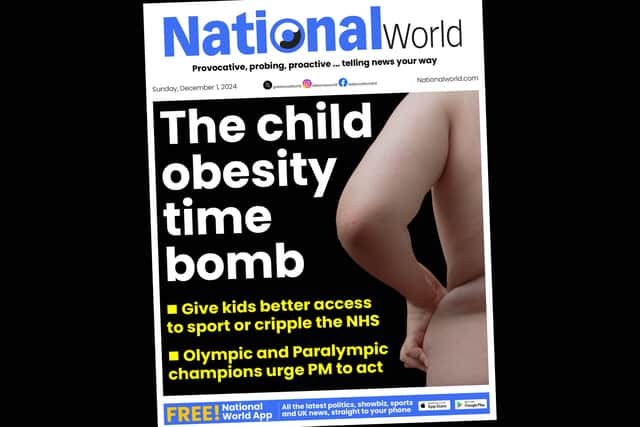
We must give children better sport and physical activity opportunities or we'll cripple the NHS and a whole generation

In an attempt to address the problems of obesity and mental health in children, Mo Farah delivered a letter to Number 10 signed by fellow Olympic and Paralympic champions urging the PM to ‘’put children first’’ and give children greater access to sport.
The four-time Olympic gold medallist stated ‘’We need to react now and be able to give kids an opportunity to be active’’.

This is a particularly meaningful cause to Farah as he claimed ‘’sport has helped me become the man I am’’ after being trafficked as a child, sports was the ‘’only way out’’ for him. This call for change has come at a crucial time, with obesity levels in the child population at concerningly high levels. Over a quarter of the children in a Youth Sport Trust study are now classed as ‘’very sedentary’’ and ‘’very inactive’’. This has particularly worsened for girls, where only 8% of highly active children were girls.
I hope this letter implores the government to address these mounting health problems by giving children better opportunities to carry out physical activity.
According to the UK government, 1 in 6 premature deaths are caused by physical inactivity and costs the NHS nearly 1 billion pounds. Inactivity as a child contributes to these long-term health issues, burdening the NHS. Professor Hanson, professor of human development of health at Southampton explained how obesity in children is difficult for them to overcome as an adult: ‘’some 60-85% of children with obesity remain obese in childhood’’.
By targeting the younger generations, we can try tackle this serious problem in Britain.
Hearing about my parent’s childhoods, I can’t help but feel a bit envious of them for having hardly any technology. While many children spend their time trapped inside watching TV or playing games on the iPad, they were outside, playing sports. I’ve come to loathe these insular past times, which are inhibiting child growth, development and social skills. Reemphasising the importance of sport is necessary to limit children’s technology usage. Not only is sport an ideal way to meet the exercise requirements for children, but it allows them to engage with others, interact, and socialise as a team in the local community.
But to me, the issue also goes beyond sports facilities - it is the general lack of time everyone, including children, spend outdoors. I blame this on the aftermath of COVID – 19, where we all adjusted to staying indoors, scrolling mindlessly on social media and binge-watching TV series.
Spending time in nature, which may just be short walk, can hugely boost emotional wellbeing. A fascinating study in Denmark examined 900,000 residents born between 1985 and 2003 and discovered that children who lived in neighbourhoods with more green space had a reduced risk of mental disorders later in life.
We can’t solve this issue alone though. As Farah is promoting, a strong step towards reducing physical and mental disorders in children is to prioritise the development and funding of facilities to create a more active, and ultimately healthier younger generation. This will not just improve their quality of life, but reduce pressures on the NHS and society.