
Hypershell review: I tried a set of robot legs that helps you climb hills


This article contains affiliate links. We may earn a small commission on items purchased through this article, but that does not affect our editorial judgement.
Strapping motors to your hips sounds like science fiction, but Hypershell’s wearable walking tech is already on sale. After weeks with its flagship model, I can see the appeal, and the compromises.
Every now and then I get invited to review something that feels like we're wandering into the realms of science fiction. And I don't just mean a futuristic coffee maker, this time it's an exoskeleton.
Yep, it sounds like something out of a comic franchise, but it's real, it works, and you can even buy one on Amazon.
Perhaps I should explain exactly what this remarkable device is. It's a wearable assistance tool that gives your legs some powered assistance. We’ve become quite comfortable with the idea of giving a bicycle an electric motor to make hills easier, but strapping a pair of motors to our hips still takes a little more getting used to.
But that is essentially the proposition behind the Hypershell X Series, a new and improved consumer-focused range of wearable exoskeletons designed to give you a boost when you're on a walk or a run.

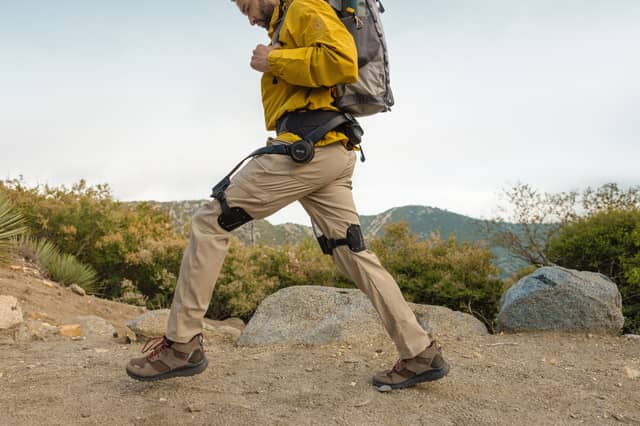
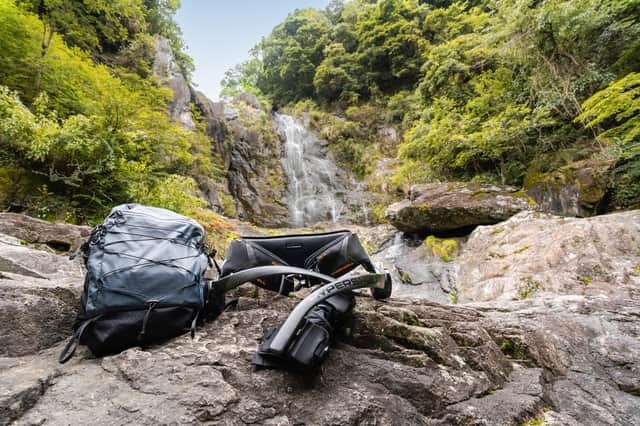
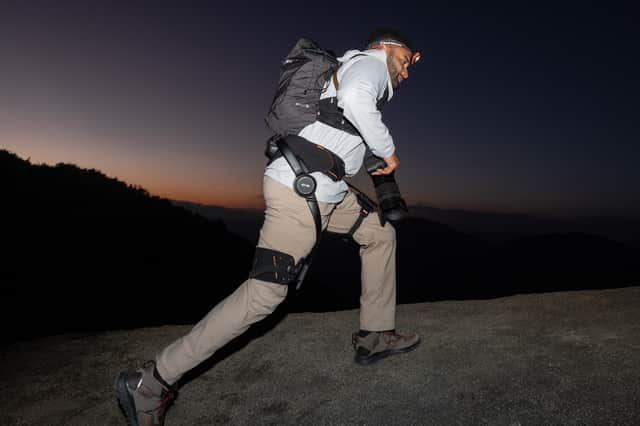
The equipment sits around your waist, with a motor at each hip and arms attached to straps around your thighs. Sensors monitor your movement so the motors can contribute to each stride.
You still have to walk, balance and decide where you’re going. The idea is to reduce some of the effort involved, particularly when the path starts heading uphill.
The original range comprises the X Go, X Pro, X Carbon and X Ultra, and the prices can be as steep as the mountain you're about to tackle. You're currently looking at a starting price of £899, all the way up to £1,699 for the range-topping carbon fibre and titanium Hypershell X Ultra S that I've spent a few weeks getting to grips with.
What I liked about the Hypershell X Series
The most interesting thing about Hypershell is that it addresses a fairly straightforward problem with some remarkably complicated technology.
Plenty of people enjoy walking but find long climbs hard work. Being able to take some of the strain out of those sections is an appealing idea, especially if it makes a favourite route feel more manageable.
And once you get used to the absolute weirdness of feeling that assistance kick in, it does exactly that.

The design is considerably less elaborate than the word “exoskeleton” suggests, despite the fact it looks a bit weird. You aren’t climbing into a robotic suit; the equipment is concentrated around the waist and upper legs, leaving your lower legs and feet free.
That doesn’t make it invisible, but it does make the concept feel rather more practical than the full-body contraption you might initially picture.
There's adjustable assistance, too, which is useful. A gentle woodland path and a steep climb don’t demand the same amount of effort, so there is little point using the strongest setting throughout a walk.
The companion app lets you adjust assistance and monitor information such as remaining charge. Adjusting the assistance levels will help you to balance the distance you can go, which is something you'll probably find yourself doing a fair bit. Keeping enough power in reserve for the climbs you know you're about to tackle.
The cleverest bit, though, is how that assistance arrives. Their "HyperIntuition" system is designed to coordinate power more closely with your movements, using an AI system. It cleverly gets around the fact that walking involves stopping, turning and changing pace, rather than marching along at a perfectly consistent speed. It still doesn't feel 100% natural, but it's very effective.
The newer X range offers a Pro S, Max S, and flagship Ultra S, and I wouldn’t automatically head for the most expensive one. Having several models gives you the opportunity to match the equipment to the walking you actually do.
What I didn’t like about the Hypershell X Series
The obvious problem is the price. Even the cheapest original model costs hundreds of pounds, while the newer Ultra S is £1,699. That is a substantial investment in something you may only use for particular activities. If most of your walking involves relatively short, flat routes, the justification becomes harder.
You are adding equipment, charging, and preparation to an activity whose great attraction is often that you can simply put your shoes on and leave the house.
Battery life also needs careful consideration. Hypershell advertises up to 30km per battery for the original Ultra, but the assistance setting makes a considerable difference. In the laughably entertaining "Hyper" mode it's possible to drain a battery before 5km.
While the exoskeleton is designed to be comfortable - and it pulls it off, I found it won't suit all body shapes, and the adjustments do have their limits.
There’s also the small matter of image. This is perhaps an entirely personal thing, but I felt a bit self-conscious using the exoskeleton out in public. It’s surprisingly subtle, but still draws some funny glances. If you don’t mind being glared at, you’ll be fine. But it’s rare you encounter someone who knows what it is and wants to find out more.
Overall verdict - should you buy the Hypershell X Series?
The Hypershell is an unusual product with a more practical purpose than its futuristic appearance might suggest. Giving your legs powered assistance sounds extravagant, but making strenuous walks less demanding is a benefit people can understand.
What appeals to me most is the possibility of enjoying the walking you already like with a little help on the hardest sections.
The reservations are substantial, though. These are expensive devices, battery endurance depends heavily on how much assistance you request, and the fit needs to work for your body.
For occasional strolls, I think the cost and complication would be difficult to justify. For someone who regularly tackles hills and is interested in reducing the effort involved, Hypershell deserves a closer look.
I would start with a fitting and demonstration, then compare the original and newer models carefully. The additional refinement of the X Series may matter more to you than saving money on an older version.
You still have to climb the hill yourself. But having a pair of motors willing to contribute is certainly an interesting development in walking equipment.