
Mercedes won by 20 seconds - here’s why they still tore it apart afterwards
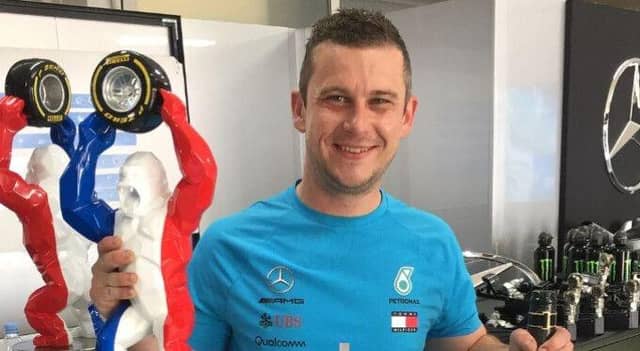

Now based in Warwick, Ryan McGarva continues to work with organisations across the UK, drawing on lessons forged at the highest level of motorsport. His experience inside Formula 1 places him among a select group translating elite performance into practical leadership insight.
In Formula 1, success is built on precision, preparation and marginal gains measured in thousandths of a second. Few understand that environment better than Ryan McGarva, who worked within one of the most dominant teams of the modern era.
Now recognised among leading Formula One (F1) Speakers, McGarva brings first-hand insight from the pit lane to business audiences. His experience inside a championship-winning operation offers a rare perspective on data-driven decision-making, high-pressure execution and sustained competitive advantage.
Represented by Champions Speakers Agency, he translates elite motorsport performance into practical lessons for leadership teams focused on preparation, culture and continuous improvement.
Question 1. In modern motorsport performance, how did Mercedes use Formula 1 data analytics to stay ahead, and what can business leaders learn from elite F1 strategy?
Ryan McGarva: “Yeah. So data is analysed in every area of F1, whether it's in the pit stops, the performance of the car, or the reliability of the car. I think the first thing that they would do is analyse ourselves and the things that the team can control. They also analyse the competition. So it's very important to look at the other nine teams on the grid and what they're doing and any lessons that can be learned from what your competition are doing.
“A very famous designer, Adrien Yui, he's one of the best F1 designers that there's ever been, but at the start of the race you regularly see him on the grid looking at what all the other teams are doing. He's taking in what he can learn from the other nine teams on the grid. So it's very important to analyse your competitors.
“In the olden days the data was the advantage. The more data you had, the more of an advantage you had. But now the teams all have a very similar amount of data and the same information available to them.
“So the strengths come from your team and how they analyse that data, how they prioritise what they look at, and realising when there's bad data and not reacting to that. So I think it's actually the people as much as the data.”
Question 2. Formula 1 pit stop strategy is often described as the ultimate test of precision under pressure. What can businesses learn from the preparation behind a world-class F1 pit crew?
Ryan McGarva: “Yeah. So back to preparation again. Having a plan, planning how you're going to achieve your objective. Also planning what’s going to go wrong and how you're going to react to that. We would do about 60 practice pit stops every race weekend.
“We'd also plan for things like broken front wings, punctures, gun failures, all sorts of things that tend not to happen very often. But when it did happen and you were in that high-pressure situation, everyone in the team knew how they were going to react.
“I think as well trusting your teammates to do their job. You know that everyone in the team is doing their job, so you just need to focus on your small area. Also winning as a team and losing as a team. Not all the time did we do the perfect pit stop. We had a few shockers in our time. But it's about learning from the mistakes, making sure they don't happen again and moving forward.
“Being part of the pit crew, you had to be quite agile and able to adapt to changing situations. Rarely did the race pan out exactly how you thought it was going to from the start. Being able to adapt and have a plan for what you were going to do is probably the most important thing.”
Question 3. During Mercedes’ era of Formula 1 dominance, how did the team sustain motivation and a high-performance mindset season after season?
Ryan McGarva: “Celebrating success is important. The thing you probably see on TV is people running down to the podium, spraying champagne and jumping around together. It is important to celebrate your success. But very quickly, half an hour after the podium, it was back to work analysing what went wrong.
“Even when we were dominating, you might have won the race by 20 seconds, but there were always things that happened in that race that you could learn from. There were small mistakes, whether it was a tyre choice, a strategy decision, or a small mistake in the pit stop.
“There were always improvements that could be made. Analysing those little mistakes and trying to improve the team keeps you moving forward.”
Question 4. As a motorsport speaker addressing business audiences, what core message about continuous improvement in sport and leadership do you hope resonates most?
Ryan McGarva: “I think it's about trying to have continuous improvement, whether that's in your personal life or in your business. Try to make small changes to continually improve how you do things.
“F1 teams do that all the time, whether it's the performance of the car, the reliability of the car, or the pit stops, all the small areas. Just try to continually improve how you do things.”
This exclusive interview with Ryan McGarva was conducted by Tabish Ali of the Motivational Speakers Agency.