
10 stunning spots to see in Summer Solstice
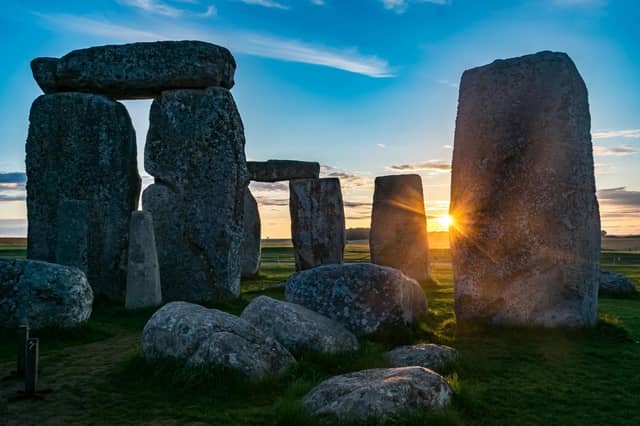

Taking place on Saturday June 21st this year, when the sun reaches its highest point in the sky and daylight stretches into the late evening hours, is the summer solstice; a time of reflection, connection with nature, and celebration of the Earth’s cycles.
Casting a golden glow over the UK’s most mystical and ancient landscapes, the solstice is a special time to get out and explore. With Google searches for this topic increasing 49% in the past three months, it seems many are looking for ways to celebrate it.
From prehistoric stone circles to windswept hilltops, you’ll need the right footwear for roaming, so sandals experts at FitFlop has researched 10 awe-inspiring UK locations to welcome the year’s longest day - each with a powerful story to tell.
1. Stonehenge, Wiltshire (301,000 monthly Google searches)
Arguably the most iconic solstice site in the world, Stonehenge is a 5,000-year-old monument where the sun rises in alignment with the Heel Stone on the summer solstice. Druids, pagans, and spiritual seekers gather here each year to witness the dawn light filter through these massive stones. Its mysterious construction and astronomical precision have captivated people for centuries.
2. Arthur’s Seat, Edinburgh (165,000 monthly Google searches)
For a nature-infused celebration which is still close to the city, Arthur’s Seat is a great choice, with sweeping views of Edinburgh. This peak in Holyrood Park is actually an ancient volcano named after the legendary King Arthur which offers a dramatic vantage point to witness the rising solstice sun over the historic skyline.
2. Arthur’s Seat, Edinburgh (165,000 monthly Google searches)
Less crowded but equally impressive, Avebury boasts the largest stone circle in Europe and is part of a set of Neolithic and Bronze Age ceremonial sites. Unlike Stonehenge, visitors can walk among the ancient stones freely. Thought to have been a centre for ritual ceremonies around 2600 BC, making it older than Stonehenge, Avebury aligns closely with solstitial events and offers a more intimate, immersive experience.
4. Glastonbury Tor, Somerset (33,1000 monthly Google searches)
Rising majestically above the Somerset Levels, Glastonbury Tor has long been associated with myths of Avalon, where King Arthur went after his last battle. Its spiraling path is thought to represent a labyrinth, and the site is popular among spiritual pilgrims. On the solstice, many gather here to meditate, celebrate, and soak in the panoramic sunrise.
5. Castlerigg Stone Circle, Cumbria (22,200 monthly Google searches)
Set in a natural amphitheatre surrounded by the Lake District fells, Castlerigg is one of the most photogenic and ancient stone circles in Britain known for its 360-degree view and 38 standing stones. Dating back to around 3000 BC, it may have functioned as an early observatory. Its peaceful energy and sublime setting make it a magical place to welcome the solstice sun.
6. The Rollright Stones, Oxfordshire (14,800 monthly Google searches)
This ancient Neolithic and Bronze age site includes the King’s Men stone circle, the Whispering Knights, and the King Stone made from Jurassic oolitic limestone. Each site dates from different time periods and is shrouded in its own folklore, with ties to both pagan and druidic practices. The Rollright Stones offer a haunting and mystical setting for observing solstice rites in the heart of the English countryside.
7. Calanais Standing Stones, Isle of Lewis, Scotland (12,100 monthly Google searches)
Set against the dramatic backdrop of the Outer Hebrides, the Calanais Stones (also known as Callanish) were erected over 5,000 years and are arranged in a cruciform pattern with a central stone circle. On the solstice, the sun sets in alignment with the shape of a reclining figure in the surrounding hills, known locally as the "Sleeping Beauty." These Neolithic stones are steeped in legend and provide a remote, solstice experience.
8. Silbury Hill, Wiltshire (8,100 monthly Google searches)
Near Avebury lies Silbury Hill, the largest artificial mound in Europe which is 30 metres high and 160 metres wide. Though its original purpose remains a mystery, it is believed people gathered for events and episodes of building. Visitors can’t climb the hill, but viewing the sunrise or sunset from nearby footpaths provides a powerful connection to its enigmatic presence.
9. Bryn Celli Ddu, Anglesey, Wales (1,600 monthly Google searches)
Meaning “the mound in the dark grove,” Bryn Celli Ddu’s most unusual feature can only be seen once a year. This Neolithic burial chamber on the island of Anglesey aligns precisely with the midsummer sunrise, where shafts of light shine directly down the tomb’s passageway to illuminate the chamber inside. Bryn Celli Ddu is a hidden gem where ancient engineering meets celestial beauty.
10. Penwith Peninsula, Cornwall (1,000 monthly Google searches per stone attraction)
Home to a rich tapestry of ancient sites, the Penwith Peninsula features stone circles like Merry Maidens, standing stones such as Men-an-Tol, and mystical spots with maritime views. The area is steeped in Celtic tradition and provides a deeply spiritual setting to connect with the solstice amid the coastal winds.
For ancient Britons, the solstice was a time of cosmic harmony, renewal, and gratitude to the sun for sustaining life. Today, whether you're dancing at dawn among stones or quietly reflecting on a hilltop, celebrating the solstice offers a chance to pause, realign with nature’s rhythms, and embrace the light.