


September 2025 feels like the right moment to reflect on the deep, historic ties between Normandy and Great Britain. In just two years’ time, both countries will mark the 1000th anniversary of the birth of William the Conqueror, the Norman duke whose reign transformed the story of England. Preparations for the commemorations are already underway on both sides of the Channel, with cultural institutions, heritage groups, and tourism boards beginning to frame how this milestone will be remembered and celebrated.
This momentum has been given a fresh spark by the recent BBC One series King and Conqueror, which captured the public imagination with its vivid portrayal of William’s rise and legacy. For many, it has rekindled interest in the places and landscapes that shaped his journey. Travelling to Normandy now feels both timely and relevant: a chance to explore the region not only through the lens of its wartime history and natural beauty, but also as the cradle of a story that continues to connect Britain and France in profound ways.
Normandy: Where History and Beauty go Hand in Hand
Some journeys are about landscapes. Others are about food, culture, or art. And then there are those rare journeys that feel deeply personal — places where memory, history, and beauty combine to create something unforgettable. Normandy is one of those places.
For me, travelling through Bayeux, Arromanches, Caen and Honfleur was more than a holiday. It was a a kind of pilgrimage, a chance to walk in the footsteps of my grandfather, who was part of the Battle for Normandy during the Second World War. Being there, in the places that shaped his story and the wider story of Europe, was both humbling and inspiring.
Yet Normandy is not defined only by conflict. It is a region of remarkable resilience, breathtaking scenery, and vibrant culture. Medieval spires rise above cobbled streets; bustling markets spill with cidre, Calvados cheese, and seafood. Harbours glisten in the soft light that once inspired the Impressionists.
One of the pleasures of the trip was discovering how accessible everything was. From the start, LeShuttle’s Flexi Plus lounge set the tone — fully accessible with excellent facilities, making travel relaxed and inclusive. Driving off in France felt effortless, with the reassurance that the journey had been designed for everyone. The charging on the French side for those with EV’s is exceptional too so the 2.5 hour trip to Normandy was relatively painless.
Bayeux: The Timeless Jewel
Bayeux is often called the jewel of Normandy — and rightly so. Its medieval core remains intact, spared from wartime destruction, and it has a quiet elegance that makes you feel as if you’ve stepped into a storybook. Half-timbered houses lean over narrow lanes, while the River Aure winds gently through the heart of the town.
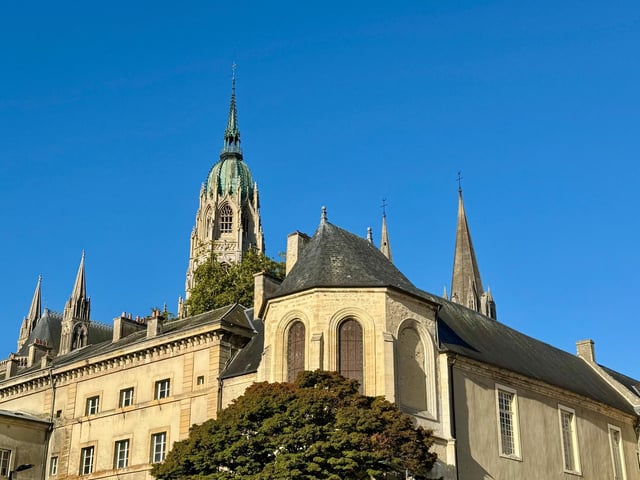
The cathedral dominates the skyline, a gothic masterpiece with soaring towers and intricate stained glass. Step inside and you are transported to the Middle Ages, where William the Conqueror once walked. This sense of continuity is everywhere in Bayeux — a city that connects the Norman Conquest of England with the liberation of France centuries later.
Dining in Bayeux is a pleasure in itself. At Restaurant La Normande, we were greeted like old friends. The menu features dishes like chicken drenched in cream and cider, local cod served with an amazing scallop spring roll, washed down with local pear cider — superb! The owners are incredibly proud of the restaurant’s reputation and the service was superb.
Arromanches and the Landing Beaches of D Day
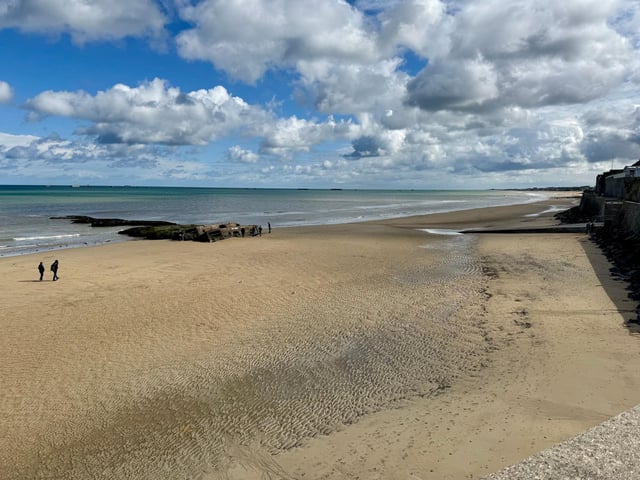
At Arromanches, the remains of the Mulberry Harbour stretch out into the sea, ghostly reminders of the ingenuity and sacrifice that defined D-Day. Nearby, the British Normandy Memorial at Ver-sur-Mer offers another profound moment of pause. Overlooking Gold Beach, it honours the 22,442 Commonwealth soldiers who lost their lives in the Battle of Normandy.
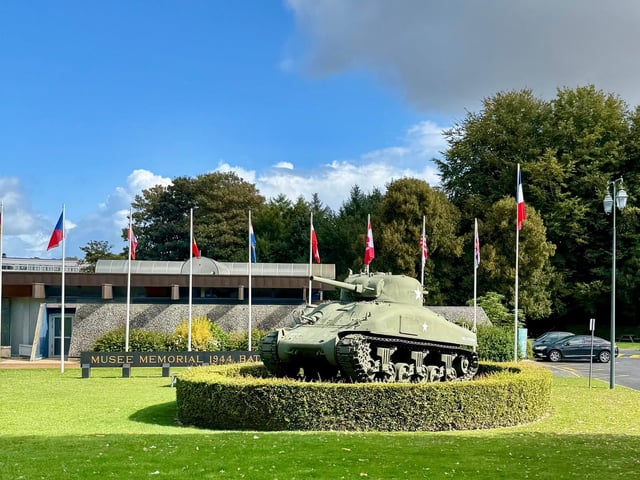
We visited the D Day museum on Gold Beach which was fascinating and with the audio tour included it gave such great insight into June 1944 and beyond! We also climbed the hill to the Normandy Invasion 360 cinema which was both powerful and extremely informative. Well worth a visit. Both venues offer lifts, ramps and studded areas for the visually impaired.
For travellers with personal family connections to the war, as I have, these sites carry an extra weight. But even without that link, the beaches of Normandy move everyone who visits. They are not only sites of loss, but of liberation symbols of courage, unity, and the human spirit.
What impressed me throughout these visits was the attention to accessibility. Museums and memorials offered carefully designed walkways for the visually impaired, audio signals to aid visitors with hearing loss, ramps at every opportunity, and facilities for wheelchair users almost everywhere. This inclusivity added to the sense of welcome, ensuring that history here is open to all.
Caen a City of Conquerors and Survivors
If Bayeux feels timeless, Caen feels alive with layers of history. This was William the Conqueror’s city, where he built great abbeys and a mighty castle in the 11th century. Walking through the grounds of the castle, you sense the ambition of the man who would shape both Normandy and England.
Nowadays the two fabulous on site Museums are joined by a fully immersive ‘sound and light show’ inside the Great Hall. This takes you through 1000 years of Caen from 1025 up to current day. I do have to say though the café lets the venue down with lacklustre service and a poor offer. But that’s a personal gripe from a tea and biscuit addict!
Evenings in Caen bring a different kind of richness. Restaurants such as El Olivo and Le Raphaël showcase the region’s creativity in the kitchen. Refined, imaginative and always rooted in local produce. At La Raphaël the waterside setting and the top deck terrace are perfect to take in the city’s riverside views. Access for all is paramount and we had no issues visiting either venue.
No trip to Normandy would be complete without a visit to Honfleur. It is one of the most picturesque towns in France, a harbour town whose beauty has captured artists and travellers for centuries. I’m told it’s the 10th most visited site in the whole country.
Arriving here feels like stepping onto the canvas of an Impressionist painting. The harbour shimmers with reflections of slate-roofed houses, their tall narrow façades painted in soft pastels. Fishing boats and yachts bob gently, while cafés spill out onto the cobbled quayside.
Honfleur’s charm lies not only in its views but in its atmosphere. Art galleries line the streets, echoing the town’s creative heritage. Wander at leisure and you’ll discover hidden courtyards, timber-framed houses, and boutique shops. It is a place to slow down, to absorb light, colour, and character.
Dining here is another highlight. At SaQuaNa, the local boulangerie that quite simply serves the finest pastries I have ever ever eaten. Savoury dishes like beef fame Stroganoff and local seafood are given a contemporary twist, while every detail from presentation to service reflects the town’s pride in hospitality. It’s run by a two Michelin-starred chef and the quality is simply outstanding!
Just beyond the harbour is the La Mora project. This offers a glimpse into another chapter of history, with a fully immersive, technically brilliant history lesson on William I along with a full-scale reconstruction of William the Conqueror’s ship. It is a reminder that Normandy’s story has always been one of journeys, ambition, and exchange.
What struck me most about Normandy is its ability to hold so many layers of history and beauty together. One moment you are in a fully immersive exhibition like La Mora, then you find yourself in a medieveal cathedral, the next you are standing on a windswept beach where the course of the 20th century changed forever. You stroll through harbours once painted by Monet and Boudin, before driving down avenues rebuilt after wartime devastation. For a visitor, it is impossible not to be moved. Normandy is both a landscape and a story.
Ferries run from Newhaven and Portsmouth but the most sustainable route is with LeShuttle, travelling from Folkestone to Calais. The journey is fast, reliable, and ideal for electric vehicles, with charging points available in Calais. Flexi Plus tickets include passes to a fully accessible lounge with super facilities and tasty treats. Book at www.leshuttle.com.
Where to go and stay
Hotel Reine Mathilde, Bayeux – Central, comfortable, and full of character, this is the perfect base for exploring Bayeux and the surrounding region.
• Hôtel Reine Mathilde, Bayeux: www.hotel-bayeux-reinemathilde.fr
Highlights to Visit
• Bayeux Cathedral & MAHB Museum: www.bayeuxmuseum.com
• Arromanches & D-Day Museum: www.musee-arromanches.fr
• British Normandy Memorial, Ver-sur-Mer: www.britishnormandymemorial.org
• Caen Castle & Abbaye aux Hommes: www.caen.fr
• Caen Memorial Museum: www.memorial-caen.fr
• Honfleur Harbour & Galleries: www.ot-honfleur.fr
• La Mora Reconstruction Project: www.la-mora.org
Where to Eat
• Restaurant La Normande, Bayeux: www.restaurantlanormande.fr
• El Olivo, Caen: www.elolivo-caen.fr
• Le Raphaël, Caen: www.restaurantleraphael.fr
• SaQuaNa, Honfleur: www.restaurant-saquana.fr
1. Contributed
Bayeux cathédral Photo: Submitted
2. Contributed
Gold beach at Arromanches Photo: Submitted
3. Contributed
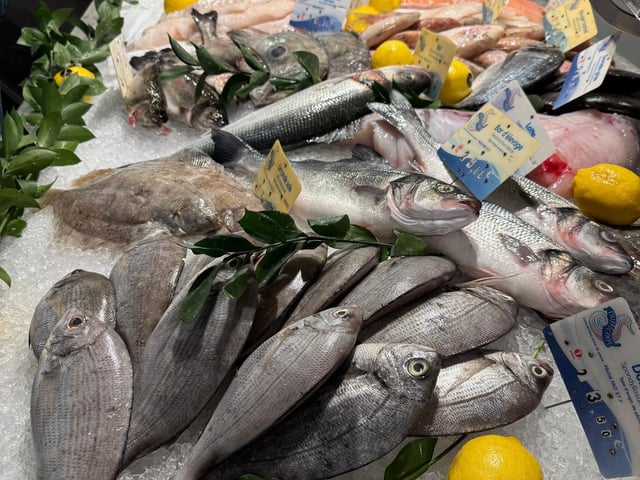
The freshest fish from Honfleur Photo: Submitted
4. Contributed
D Day remembered Photo: Submitted