


Modern and wealthy, Kazakhstan is where apples and tulips come from and is the home of space travel and the world’s newest capital city. With a population of just over 21 million, there is plenty of open space but I was aiming for its two major cities, Almaty, the former capital, and Astana, the new capital.
Almaty
My first surprise was the overnight flight to Almaty with the national carrier, Air Astana; comfortable and great service. Its President and CEO hails from Yorkshire and the airline has won ‘Best Airline in Central Asia and CIS’ fourteen years in a row.
After a short transfer to my hotel there was time to rest after the overnight flight before heading out for an early evening exploration and dinner. Looking out of my hotel window onto a busy road with traffic streaming in and out of the city, I was surprised to see a number of people ‘thumbing’ lifts from passing motorists, underlining just how safe the country is.
Almaty, whose name is derived from the Kazakh word for apples, was the country’s capital city until 1997. It is still its largest and, for many, the commercial hub. I saw numerous good hotels and restaurants as well as night clubs and entertainment.
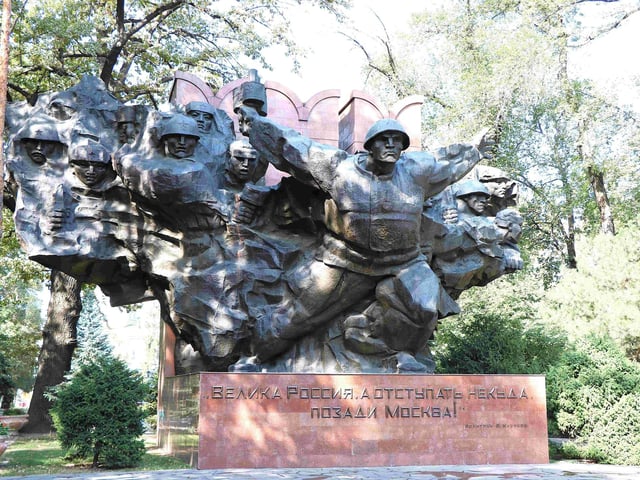
After a welcome dinner, a good night’s sleep and a buffet breakfast next morning I set out with my guide to discover more of this lively metropolis. Probably the best-known attraction is the Russian Orthodox Ascension Cathedral, also known as the Zenkov Cathedral after its architect Andrei Zenkov. Completed in 1907 it’s made entirely of wood, built without nails and is the world’s largest wooden cathedral. It’s situated in Panfilov Park, a delightful area named after the regiment from which twenty-eight guardsmen died during the battle of Moscow in WWII. A memorial to them contains part of the Berlin Wall.
One of the reasons for moving the capital was the threat to Almaty of earthquakes and mudslides from the nearby Tien-Shan mountain range. However, visitors need not be concerned as the buildings are constructed with that in mind and the Medeu Dam, a large barrier of rocks and rubble, protects the city from mud slides.
Prior to its independence from the USSR, the then occupying Russian soldiers built a huge speed skating rink at the dam which, at 1691m (5,500ft) is the world’s highest and just a short journey from the city centre. The quality of the ice is superb and over two hundred world records have been broken there. The rink is in a dip, surrounded by trees, and is something of a winter suntrap. My guide told me, with a wistful look in his eye, that girls often skate in bikinis and it’s where many young men meet their future wives.
From there I took a chairlift to Shymbulak, a lovely alpine-style resort. It narrowly lost out to Beijing to host the winter Olympics and numbers Prince Harry amongst its former visitors. I enjoyed a relaxing lunch and was in no hurry to leave this delightful spot so it was late afternoon by the time I made it back to the centre of Almaty.
Astana
Next morning I headed back to the airport and took the ninety minute flight to the new capital, Astana. Built in the middle of the Steppe and five hundred miles from anywhere, a number of architects were invited to design buildings for the new capital, making it something of an architectural centre of excellence.
My first stop was the semi-transparent and conical-shaped Khan Shatyr, designed by Norman Foster. A shopping an entertainment centre, it’s officially the world’s largest tent. On the top floor I ventured into the members-only Sky Beach Club, complete with tropical climate, sandy beach, palm trees and sunbeds. How bizarre that for around £25 you can have a day at the seaside in the world’s largest landlocked country.
Next stop, another Norman Foster building, the pyramid-shaped Palace of Peace and Reconciliation. Two sides of the structure stand on roller bearings to cater for the changes in temperature, from -40 in winter to +35 in summer. It houses a 1,500-seat theatre and various educational facilities.
Continuing my building-spotting tour I saw an art gallery built like a doggie-bowl and an opera house,home to both opera and ballet, constructed in the style of an ancient Roman temple. The Presidential Palace looked like a cross between a mosque and the White House and next to it, probably my favourite, was an ultra-modern concert hall.
The national museum is also situated in Astana and has a fascination exhibition of historical and cultural artefacts. However, the stand-out place for me was the Gold Hall. It was crammed full of gold ornaments and even a suit of armour, all appearing brand new, despite dating back to the 4th century BC and beyond. It looked more like a vast top-flight jewellers than a museum.
Dominating the city is the Baiterek Tower. It’s the perfect place from which to get a complete view of the city and its top floor and observation platform is at a height of 97m to commemorate the fact that Astana became the capital of Kazakhstan in 1997.
Kazakhstan is modern, wealthy, safe and full of lovely surprises. Visiting its contrasting two main cities is certainly a great way to experience some of the best the country has to offer.
1. Contributed
WWII memorial in Panfilov Park Photo: Submitted
2. Contributed
Medeu Skating Rink Photo: Submitted
3. Contributed
Shymbulak Photo: Submitted
4. Contributed
Khan Shatry Photo: Submitted