
Warning for UK tourists not to take photos in these popular holiday spots

Public places offer some of the most exciting scenes for photographers and are great places to test your digital camera skills.
Public places offer some of the most exciting scenes for photographers and are great places to test your digital camera skills.
Although getting that perfect shot for your Instagram is always a plus, it's not always possible to do so everywhere you go.
With this in mind, the team at Jessops have provided a roundup of places around the world where photography is restricted. Product Specialist Lizzie James at Jessops also provides her top tips on adhering to photography etiquette abroad.
The full guide is available to view here: https://www.jessops.com/c/advice/our-photography-blog/10-places-you-cant-take-photos
Taj Mahal, India
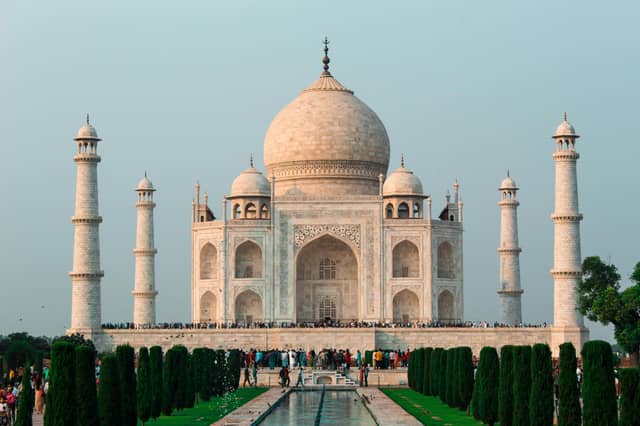
While visitors frequently flock to The Taj Mahal to capture images of the impressive exterior and picturesque surrounding gardens, photography inside the mausoleum is prohibited.
The Taj Mahal serves as the final resting place for Mumtaz Mahal and Shah Jahan, the Mughal emperor who commissioned this architectural marvel in memory of his beloved wife. Given its sacred purpose, photography inside is considered extremely disrespectful.
The Eiffel Tower, Paris
Due to copyright laws, photographing one of the world's most iconic landmarks, the Eiffel Tower, at night is technically illegal.
Capturing the Eiffel Tower during the day is perfectly legal since the copyright on the structure itself has expired. However, at night, the tower is lit by a dazzling light show designed by Pierre Bideau in 1985, which changes the situation. This is because the light show is considered a separate artistic work, and under European Union copyright law, such works are protected for the lifetime of the creator plus 70 years after their death. Since Bideau passed away in 2021, the copyright for the light show will extend well into the future, until the year 2091, to be exact.
The Sistine Chapel, Italy
Taking photos or videos in The Sistine Chapel is a no-go. This isn't just to keep the art safe from camera flashes, but there's a backstory too.
In the 1980s, the Vatican faced a hefty bill to restore Michelangelo's artwork within the chapel. To cover the costs, they made a deal with a broadcasting company, Nippon TV, granting them exclusive rights to photograph and film the newly restored art in exchange for a significant sponsorship.
The Valley of The Kings, Egypt
In the Valley of the Kings in Egypt, photography inside the tombs is generally restricted to protect the delicate art from potential damage caused by flash photography.
However, you are usually free to take photographs of the tomb exteriors without any restrictions. If you wish to photograph the interior of some tombs, you will need to purchase a permit at the entrance, which can be quite expensive. It's always best to check the current rules when you arrive.
The Red Light District, Amsterdam
In Amsterdam's Red Light District, photography is generally discouraged, especially of the workers in the windows, to protect their privacy and safety. Taking photos in this area can be seen as disrespectful and may provoke a negative reaction from the locals or the workers themselves.
However, you can take general photos of the streets and canals, as long as you're respectful of the people around you.
When it comes to adhering to photography etiquette abroad, Product Specialist Lizzie James at Jessops said the following:
Research local customs
"Always research the cultural norms and photography rules of your destination before you arrive," suggests Lizzie. "Or, you could even chat to the locals while you’re there.”
“This preparation helps you avoid breaches of etiquette related to religious or cultural sensitivities that might not be obvious to outsiders."
Respect privacy and personal space
"When you're visiting tourist spots, it's normal to end up with other people in your pictures," Lizzie points out. "And sometimes, capturing people in your shots can really bring your photos to life and add context to your scenes."
"While there's no law in the UK that prohibits taking photos of people in public spaces, it's considerate to ask for their permission first. Doing so not only avoids uncomfortable reactions, but also avoids potential confrontations."
"However, the law can vary depending on where you're travelling. In France, for example, the Right to Image and Respect for Private Life Law means you'll need consent to publish photos of recognisable people in both public and private settings."
"Also, keep in mind that in many places, taking photos of someone's face or certain body parts without asking can be considered rude or even a violation. So, knowing these nuances can help you steer clear of offending someone."
Look for signs
"Always be on the lookout for signs that indicate photography restrictions," Lizzie advises. "Just remember that not all areas will have clear signage, so if in doubt, it’s best to ask a local or a guide.”
"Respecting these signs shows that you value local norms and helps you avoid unintentional disrespect or legal issues, especially in culturally sensitive or privately managed spaces."