
AI could make human skills more valuable as routine work is automated, business strategist says
Artificial intelligence could remove more routine work without replacing entire careers, according to business strategist Felix Riley.
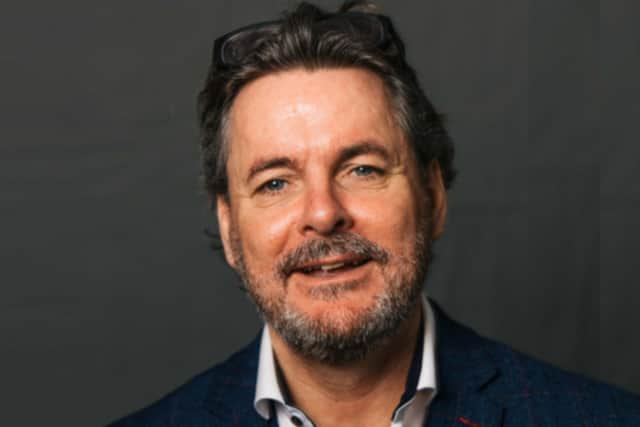

Riley, who works with leadership teams on strategy, organisational change and AI, said some predictions about technology taking people's jobs overlooked the potential for employees to focus on skills machines cannot easily replicate.
“I don’t think the threats of it taking everyone’s jobs are true,” he said.
“I think lots of companies will mistakenly try that. I think certain tasks will be taken away, but then that should free people up to use the human edge because what people want is humans.”
He expects AI applications to become increasingly useful as the technology develops, but is sceptical of some of the terminology surrounding it.
“It’s not artificial intelligence. It’s machine learning. AI is a marketing term,” he said.
Riley also believes the next stage of development will be driven increasingly by applications built around existing large language models rather than simply making the underlying technology more powerful.
“What we’re going to see now is what they call the application stage, where the apps that are built on top of those engines are going to get better and better,” he said.
“I think they’ll be really good. They’ll be really useful.”
Why human judgement could become more important
Riley uses professional services, including law firms, as an example of how AI could change the nature of work.
He has no objection to AI handling routine documentation and communication, but argues that clients will continue to value the person providing advice, particularly when decisions involve uncertainty.
“I want the person,” he said.
“Is that person really smart and are they able to think creatively and innovatively about my problem?”
He believes removing some routine tasks could give professionals more time to develop those skills.
“The less we have to do, the more we’re free to be,” he said.
“I think the smartest companies, the smartest law firms and all these other companies right now are saying, ‘We need to upskill your human skills because they are going to be everything in the future.’”
Why businesses need to think differently about failure
Riley also argues that businesses should change how they view failure, describing unsuccessful attempts as information that can help people decide what to do next.
“Most of life is failing,” he said.
He compares the process with learning skills such as playing the guitar or learning to walk, where mistakes are part of the process.
“If we don’t succeed by the measure we’ve given ourselves or other people around us, well, that’s data,” he said.
“You learn from it and you just go back and do it again better. Or you may go, ‘Well, I shouldn’t be doing that. That’s the wrong thing to do.’”
He said the same approach could help organisations challenge cautious thinking and encourage employees to consider different ways of tackling problems.
Riley's speaking work includes Humans vs The Machine, as well as a version focused on the legal profession, exploring how human judgement could remain important as AI changes professional work.