
DRC-Rwanda: Agreement under US mediation relaunches the debate on peace and governance in Central Africa
The signing of a peace agreement between the Democratic Republic of Congo (DRC) and Rwanda, announced on June 27 in Washington under the aegis of former US President Donald Trump, marks an unexpected diplomatic turning point in the Great Lakes region. The event, welcomed by several figures of the Congolese opposition, however, raises questions about its real scope and political implications within the country.
The American mediation, engaged discreetly according to diplomatic sources, would have succeeded after several months of bilateral discussions between Kinshasa and Kigali. Former President Trump, who no longer held official office, acted as a facilitator, relying on his network and regional relays. The current White House has not yet commented on the agreement.
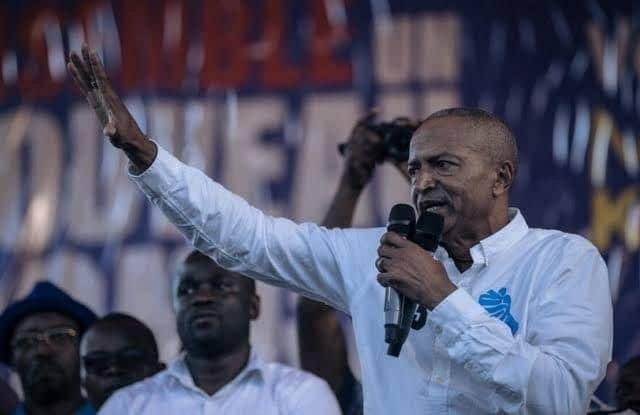

Moïse Katumbi, opposition figure and president of the Together for the Republic party, reacted in a message published on X (formerly Twitter), hailing the diplomatic effort: "This agreement finally opens a glimmer of hope for the long-bruised East of our country. ”
While recognizing the importance of the step taken, Katumbi recalled that peace cannot be limited to one text: it requires "dialogue, justice and good governance".
Contrasting reactions
If the opposition evokes a new hope, several analysts interviewed are cautious. "This is a diplomatic advance, of course, but without clear implementation mechanisms or guarantees of transparency, this agreement may remain symbolic," says Jean-Marie Kalonji, a researcher in political science at the University of Kinshasa.
On the government side, the signature has not yet been the subject of a detailed official declaration, fueling speculation about the precise content of the document. The Ministry of Foreign Affairs limited itself to confirming the participation of Congolese representatives in Washington, without providing additional details.
A tense indoor climate
The announcement of the agreement comes in a tense domestic political context. For several months, criticism has been increasing against what local NGOs and international organizations describe as authoritarian excesses: restrictions on public freedoms, arbitrary arrests, pressure on the media and opponents.
Katumbi pointed out this security instrumentalization:
"Too often, this war has served as a pretext to muzzle opinion, persecute journalists and the opposition. ”
This accusation, already formulated on several occasions by organizations such as Human Rights Watch or Reporters Without Borders, reflects a growing malaise within Congolese civil society. Some see it as a gap between the official peace discourse and current government practices.
Towards a national dialogue?
Beyond the international scene, Katumbi calls for an inclusive dialogue carried out by religious institutions such as the National Episcopal Conference of Congo (CENCO) and the Church of Christ in Congo (ECC). This framework could, according to him, promote internal reconciliation and lay the foundations for a renewed social contract.
This approach joins the regular calls of the Congolese Churches to get out of a governance model based on permanent confrontation. "This dialogue will only be possible if all voices, including those that criticize power, are respected and heard," says a priest involved in the preparatory discussions, on condition of anonymity.
A still fragile peace
The situation in the eastern DRC remains unstable, despite diplomatic efforts. Armed groups, including the M23, continue to control certain areas, and violence against civilians persists. The agreement signed in Washington has not yet had any visible repercussions on the ground.
"Peace cannot be decreed at a distance. It must take root in local realities and rely on the populations concerned, "recalls Alice Mukandilwa, head of an association of displaced women in Goma.
If American mediation attracts attention, the challenges to be met remain multiple: disarmament, transitional justice, return of the displaced, but also institutional and economic reconstruction. So many issues that can only be dealt with in a long-term logic, far from symbolic announcements.